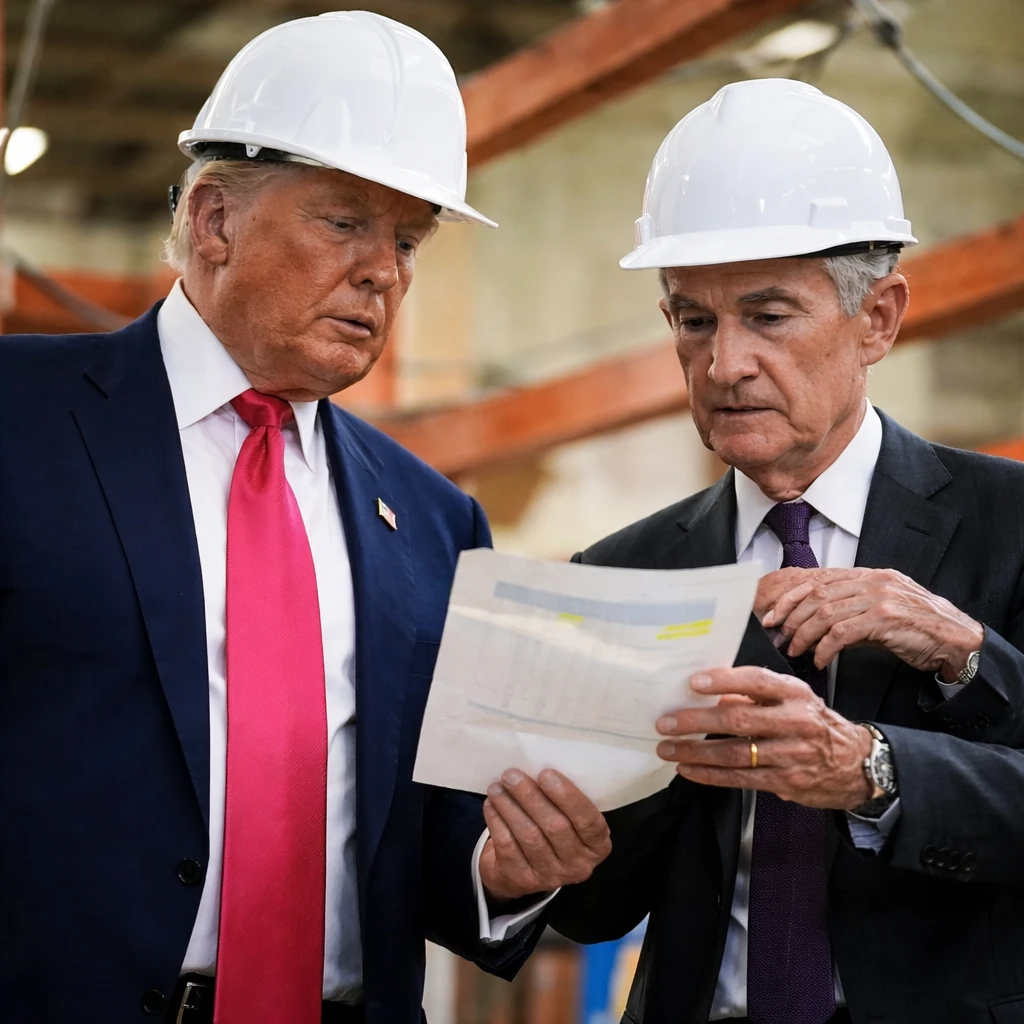

In a notable development over the weekend, Federal Reserve Chair Jerome Powell revealed that the Department of Justice (DOJ) has formally subpoenaed the central bank and has threatened it with possible criminal indictment. The legal actions pertain to Powell's prior testimony concerning the Federal Reserve's renovation of its office buildings.
Specifically, the subpoenas relate to Powell's June testimony before the Senate Banking Committee about the Fed’s $2.5 billion refurbishment of two of its office buildings. This renovation project had drawn criticism from President Donald Trump during the summer months, who perceived it as an excessive expenditure.
In a video statement, Powell characterized the DOJ’s threat of criminal charges as a tactical move undermining the Fed’s institutional independence, particularly in its mandate to set interest rates based on economic conditions. He emphasized the stakes saying, "This is about whether the Fed will be able to continue to set interest rates based on evidence and economic conditions—or whether instead monetary policy will be directed by political pressure or intimidation."
The DOJ, through a Sunday statement, declined to comment on any specific ongoing investigations but indicated that Attorney General Pam Bondi has directed U.S. Attorneys nationwide to prioritize inquiries into any misuse of taxpayer funds.
Efforts to reach a spokesperson for U.S. Attorney Jeanine Pirro’s office for further comment were met with no immediate response.
The controversy over the subpoena and threat of indictment has ignited concern among lawmakers. Senator Thom Tillis of North Carolina, who serves on the Senate Banking Committee responsible for overseeing Fed leadership nominations, declared his intent to oppose any new Federal Reserve Board nominees—including any prospective replacement for Powell—until the legal proceedings are conclusively settled. He remarked, "If there were any remaining doubt whether advisers within the Trump Administration are actively pushing to end the independence of the Federal Reserve, there should now be none." Tillis further suggested that the integrity and credibility of the Department of Justice itself are now under scrutiny amid the unfolding dispute.