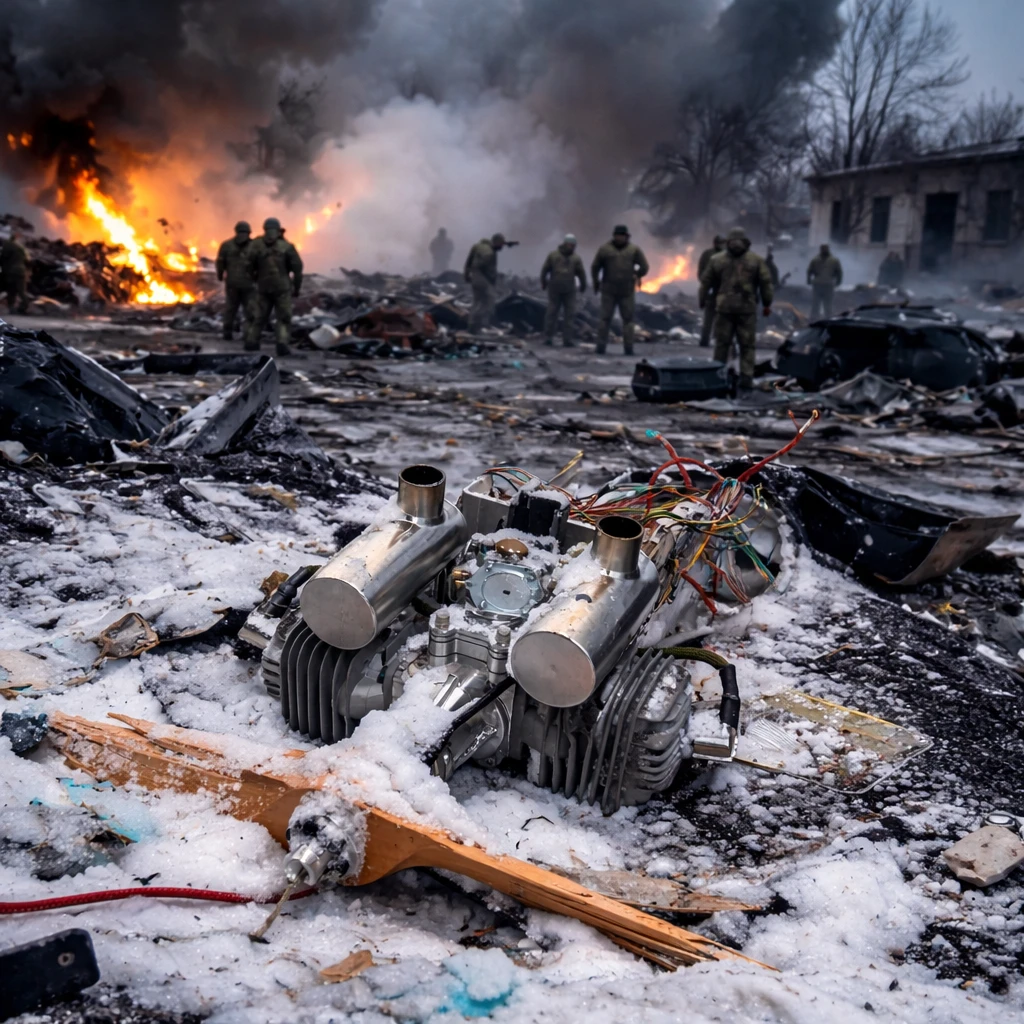

Amid ongoing peace negotiations, a deadly drone strike attributed to Ukrainian forces has resulted in significant casualties within a Russian-occupied village in Ukraine’s Kherson region. According to statements from Russian-installed regional authorities, three unmanned aerial vehicles struck civilians gathering to celebrate the New Year in the coastal town of Khorly, killing 24 individuals and injuring at least 50 others.
The regional leader appointed by Moscow, Vladimir Saldo, detailed the assault on the messaging platform Telegram, revealing that among the drones, one carried an incendiary composition which ignited a fire at a café and a hotel in the Black Sea resort town. Ukrainian officials have not yet provided a response or confirmation regarding this specific attack. As of now, independent verification of these claims has not been possible.
The severity of this strike elicited condemnation from several Russian officials. Valentina Matviyenko, chair of Russia's Federation Council, described the incident as reinforcing Russia’s determination to accomplish its objectives in the country's nearly four-year conflict in Ukraine. She characterized the events as a validation of prior demands made by Russia.
These developments come shortly after Moscow alleged a separate Ukrainian drone attack targeted President Vladimir Putin’s official residence located in Russia’s northwest. The Ukrainian government has categorically rejected this accusation as falsehood.
The Russian Defense Ministry announced that it had obtained navigation data from one of the drones reportedly utilized in the alleged attack on Putin’s residence. This data purportedly confirms the residence as the drone’s destination. However, the ministry did not present supporting evidence to the public, though officials indicated intentions to share the information with U.S. counterparts through established diplomatic channels.
In conjunction with these claims, Russia’s Defense Ministry released a nighttime video depicting a camouflaged individual standing beside a damaged drone amidst snow-covered terrain. The individual's face was obscured, and while he provided commentary about the drone, no identifiers such as location or date were disclosed. Independent verification of this footage and its assertions remains unavailable. Kyiv regards such allegations regarding Putin’s residence attack as attempts to undermine ongoing peace efforts, which have seen increased activity across European and transatlantic partners in recent weeks.
Ukrainian President Volodymyr Zelenskyy, in his New Year’s address, remarked that a peace agreement was near completion, stating it was “90% ready,” but stressed that remaining issues, notably territorial disputes, would influence the ultimate success of peace and stability for Ukraine and Europe alike. Meanwhile, former U.S. President Donald Trump’s special envoy Steve Witkoff reported productive discussions with officials from the United Kingdom, France, Germany, and Ukraine regarding advancing peace initiatives. Key topics included bolstering security guarantees and devising mechanisms to prevent resurgence of conflict.
Lead Ukrainian negotiator Rustem Umerov confirmed plans for European and Ukrainian officials to convene in the near term, supplemented by upcoming talks between President Zelenskyy and European leadership. Concurrently, the Ukrainian government has urged the International Atomic Energy Agency (IAEA) to respond to Russian attacks on critical electricity infrastructure essential for the safety and security of Ukrainian nuclear power stations.
The IAEA recently published a Note Verbale from Kyiv outlining damage inflicted by Russian drone and missile strikes on December 23, which resulted in a loss of substantial off-site power connections at certain Ukrainian nuclear plants.
Elsewhere, hostilities continued with Russian drone attacks targeting civilian infrastructure in the Odesa region, as reported by regional head Oleh Kiper. Damage included a two-story residential building and an unexploded drone impacting a high-rise apartment on the 17th floor. No casualties were reported in these incidents.
According to the Ukrainian Air Force, air defense systems engaged 205 drones overnight, successfully neutralizing or suppressing 176. They identified 24 strike drones active across 15 locations, indicating a continuing assault phase.