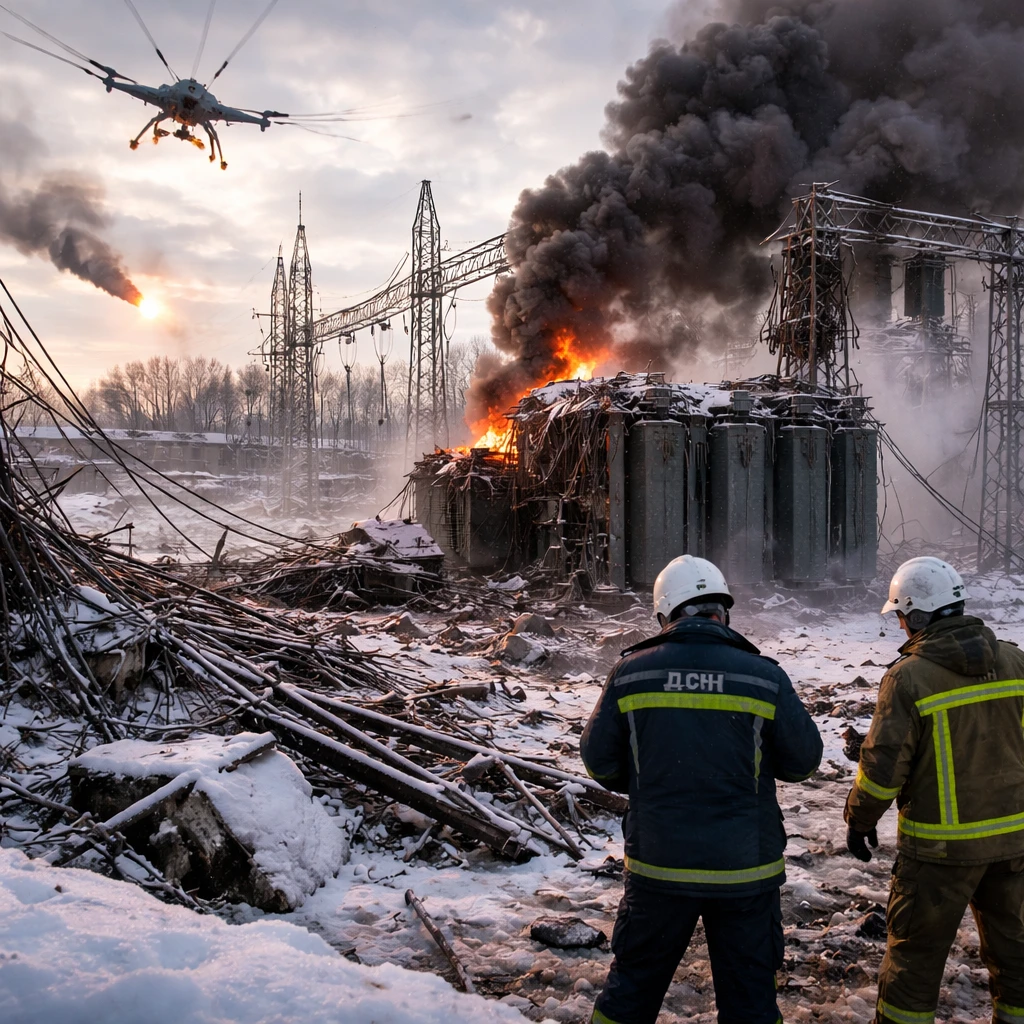

In southern Ukraine’s Russian-held areas, Ukrainian drone operations have inflicted damage on vital power infrastructure, resulting in widespread electricity outages affecting hundreds of thousands of residents, according to statements from Kremlin-backed local officials.
Yevgeny Balitsky, the governor appointed by Moscow in the Zaporizhzhia region, reported via Telegram that more than 200,000 households are currently without electricity, with nearly 400 settlements impacted by the disruption to energy networks following these drone strikes.
Simultaneously, Russia has maintained its aggressive targeting of Ukraine’s energy grid, particularly taking advantage of winter conditions that accentuate the effects of power loss. These attacks, ongoing throughout the nearly four-year conflict, are aimed at eroding Ukrainian resistance, a tactic Kyiv describes as "weaponizing winter."
Overnight, Russian strikes targeted energy infrastructure in Ukraine’s Odesa region, leading to a fire that was quickly extinguished, Ukrainian Emergency Service officials reported. In the Dnipropetrovsk region, six individuals sustained injuries resulting from Russian assaults.
Ukrainian President Volodymyr Zelenskyy acknowledged the persistent challenges in restoring the country’s energy system but emphasized ongoing efforts to expedite repairs. He confirmed that overnight attacks across various regions — including Sumy, Kharkiv, Dnipro, Zaporizhzhia, Khmelnytskyi, and Odesa — have resulted in at least two fatalities.
Zelenskyy detailed that throughout the week, Russian forces employed a heavy arsenal comprising over 1,300 attack drones, 1,050 guided aerial bombs, and 29 various missile types to assault Ukraine.
Addressing diplomatic dimensions, Zelenskyy noted that if Russia deliberately impedes peace negotiations, the international response should intensify support to Ukraine and apply greater pressure on the aggressor. This statement comes shortly after a Ukrainian delegation arrived in the United States to engage in discussions on U.S.-led diplomatic efforts intended to conclude the war.
The delegation is seeking to finalize agreements concerning postwar security assurances and economic recovery measures with U.S. officials. If these proposals receive approval, signing is anticipated at the upcoming World Economic Forum in Davos, Switzerland, albeit contingent on further consultation with Russia.
In a separate development, Ukrainian drone debris fell on a residential building in Russia's North Ossetia within the Caucasus Mountains, wounding two children and an adult, and prompting evacuation of 70 residents due to structural damage, regional governor Sergei Menyaylo reported on Telegram.
According to Russia’s Defense Ministry, forces intercepted or suppressed 63 Ukrainian drones overnight over Russian territory and the occupied Crimean Peninsula. A drone strike resulted in hospitalization of one individual in Russia's Krasnodar region east of Crimea.
On the energy repair front, Ukrainian technicians have commenced restoration work on a critical backup power line connecting the Zaporizhzhia Nuclear Power Plant to the grid. This operation is proceeding under a ceasefire brokered by the International Atomic Energy Agency (IAEA), which emphasized the significance of restoring the damaged 330-kilovolt Ferosplavna-1 line in ensuring the plant's electricity supply. The facility, the largest nuclear power station in Europe, remains under Russian control, with its status a focal point in ongoing, U.S.-facilitated peace dialogues.