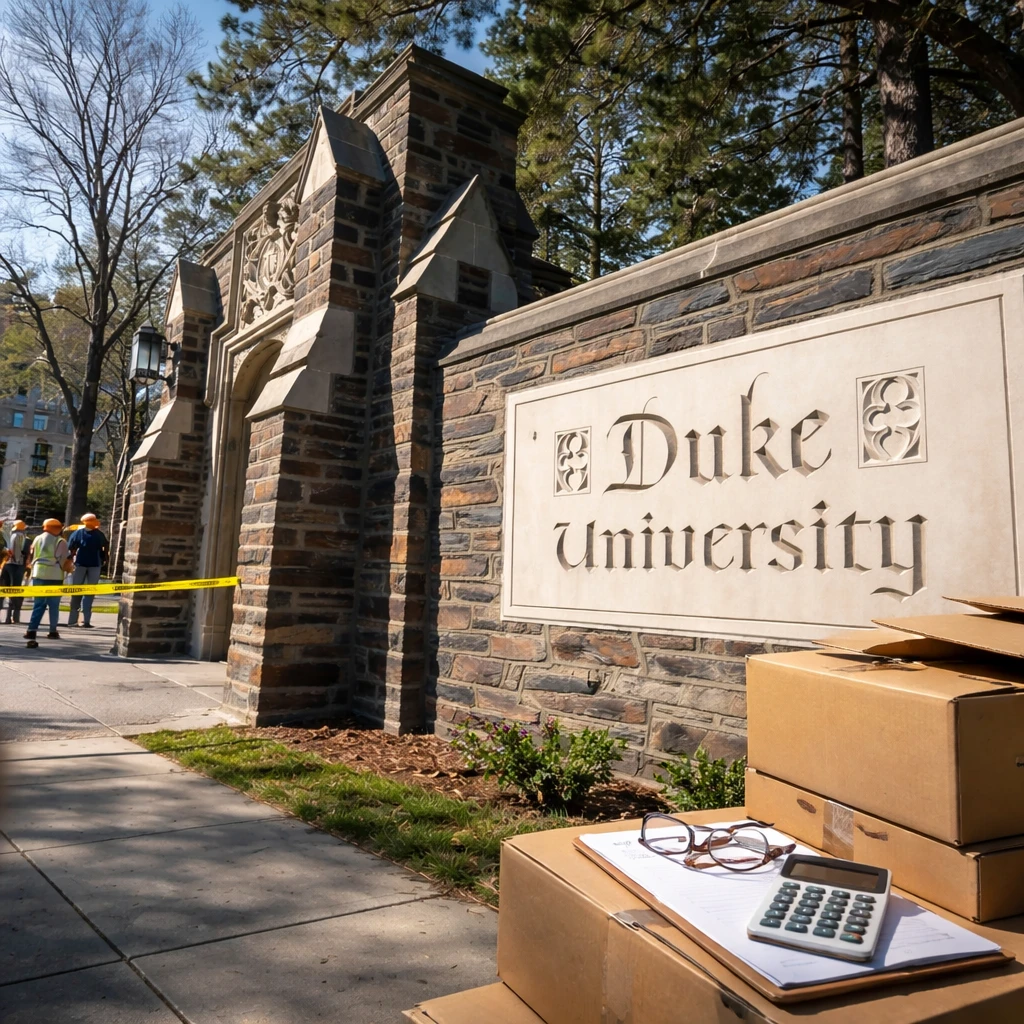

Since the inauguration of President Donald Trump in January, U.S. higher education institutions have faced increased regulatory pressures and funding challenges. The Trump administration introduced multiple policies perceived by university leaders as intrusive, including demands to eliminate diversity, equity, and inclusion (DEI) programs, impose restrictions on international student admissions, and reduce dependence on federally funded research. Changes to student loan policies, Medicaid reimbursements, and elevated taxes on university endowments further strained academic institutions. Duke University, which operates an integrated University and Health System, experienced significant revenue disruptions stemming from these federal actions.
In response, Duke announced a substantial cost-cutting program aimed at curbing expenses by a total of $364 million. This initiative places Duke among the earliest and most significant cases of personnel and operational reductions in higher education linked to shifting federal funding policies. According to a September presentation to the Academic Council by Executive Vice President Daniel Ennis and Vice President for Finance and Treasurer Rachel Satterfield, the university has realized $229 million in savings within its departments and schools for the fiscal year 2026 budget. The overall objective remains to achieve a $350 million reduction by 2030 through incremental annual savings: $47 million in each of the next two fiscal years followed by $30 million in 2029 and an additional $11 million in the year after.
The program's origin lies in a February directive from the Trump administration seeking to cap Facilities and Administrative (F&A) reimbursement rates for federally funded grants from institutions such as the National Institutes of Health and National Science Foundation at 15%, down from the existing approximate level of 60%. This regulation encountered legal opposition and remains enjoined by courts. Concurrently, the administration urged funding agencies to terminate grants supporting diversity and equity initiatives, to freeze awards arbitrarily at certain universities, and to limit overall grant opportunities available to researchers.
Faced with potential losses—estimated at approximately $194 million annually from the proposed F&A rate reductions—Duke's leadership began proactive cost reduction measures. In March, University President Vincent Price launched a program encompassing a hiring freeze, evaluation of administrative efficiency, and curtailment of non-personnel expenditures. During his annual faculty address, Price underscored the urgency of these measures, noting the diminished availability of federal resources that Duke had previously counted on.
Price emphasized the need for strategic realignment of university functions, stating, "We should be prepared not only to seek cost-reductions across the university but also to re-imagine our work and consider how we might strategically realign around our highest priorities." By mid-April, administrative communications signaled that employment reductions were inevitable. Subsequently, Duke introduced a voluntary separation incentive program (VSIP) offering buyouts to eligible staff.
The VSIP extended offers to 939 staff members, with 599 accepting—representing 5% of the university's full-time staff. Many reported broad-based reductions affecting various departments including libraries, student affairs, information technology, and communications. Staff across diverse seniority and tenure levels were given a 45-day period to consider their acceptance, within which nondisclosure agreements largely restricted external discussions of the terms or decisions. When fewer than anticipated staff accepted the buyouts, the university prepared for compulsory layoffs.
In June, Price acknowledged that layoffs would likely occur, with actual reductions in August impacting approximately 45 employees. The statement "We will, for the foreseeable future, have to be smaller — and do our work with fewer people," reflected the administration's expectation of a leaner operational model. Faculty were also affected; a retirement incentive program saw 82 of 273 eligible faculty members participate. Additionally, the School of Medicine, which faced notable cuts related to NIH funding, proposed salary reductions for certain underperforming tenured faculty members as part of broader cost-containment strategies.
The School of Medicine undertook the decommissioning of the Jones Research Building to achieve $125 million in annual expenditure cuts. When students and faculty returned to campus in mid-August, various operational and personnel changes were evident. For instance, incoming first-year Trinity students were supported by a significantly smaller team of 11 full-time advisers, replacing the traditional group exceeding 300 volunteers, many of whom had accepted the buyouts. Faculty noticed the absence of subject librarians, changes reportedly made without prior faculty consultation. These developments led to discussions on governance transparency and decision-making communication in the September Arts & Sciences Council meeting, with Trinity Dean Gary Bennett recognizing the need for clearer and more direct communication regarding finances and administrative operations.
Throughout this challenging financial period, calls for adjustment in Duke's approach emerged. The American Association of University Professors in May urged a pause on buyouts and layoffs pending greater faculty and staff involvement. June saw community petitions advocating for salary reductions among university administrators, while alumni voiced opposition to federal policy intrusions, urging resistance to perceived authoritarian measures. Local leadership echoed support for Duke maintaining its institutional values amidst federal pressure.
As Duke enters fiscal year 2026, the pace of cost reductions has moderated. The university anticipates a $74 million budget surplus for the year. With constrained resources, Duke plans to prioritize strategic realignment, concentrating investment in its most critical mission areas. Executive Vice President Ennis stated, "In the aggregate, we’re so much better positioned than had we not taken the action we did," signaling cautious optimism in the institution's financial trajectory moving forward.