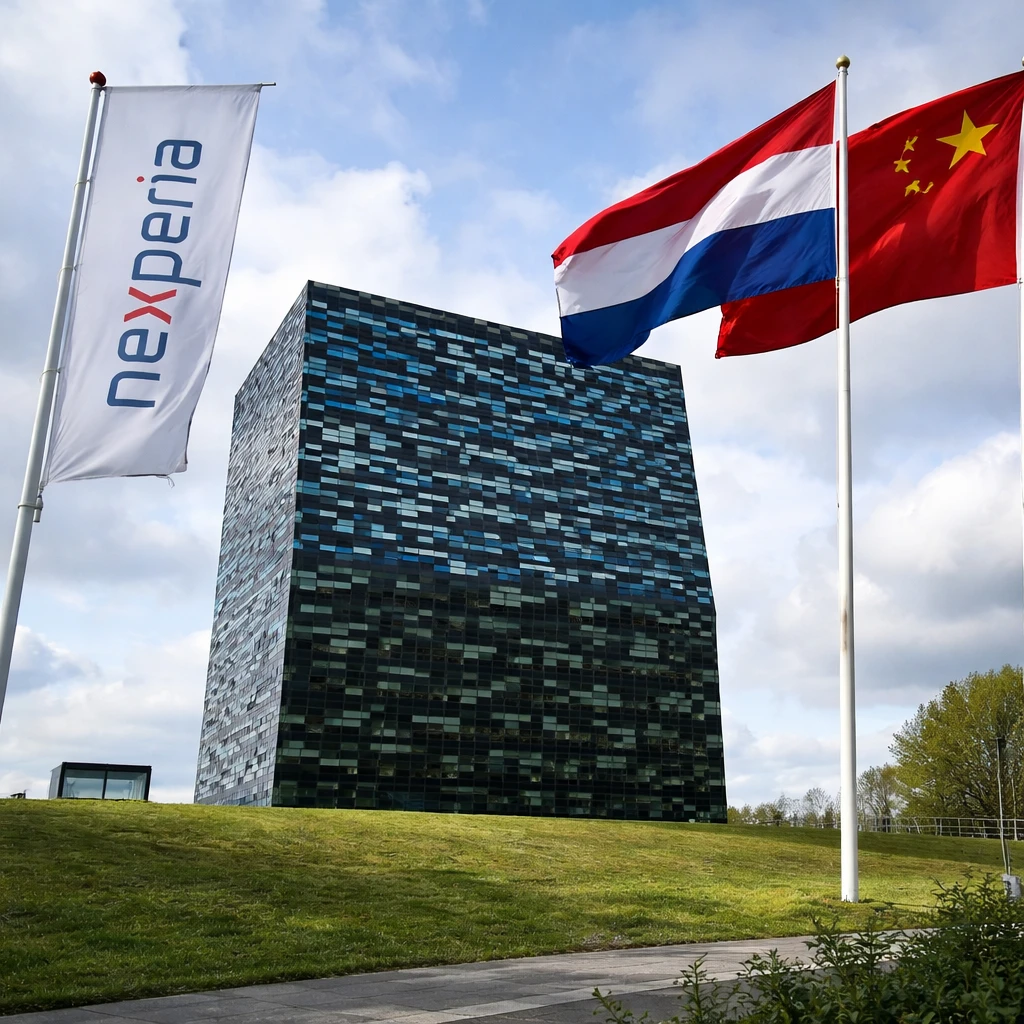

In Amsterdam, the enterprise chamber of the Court of Appeal convened on Wednesday to evaluate whether to initiate a formal inquiry into purported mismanagement at Nexperia, a semiconductor manufacturer headquartered in the Netherlands and owned by Chinese firm Wingtech. Legal representatives for both the company and its Chinese proprietors presented their arguments amid significant global automotive industry ramifications. While the panel of three judges heard extensive testimony, no immediate ruling on the investigation was anticipated.
The scrutiny surrounding Nexperia surfaced publicly in October after the Dutch government asserted effective control over the company since late September, citing concerns tied to national security. This intervention resulted in the removal of Zhang Xuezheng, Nexperia's Chinese CEO and founder of Wingtech, following allegations of mismanagement and apprehensions about the possible transfer of intellectual property rights.
Legal counsel for Zhang and Wingtech portrayed Zhang as an adept entrepreneur navigating complex geopolitical challenges, urging the court against ordering an investigation and suggesting that Wingtech was taken by surprise by the Dutch governmental actions. Zhang himself did not attend the hearing.
Conversely, Nexperia's lawyer Jeroen van der Schriek contended before the judges that the conduct of Wingtech and its associated Hong Kong-based holding company, Yuching, since October illustrated an intent to prioritize interests other than those of Nexperia. He underscored the importance of evaluating whether such behavior constituted corporate mismanagement meriting judicial intervention.
The intensifying conflict coincided with Beijing's temporary ban on exports of Nexperia-produced semiconductors from its Chinese factory in October. This embargo caused considerable disarray among global automakers, particularly in North America, Japan, and South Korea, who depend on Nexperia's chips for manufacturing vehicles. The export restrictions were lifted following a high-level meeting between U.S. President Donald Trump and Chinese leader Xi Jinping in late October. In a conciliatory move, the Dutch government announced in November that it was relinquishing its direct control over Nexperia as a goodwill gesture.
Despite these developments, tensions persisted between Nexperia's Dutch headquarters and its Chinese division, exacerbating concerns about the stability of the global semiconductor supply chain. The Chinese unit accused the Dutch-based head office of impeding wafer shipments necessary for its production, which allegedly hampered its core manufacturing capabilities and delivery commitments. The Dutch headquarters, however, refuted these claims, asserting that the Chinese factory disregarded instructions issued from the Netherlands.
The ensuing supply disruptions compelled automotive companies such as Honda to pause production lines, while Mercedes-Benz and others sought alternative component providers to mitigate operational risks. The Chinese Ministry of Commerce in late December publicly demanded immediate corrective actions from the Netherlands, accusing the Dutch government of instigating a worldwide chip supply crisis.
Nexperia's corporate lineage traces back to its spin-off from Philips Semiconductors approximately two decades ago, with ownership transferring to Wingtech in 2018. In 2023, the United Kingdom government blocked Nexperia's attempt to acquire Newport Wafer Fab, a chip manufacturer based in Wales, citing national security factors. The ongoing legal and political tussles exemplify the intricate challenges at the intersection of geopolitics, technology supply chains, and corporate governance.