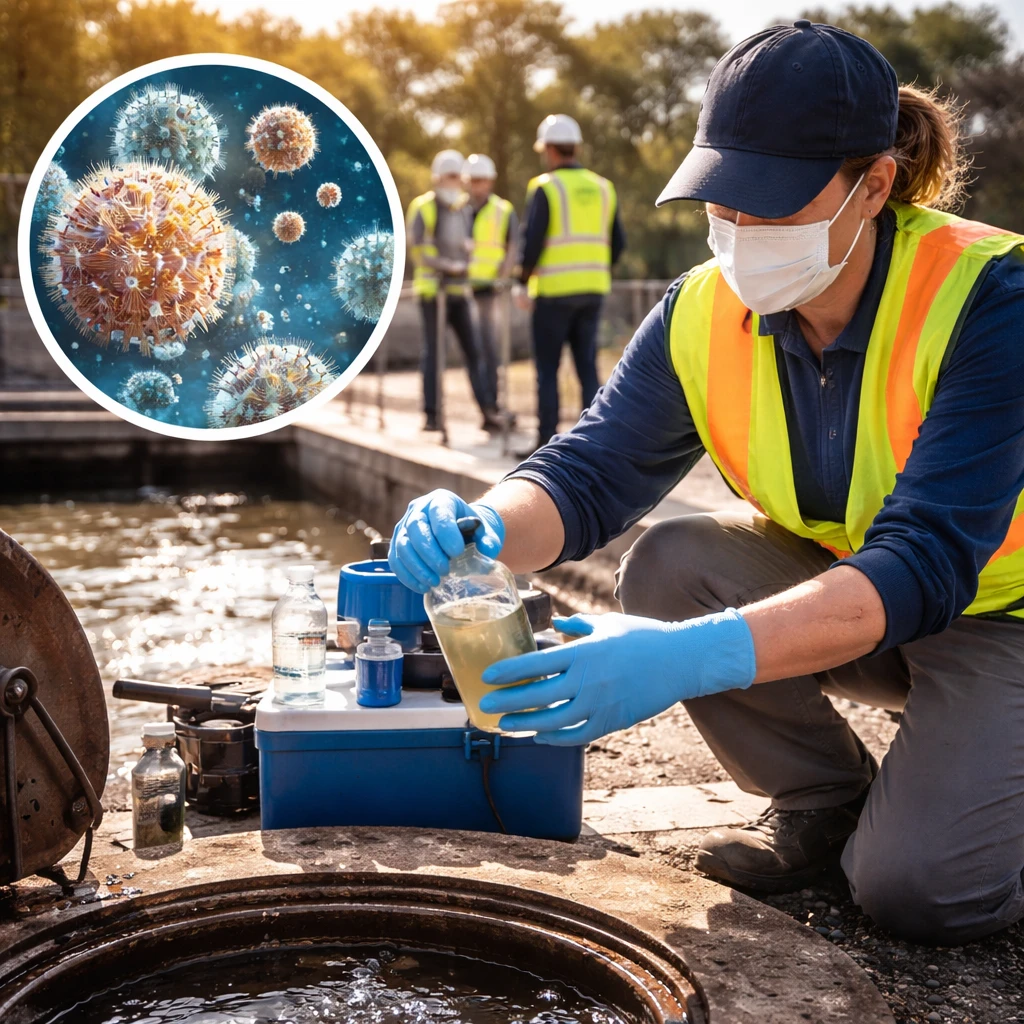

Two recent investigations published by the Centers for Disease Control and Prevention (CDC) confirm that sewage testing can provide public health authorities with advanced warning of measles infections, detecting the virus days to several months before individual cases are verified by healthcare providers. By monitoring sewer systems, Colorado public health officials were able to proactively address measles transmission, as detailed in one study. In a separate inquiry, researchers in Oregon identified that wastewater analysis could have predicted an outbreak peak over two months prior to the first positive clinical diagnosis.
These results reinforce the growing body of evidence that wastewater surveillance is a critical tool for monitoring communicable diseases—including COVID-19, polio, mpox, and avian influenza. Despite its proven benefits, the CDC's national wastewater surveillance initiative, established in 2020 and currently operating with an annual budget around $125 million, faces considerable funding reductions under a proposed Trump administration budget plan that aims to reduce funding to roughly $25 million per year.
Peggy Honein, who leads the CDC’s division of infectious disease readiness and innovation, remarked that while the proposed budget might maintain some essential functions, it would necessitate prioritizing certain activities due to limited resources. The national wastewater program presently includes over 1,300 wastewater treatment facilities that serve approximately 147 million people, along with six "centers for excellence"—Colorado being one—that support advancements and aid in expanding similar efforts across other states.
State-Level Preparations and Funding Concerns
Although the funding cut remains a proposal subjected to Congressional review and opposition towards reductions in healthcare budgets, state health departments are proactively preparing for potential decreases in federal support. Most states rely entirely on federal funds for their wastewater surveillance operations, as emphasized by Honein.
Colorado initiated its sewage surveillance program in 2020 with voluntary participation from 68 utilities. Since then, the program has both broadened to include additional pathogens and simultaneously refined its focus due to the constraints of federal funding, explained Allison Wheeler, manager of Colorado’s wastewater surveillance unit. This program is financed through 2029, but ongoing discussions with state leadership are in progress regarding continuity beyond that date.
Wheeler expressed concern for other states less fortunate in securing stable funding, indicating many are dependent on continued financial support to sustain their surveillance capabilities into the future.
Early Measles Detection Through Wastewater
The Colorado study, co-authored by Wheeler, recorded measles virus in wastewater samples starting in May, during which outbreaks were escalating in nearby states such as Texas, New Mexico, and Utah and just five laboratory-confirmed cases had been identified in Colorado. By August, the presence of measles was detected in sewage from Mesa County roughly one week prior to healthcare providers confirming infections in two patients—neither of whom had any known exposure to the virus.
Intensive contact tracing uncovered an additional five cases linked to these index patients, following 225 household and healthcare contacts. In Oregon, researchers retrospectively analyzed stored sewage samples from late 2024 to evaluate if wastewater testing could have predicted a local measles outbreak.
This outbreak involved 30 confirmed cases across two counties, primarily affecting a tight-knit community with limited healthcare engagement. The first confirmed patient was diagnosed on July 11, and public health officials required 15 weeks to conclude the outbreak. Analysis revealed that sewage samples had tested positive for measles around 10 weeks before the initial case was clinically identified, and viral concentrations detected correlated with the known peak of transmission.
Dr. Melissa Sutton of the Oregon Health Authority acknowledged that the traditional health care system likely underreported cases, and wastewater testing provided valuable insights into the scope of undetected, or "silent," community spread.
Integration and Impact of Wastewater Surveillance in States
In other states, including Utah, wastewater data has been integrated into public measles tracking dashboards, allowing residents and health officials to monitor outbreaks in real time. New Mexico, which experienced 100 measles cases and one fatality the previous year, utilized wastewater surveillance to identify emerging clusters far from the primary outbreak zones.
Kelley Plymesser from New Mexico’s health department recounted how early detection of cases in northwestern Sandoval County allowed authorities to recalibrate their testing strategies, communicate advisories to clinicians and the public, and redirect resources effectively. The outbreak in this region was declared over by September, though ongoing transmission in the Southwest means surveillance systems remain active in the area.
Dr. Sutton expressed optimism that federal decision-makers will appreciate the system’s effectiveness, adaptability, cost-efficiency, and broad reach, characterizing widespread wastewater surveillance as one of the most substantial advancements in communicable disease monitoring in recent decades.