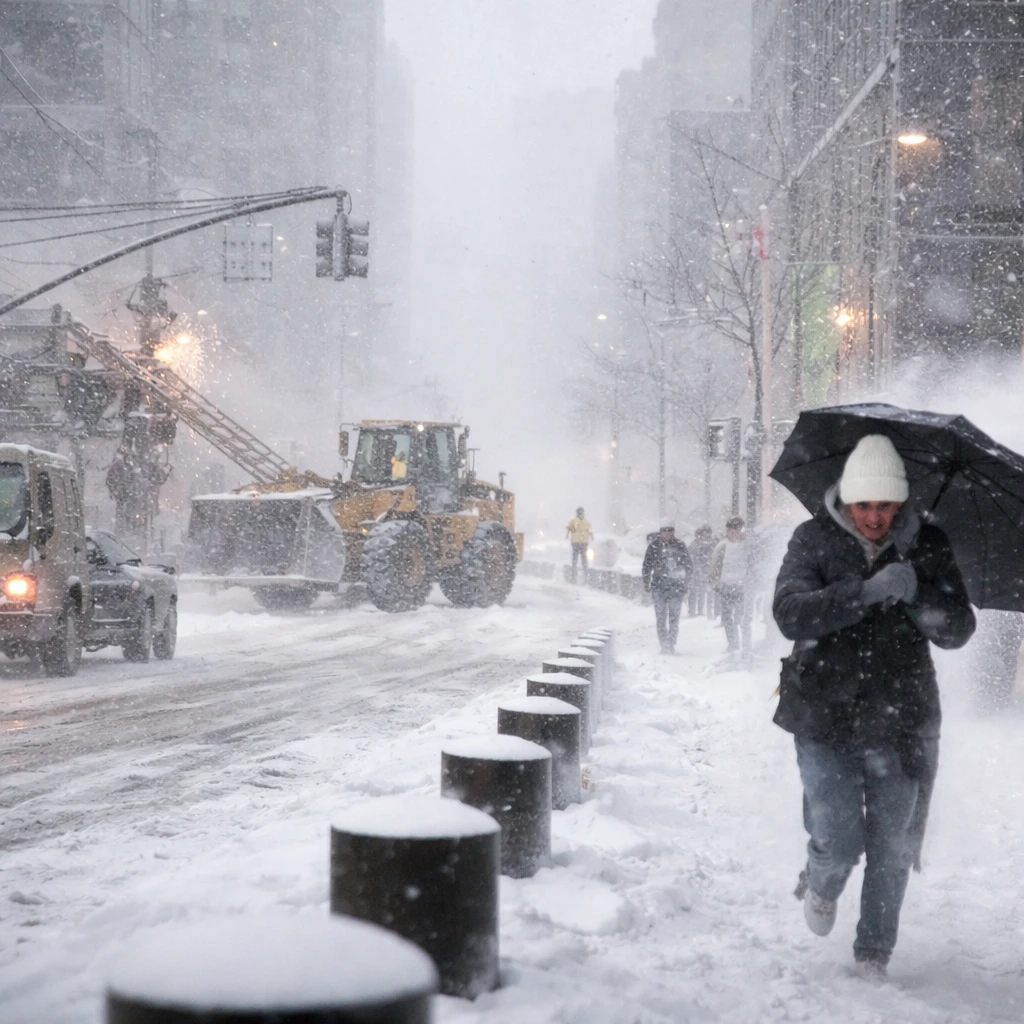

The recent winter storm sweeping through the American East has brought with it a lethal combination of ice, snow, and frigid temperatures, causing widespread paralysis across the region and significant economic disruption. Although the exact financial toll remains uncertain, experts anticipate that the costs to the U.S. economy are likely to reach multi-billion dollar levels.
Economists and meteorologists continue to analyze the extent of the storm's disruption. Unlike damage from hurricanes, floods, or fires where physical destruction can be more readily quantified, the economic consequences from winter weather disasters pose greater challenges to measure.
Jacob Fooks, a research economist at the Cooperative Institute for Research in the Atmosphere at Colorado State University, emphasized the interconnected nature of the economy and weather conditions: "When critical transportation hubs shut down or power grids fail, the resulting ripple effects permeate supply chains and operations across many sectors simultaneously." He noted that while exact estimates vary, severe weather events collectively may reduce gross domestic product (GDP) by between 0.5% to 2% annually, which he characterized as "very substantial." With the U.S. GDP approximately $30 trillion, this translates to potential losses ranging from $150 billion to $600 billion.
A private weather analytics company, AccuWeather, released a preliminary figure estimating the economic impact of the storm that disrupted 11,400 flights at between $105 billion and $115 billion. This figure is notably higher than most experts' assessments and has been met with skepticism due to insufficient methodological detail.
Jonathan Porter, AccuWeather's Chief Meteorologist, attributed much of this cost to commerce disruption and power outages. He highlighted that many businesses may remain closed for several days or even weeks, justifying their characterization of the event as "the storm that shut it all down." By the following Monday, the storm had caused at least 25 fatalities.
Porter also pointed out additional costs stemming from ice-induced damage such as fallen electrical lines which rendered hundreds of thousands without power, destruction of trees and vehicles, and the complex process of resuming air travel and restoring power infrastructure.
Conversely, some experts consider AccuWeather's estimate excessively high. Climate economist Adam Smith, formerly overseeing NOAA's billion-dollar weather disaster list and now a senior climate impact scientist at Climate Central, acknowledged the storm will result in multiple billions in costs and be the first billion-dollar weather disaster of 2026. However, he pointed out that AccuWeather’s previous estimate of $250 billion damage from last year’s Los Angeles wildfires was also significantly above the consensus $60 billion range.
AccuWeather defends their elevated estimates as encompassing broader indirect and long-term costs, including supply chain disruptions and medical expenses, which other analyses may omit. The NOAA’s billion-dollar disaster listings are described by the agency itself as conservative in capturing true losses.
The most costly winter storm previously recorded in the U.S. is the 2021 Texas ice storm, with an estimated cost of about $26 billion. The 2016 Northeast blizzard accounted for around $3 billion in damages. Smith noted that this recent storm’s impact could approach that of the Texas event due to its extensive geographical reach.
Quantifying losses specific to winter storms remains particularly complex. Unlike hurricanes or wildfires, which result in insurable physical damages to assets, much of the economic damage from ice and snow events is due to lost opportunities—business closures, halted operations, and supply chain interruptions—which are less tangible and more difficult to assess.
Former NOAA chief scientist Ryan Maue underscored that people typically receive no financial recompense for losses attributable solely to weather disruptions, differentiating these events from insurable disasters. Additionally, while certain businesses—such as hardware stores selling snow removal products and grocery stores experiencing increased sales—may gain economically during these storms, overall losses, according to experts like Fooks, substantially outweigh such gains.
Direct costs include response expenditures by emergency management and transportation departments, alongside substantial disruptions to daily economic activities. Experts agree that costs are accumulating and anticipate an increasing frequency and intensity of costly weather-related disasters in a warming climate.