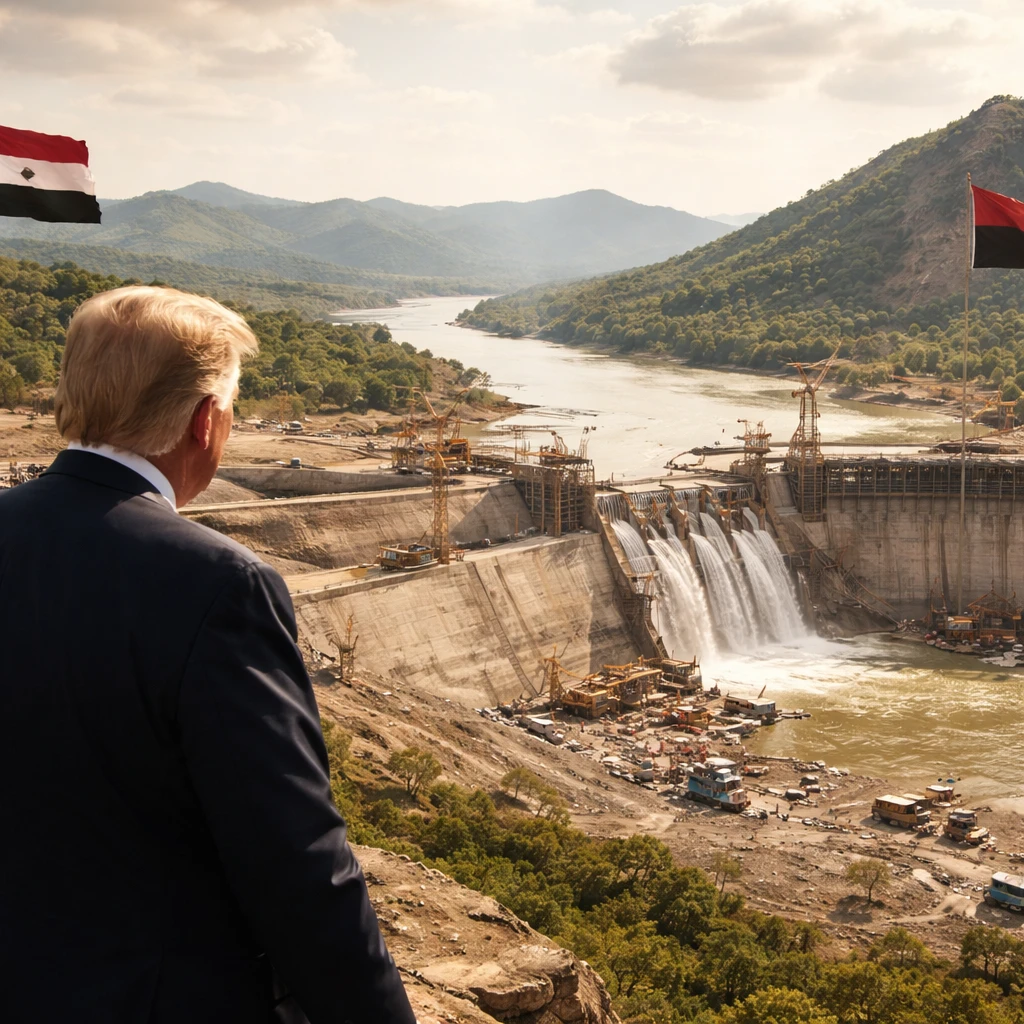

CAIRO, Egypt – On Saturday, Egypt and Sudan expressed their approval of a proposal by former US President Donald Trump to revive American-facilitated negotiations with Ethiopia. These talks aim to resolve an enduring conflict over control and usage of the Nile River following Ethiopia's construction of a substantial dam.
Last autumn, Ethiopia inaugurated the Grand Ethiopian Renaissance Dam (GERD), Africa's largest hydroelectric project. Intended to generate upwards of 5,000 megawatts, the dam effectively doubles Ethiopia's electric capacity. However, Cairo has condemned the structure as a serious violation of international law, citing existential concerns over significant reductions in downstream Nile water flow.
Egypt's President Abdel-Fattah el-Sissi commented via social media, expressing appreciation for Trump's attention to the Nile's critical importance to Egypt. He emphasized Egypt's dedication to engaging in earnest and constructive collaboration with Nile basin nations grounded in international law principles. The aim is to achieve mutually beneficial outcomes that avoid harm to any party involved.
President el-Sissi also confirmed Egypt's support for efforts led by Washington to bring about resolution with Ethiopia on this matter.
Similarly, General Abdel-Fattah Burhan, head of Sudan's Sovereign Council and the nation's military, lauded Trump's initiative. Posting on the platform X, Burhan described the proposal as a positive measure toward sustainable and equitable solutions that respect the rights of all stakeholders.
Thus far, Ethiopian officials have not issued a public response. Meanwhile, Trump released a letter on social media he sent to el-Sissi, stating readiness to recommence US mediation to address the Nile water sharing dispute decisively and responsibly.
The initial US mediation attempts began during Trump's earlier presidency but faltered in 2020 after Ethiopia withdrew from the process. Subsequent discussions under the African Union's auspices have continued without reaching a conclusive agreement.
Both Egypt and Sudan demand a legally binding pact regulating the filling schedule and operation of the GERD, situated on the Blue Nile near the Ethiopia-Sudan border. In contrast, Ethiopia advocates for establishing cooperative guidelines rather than strict legal commitments.
For Egypt, a predominantly desert nation reliant on the Nile to supply water for its population of 110 million, preserving water flow is vital. Authorities worry the dam might cause severe diminutions of Nile water downstream, threatening agriculture and related economic sectors. President el-Sissi maintains that Egypt's river water allocation is non-negotiable, while supporting continued negotiations to find a diplomatic resolution.
Sudan seeks coordinated management of the GERD's reservoir filling and release schedules to mitigate unforeseen consequences for its irrigation and hydroelectric infrastructure.
Ethiopia defends its $5 billion dam project as essential, given its large portion of the population still lacks access to electricity. The primary points of contention include the annual filling protocol of the reservoir, the volume of water Ethiopia would release during extended drought periods, and mechanisms the three countries would employ to resolve prospective disagreements.