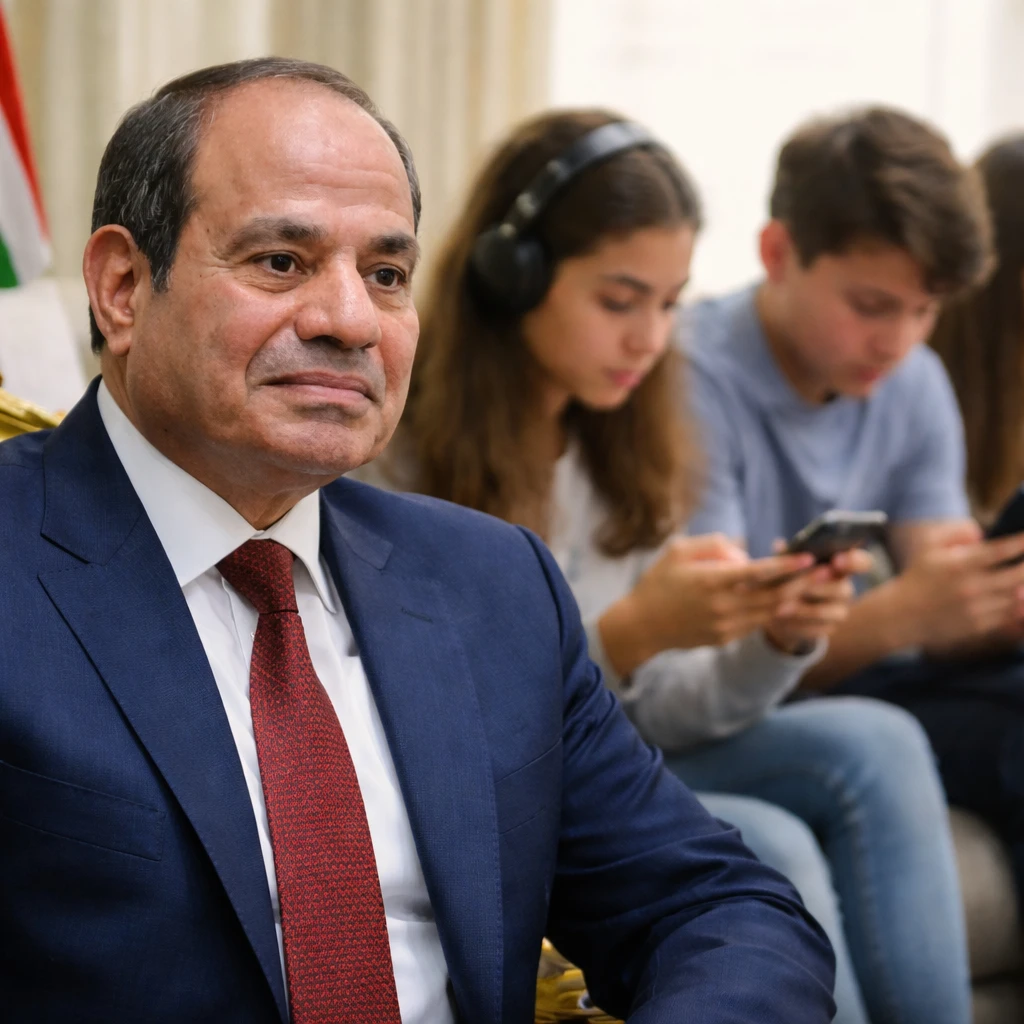

CAIRO - Responding to increasing concerns about the negative impact of social media on young users, Egypt’s legislative body is examining plans to impose restrictions on children's access to these platforms. The Egyptian House of Representatives issued a statement Sunday evening reaffirming its intent to develop legislation aimed at regulating children’s engagement with social networks in order to mitigate what has been termed as 'digital chaos' affecting the youth.
The proposed law aims to safeguard young Egyptians from risks that could influence their cognitive and behavioral development, a goal which lawmakers intend to pursue through collaboration with government agencies and expert organizations. According to the parliament's declaration, the objective is to prevent adverse consequences on children's futures caused by unregulated social media exposure.
This move follows a recent directive from President Abdel Fattah el-Sisi, who on Saturday urged both government officials and representatives to consider enacting laws that limit social media usage among children. His remarks called for the suspension of access until children reach an age at which they can responsibly manage their online presence.
During a televised address, President el-Sisi cited international examples, including legislative measures being developed in Australia and the United Kingdom, which aim to either restrict or prohibit social network participation by minors. These countries have initiated public and policy debates surrounding the dangers and societal effects linked to youth engagement with digital platforms.
Research by the National Center for Social and Criminal Research, a government-affiliated think tank, indicates that approximately half of children under 18 in Egypt are active on social media sites. These platforms often expose them to harmful content, cyberbullying, and other forms of abuse, raising alarm about the vulnerability of young users.
Notably, Australia became the first nation to institute a ban on social media use for children under the age of 16 in December. This bold step sparked widespread discourse on the balance between technology use, privacy considerations, child protection, and mental health.
Echoing these global trends, the UK government is evaluating similar prohibitions for teenagers in conjunction with strengthening legislative frameworks designed to shield children from both dangerous content and excessive screen time. Concurrently, French President Emmanuel Macron has advocated for an expedited legislative process to implement a ban on social media access for children younger than 15, targeting implementation at the start of the school year in September.
Egypt’s consideration of such legislation underscores a growing international movement to reassess the role digital networks play in the lives of minors, emphasizing child safety and well-being in an increasingly connected age.