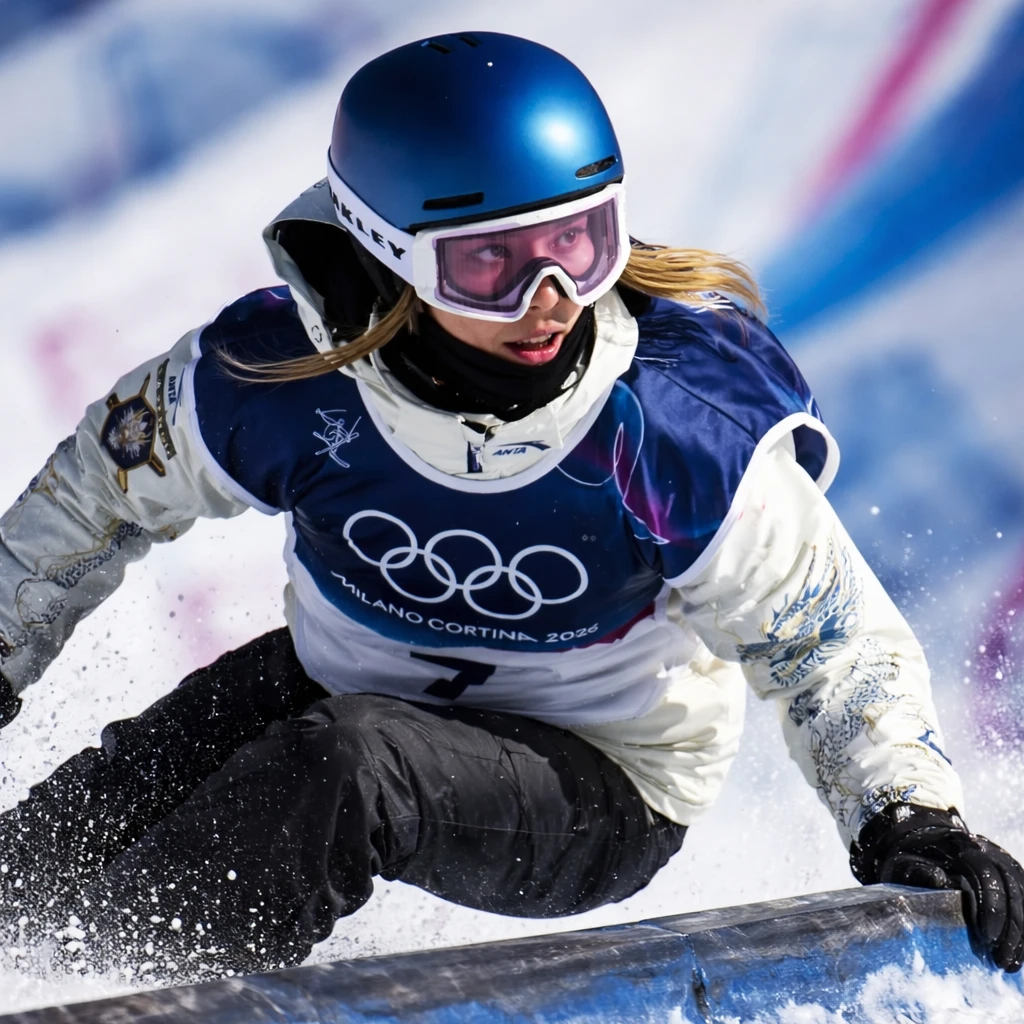

In Livigno, Italy, Eileen Gu commenced her women's slopestyle qualifying round by skiing backwards out of the starting gate, executing a 270-degree spin onto the first rail. However, she failed to maintain control and fell onto the snow immediately afterward. That initial mishap put her in jeopardy of elimination and created intense pressure as she prepared for her second and final qualifying run.
For the hour following her fall, Gu was intensely focused, repeatedly reminding herself that her Olympic aspirations depended on this moment. She described her emotional journey following the fall as moving through "five stages of grief," ranging from confusion and despair to ultimately entering a flow state of composure and confidence.
The fall happened within the first six seconds on a rails section that proved more challenging than anticipated, especially on the larger-than-usual first rail. Gu landed at an awkward angle and consequently slid into the snow, earning a score of just 1.26 out of 100, a mark far below expectations.
Her mother, Yan, concerned about potential physical factors, ensured Gu was well-nourished before the second run. Gu then retreated mentally, digging deep to regain focus and remind herself of the dedication and obsession she has with skiing. This mental reset was essential to overcoming the stress and restoring belief in her abilities ahead of the decisive second run.
On her second attempt, Gu exhibited remarkable composure and mastery, clearing the challenging rail section she had previously fallen on and completing the course with technical prowess. She achieved a score of 75.30, which secured her second place among 23 competitors vying for 12 spots in the final round scheduled for Monday.
Swiss skier Mathilde Gremaud obtained the top qualifying score, having executed a near-flawless first run. Gremaud is noted as the reigning Olympic champion, and her presence represents the primary hurdle between Gu and an unprecedented third gold medal across multiple events.
The course's difficult rails section, featuring unusually large rails and shorter distances between certain elements, posed significant challenges. Gu had been revising her rails routine ahead of the Milan Cortina Games and had never before attempted the initial trick in contest conditions, partly explaining the early fall. However, her second-run success confirmed her exceptional capability to perform complex spins in multiple directions off these features.
Gu expressed that watching footage of her first run made her realize she appeared uncertain and fragile, a state she was determined to overcome by reaffirming her identity and confidence in her skills.
In men's qualifying, American skier Alex Hall, the defending Olympic champion, qualified in eighth place. Two other American men qualified as well: Konnor Ralph and Mac Forehand. Forehand shared a similar experience to Gu, falling in his first run but advancing on a successful second run, which earned him sixth place. Norway’s Birk Ruud posted the best combined qualifying score after two runs.
Overall, the women's qualifying round at Livigno Snow Park was marked by unexpectedly high difficulty, dramatic moments, and showcased the athletes' mental toughness and technical expertise as they contend for Olympic medals in a demanding event.