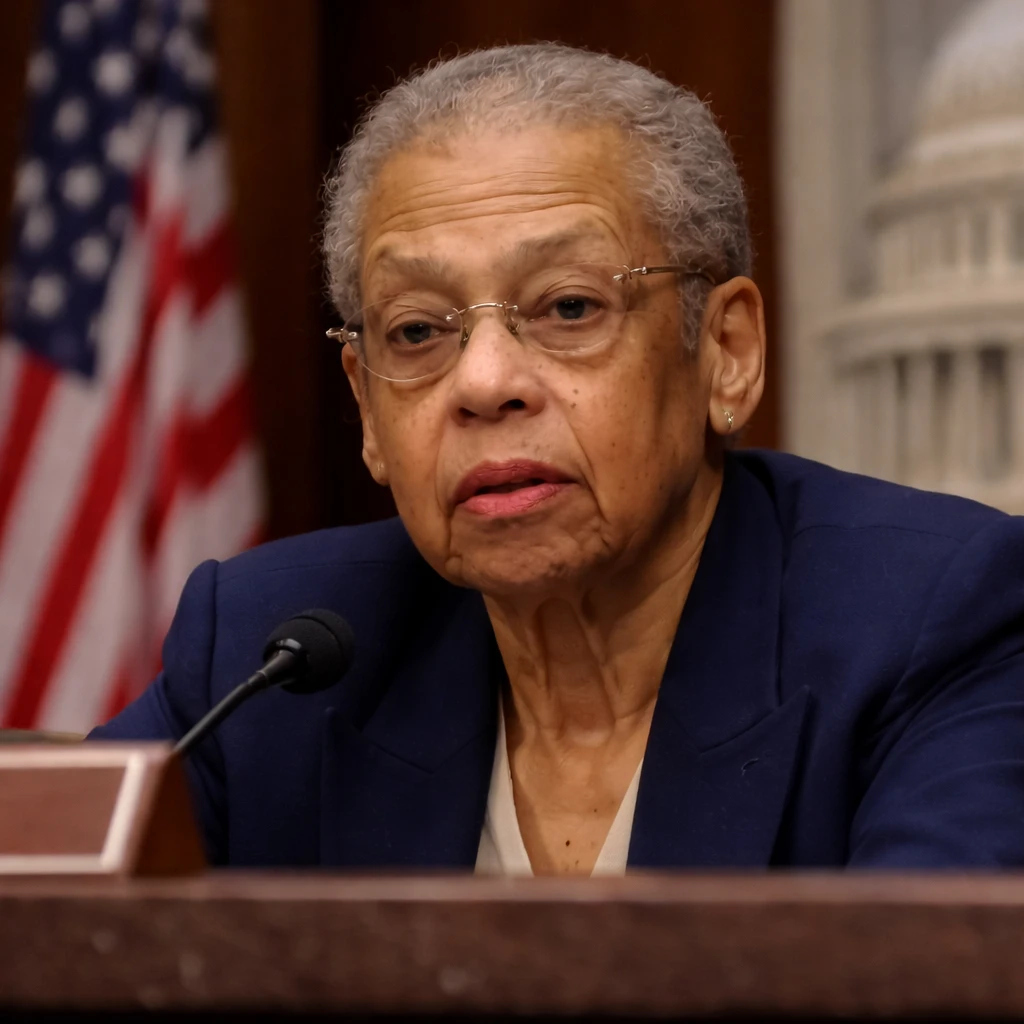

Eleanor Holmes Norton, an 18-term delegate representing the District of Columbia in the U.S. Congress and a prominent figure in the Civil Rights Movement, has taken the formal steps to halt her campaign for another term. At 88 years old, Norton is poised to conclude a public service career spanning several decades.
Since 1991, Norton has been the exclusive congressional voice for the residents of the nation's capital, a role in which she has been both an advocate and a symbol of persistent effort toward equality. However, her tenure has recently come under scrutiny amid increased federal intervention in Washington, DC, particularly following actions taken by the previous administration.
Muriel Bowser, the District's mayor, publicly acknowledged Norton's impending retirement, praising her as an unwavering defender of city interests on Capitol Hill. On social media, Bowser characterized Norton’s legacy as integral to the city’s relentless pursuit of equal representation.
Norton’s electoral campaign officially filed termination documents with the Federal Election Commission this past Sunday. To date, her office has not released an official announcement detailing her future plans.
The closure of Norton's campaign has sparked anticipation of a contest within the city's Democratic primary to fill her seat, given the District's strong Democratic leanings. Several local political figures have already declared their intent to run for the position.
Recognized as a fixture in Washington politics and the oldest member of Congress, Norton’s career is noted for close ties with civil rights leaders such as Medgar Evers. She has been contemporaneous with other notable congressional Democrats including Jim Clyburn, John Conyers, and John Lewis.
In recent months, mounting calls for her to step down have arisen amid concerns from both residents and local officials regarding her capability to effectively champion the city amid aggressive measures enacted by the Republican administration. Federal actions included the federalization of the city’s police force, deployment of National Guard troops from multiple states throughout the capital's streets, and an increased presence of Department of Homeland Security agents in local neighborhoods. These moves sparked community backlash and legal challenges led by the District’s attorney general.
Norton’s exit occurs alongside a broader trend of congressional turnover, with an unprecedented number of incumbent lawmakers choosing to retire or seek other offices. Currently, over 10% of House members are not standing for reelection this cycle.
Throughout her tenure, Norton has championed the interests of the District despite lacking a vote on the House floor. Her advocacy extended to campaigns for D.C. statehood and labor protections for federal employees residing in the region. Notably, she achieved bipartisan support for legislation enabling district residents to access in-state tuition rates nationwide and financial aid at private universities.
During the 1990s, Norton played an instrumental role in resolving the District's fiscal crisis by negotiating the transfer of unfunded pension liabilities to the federal government, in exchange for fiscal policy reforms. She also led efforts in securing House approval for D.C. statehood bills on two occasions.
The breadth of Norton’s life and career reflects the city’s turbulent and transformative history. Raised in Washington and part of Dunbar High School’s last segregated class, she pursued higher education at Antioch College and spent time both at Yale Law School and participating in the 1963 Freedom Summer civil rights campaign in Mississippi. Her association with Medgar Evers was personal and poignant, as she was with him on the day he was assassinated.
Norton also contributed to organizing the 1963 March on Washington and made history as the first woman to head the Equal Employment Opportunity Commission. Her initial congressional run coincided with her predecessor’s departure to pursue the mayoralty.