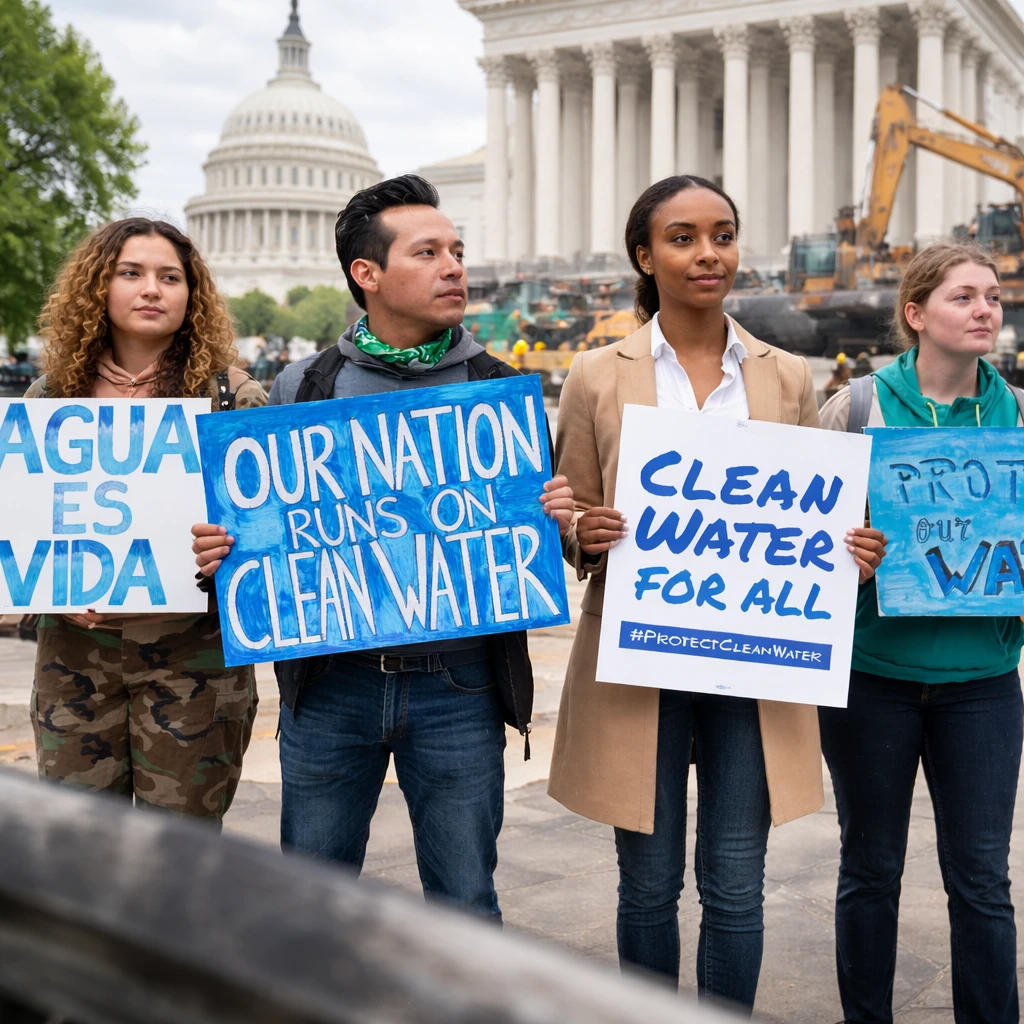

In a recent development, the Environmental Protection Agency (EPA) announced a proposal intended to limit the influence states and federally recognized Native American tribes have via the Clean Water Act in blocking or delaying significant federally authorized infrastructure ventures such as natural gas pipelines. This action represents a continuation of regulatory shifts that align with previous federal government efforts to expedite the construction of fossil fuel infrastructure and large-scale data centers.
The EPA explained that the proposed adjustments to the review process for water quality assessments under federal projects would permit states and tribes to continue protecting their environmental interests while aiming to curb what it deems unnecessary procedural delays. Historically, control over the extent of state authority under the Clean Water Act has fluctuated between administrations, with the Trump administration initially imposing restrictions, the Biden administration expanding state and tribal oversight, and now a renewed effort to tighten these powers.
Jess Kramer, the EPA's assistant administrator for water, highlighted that the intended rule change would foster greater clarity, efficiency, and predictability for certifying authorities and the regulated parties, ensuring states and tribes comply with the statutory framework of Section 401 of the Clean Water Act.
Under the current federal statute, states and certain authorized tribes are empowered to assess how projects like pipelines, dams, and related infrastructures might influence water quality within their jurisdiction. Since these projects often interact with waterways — crossing rivers, streams, and wetlands — state-level environmental review is crucial and has historically resulted in permit delays or denials to safeguard these resources. For instance, in 2017, New York state regulators declined to issue a permit for a pipeline project on grounds that protection measures for numerous streams and wetlands were inadequate.
The new proposal seeks to reinstitute policies similar to those implemented during the Trump administration's initial term. These policies emphasize a clear delineation of the documentation applicants must present to state agencies, enforce firm deadlines for administrative reviews, and mandate comprehensive justification from states when imposing conditions on project approvals or rejecting permits outright.
Conversely, in 2023, the Biden administration broadened state and tribal authority by endorsing a more comprehensive approach to water quality evaluations. Advocates praised this move for empowering environmental protection beyond just direct pollutant discharges to encompass broader hydrological impacts associated with infrastructure developments. The agency’s stance then emphasized a holistic review of projects’ consequences on water quality systems.
However, the current regulatory revision aims to narrow this scope, concentrating evaluations primarily on direct discharges to federally overseen waters. This recalibration comes amid a backdrop of reduced federal jurisdiction over waters following the Supreme Court's 2023 ruling in Sackett v. EPA, which constrained federal regulatory reach over millions of acres of wetlands.
Critics, including environmental experts like Moneen Nasmith from Earthjustice, contend that states and tribes have acted appropriately within their legal mandate by reviewing impacts on water quality, fishing, and drinking water protections. They argue the EPA's proposal is addressing a problem that environmental oversight authorities do not substantiate and caution that the change could undercut genuine environmental protections inherent in the Clean Water Act’s framework.
Under the leadership of EPA Administrator Lee Zeldin, the agency has broadened its focus area to include economic goals such as reinvigorating America's fossil fuel sector and positioning the country as a leader in artificial intelligence development. Given the rising demand for new data centers that may require state water quality permits, the EPA stresses the need for regulatory certainty to facilitate timely project approvals.
Kramer stressed that the refinement of rules governing Section 401 reviews would be critical for enabling such projects to proceed with predictable and efficient processes. The EPA has opened a public comment period on the proposal, with a final rule anticipated by spring.