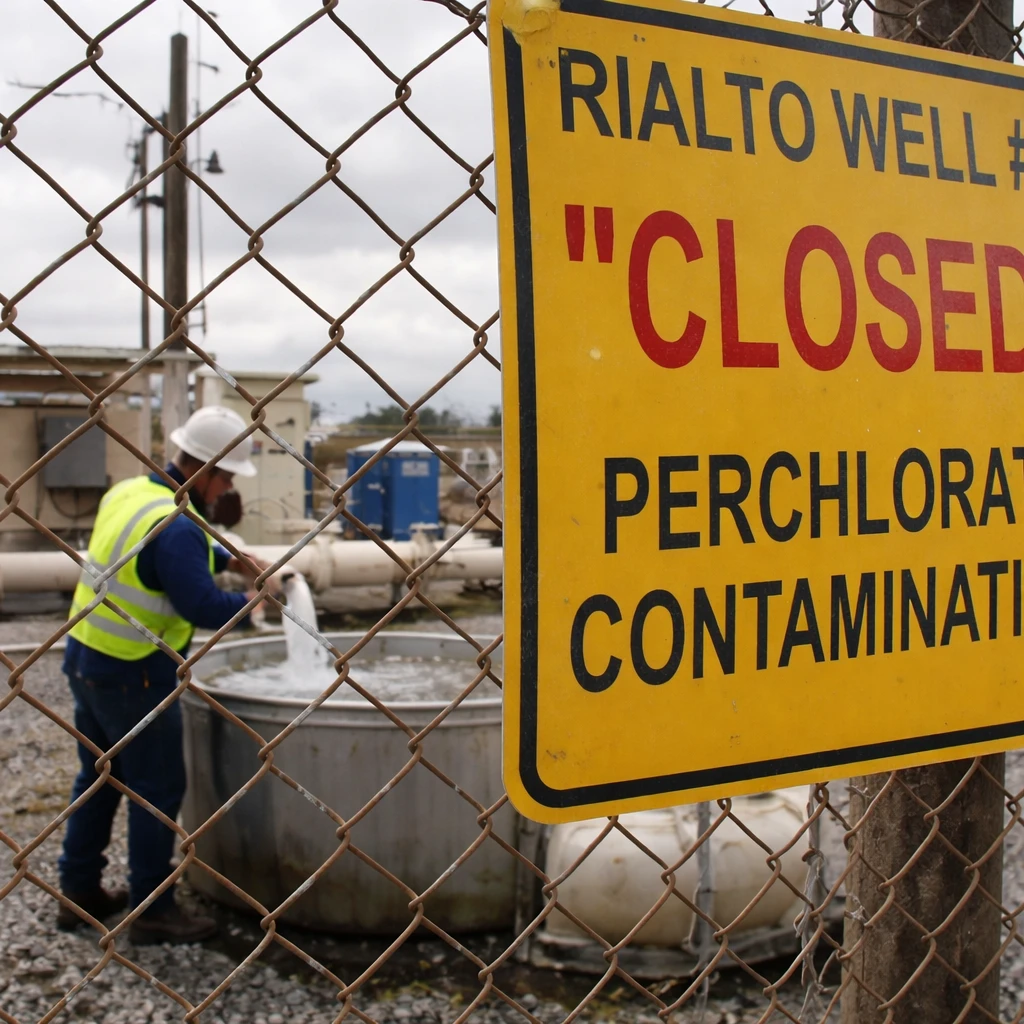

The Environmental Protection Agency (EPA) has declared its intention to propose a contaminant level for perchlorate in drinking water following a federal court’s direction. Perchlorate, a chemical component found in rockets, fireworks, and other explosive materials, poses distinct risks, particularly to the developing thyroid glands of infants, potentially leading to cognitive impairments and behavioral issues.
In its announcement on Monday, the EPA outlined plans to seek public input on the stringency of the prospective limit and to mandate water utilities to test for perchlorate presence. The agency emphasized that while it is obligated to act due to the court order, its analysis indicates that the overall public health advantages from the regulation will be limited, especially when weighed against the anticipated administrative and compliance expenditures.
Highlighting the scope of regulatory impact, the EPA noted that approximately 66,000 water systems would fall under the new rule. However, it projected that only a tiny fraction would encounter perchlorate levels exceeding the proposed thresholds, resulting in significant compliance costs for many systems without corresponding health improvements.
Perchlorate contamination has historically stemmed from its use in defense, aerospace, and manufacturing industries, where it has leached into groundwater, notably in the Southwestern United States and parts of the East Coast. Naturally occurring perchlorate also contributes to environmental levels, complicating the issue.
The health concerns linked to perchlorate revolve around interference with thyroid hormone production. This disruption can adversely affect brain development in infants, leading to lower IQ scores and increased behavioral problems during childhood.
In 2011, the EPA determined that perchlorate’s presence in drinking water posed a sufficient threat to warrant regulation under the Safe Drinking Water Act. That declaration legally required the EPA to propose and finalize drinking water standards within defined timelines. However, the agency struggled to formalize regulations in the following years due to evolving scientific assessments and legal challenges.
Efforts to establish limits have faced hurdles. For example, during the earlier Trump administration, the EPA proposed a perchlorate standard that was more lenient than restrictions adopted by several states, igniting opposition from environmental groups concerned about the potential impact on children’s neurodevelopment. Subsequently, in 2020, the EPA reversed course, asserting that perchlorate did not necessitate regulation due to updated analyses indicating lower risk and less frequent contamination.
This reversal was contested by the Natural Resources Defense Council (NRDC), which argued that perchlorate remains a significant public health threat. Following this dispute, a federal appeals court mandated the EPA to fulfill its obligation to propose regulatory limits. The EPA’s current proposal includes a request for input on concentration limits of 20, 40, and 80 parts per billion, alongside other regulatory details.
The EPA projects that perchlorate concentrations above the proposed limits will be detected in less than one-tenth of one percent of water systems subject to regulation. Officials acknowledge the establishment of a drinking water standard will support the minority of affected communities but may impose unwarranted costs on the vast majority of water utilities.
Environmental advocates underscore the public's right to knowledge about contaminants such as rocket fuel derivatives in drinking water. Sarah Fort, a senior attorney at NRDC, remarked that while the agency’s move is reluctant, it represents progress towards greater transparency and safety.
The current EPA administration, led by Lee Zeldin, has promoted expansive deregulation in environmental policies and fostered fossil fuel development. Yet, in the context of drinking water safety, it has adopted a more measured approach. Notably, the EPA has retained stringent limits on certain persistent 'forever chemicals' introduced during the preceding administration while extending compliance timelines for water utilities and removing limits on other types of these substances.