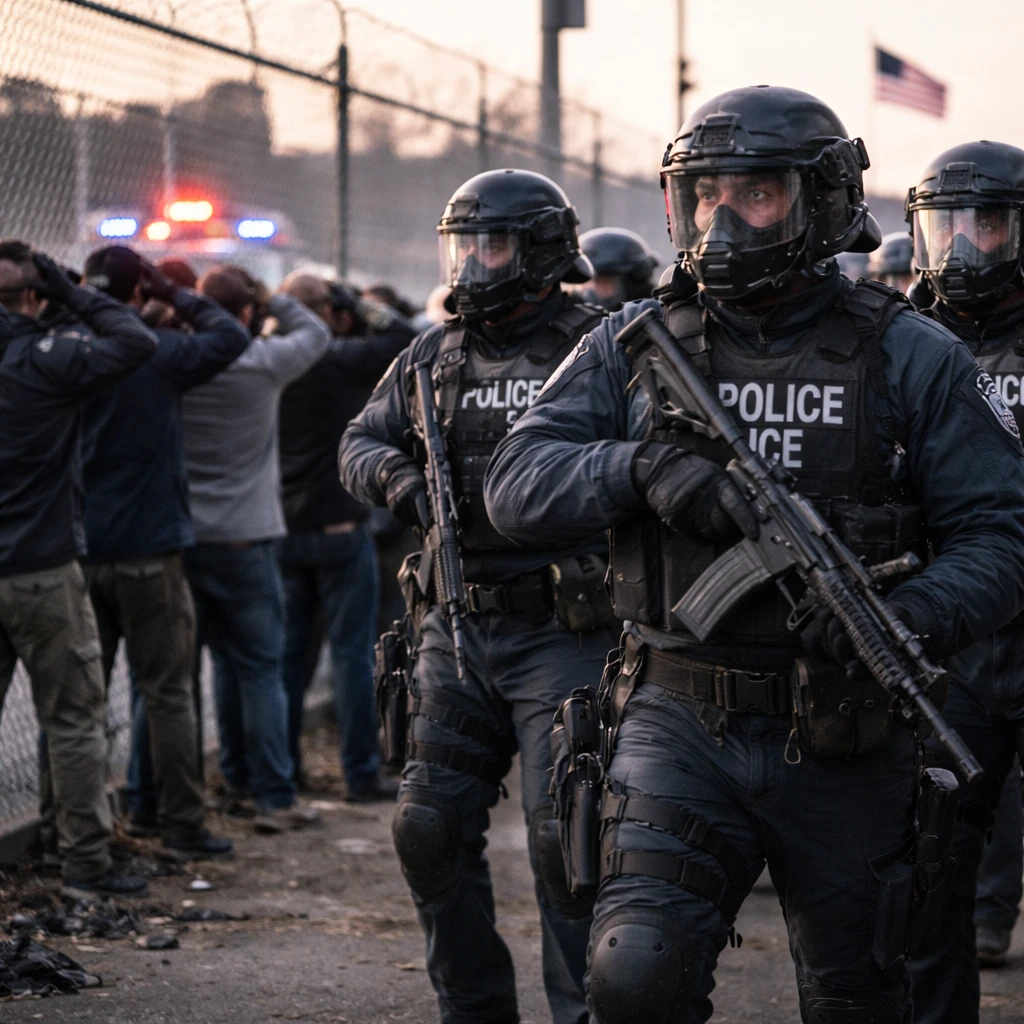

The expansion of Immigration and Customs Enforcement (ICE) in the United States has been notably accelerated by the substantial financial backing enshrined in the recent tax and spending bill passed by the Republican-led Congress. This legislation has provided the resources necessary for unprecedented hiring bonuses reaching as high as $50,000 and helped swell ICE's ranks to approximately 22,000 officers, forming a national force larger than many local police departments.
President Donald Trump has emphasized this expansion as part of his commitment to conducting the largest deportation operation in American history. However, this ambitious goal relies heavily on the infusion of billions of dollars made available through the sweeping tax cut and spending legislation, which effectively "supercharges" ICE capacity, according to experts studying federal budget policy.
Bobby Kogan, senior director of federal budget policy at the Center for American Progress and a former Biden administration budget adviser, remarked that the scale of ICE’s expansion is unprecedented, with current operations far exceeding anything previously witnessed in the country.
Transformation Into a National Law Enforcement Entity
Entering the second year of his second presidential term, Donald Trump's immigration agenda has shifted towards establishing ICE as a prominent nationwide law enforcement body. This transformation involves billions of additional taxpayer dollars dedicated to immigration enforcement and removal efforts, significantly increasing the federal footprint across cities nationwide.
The killing of Renee Good in Minneapolis has drawn attention to this growing federalized force, inciting widespread protests against the heavily militarized enforcement officers conducting aggressive operations such as door-to-door immigrant detentions. In response to the escalating demonstrations, the administration has threatened to deploy the Insurrection Act and even put 1,500 U.S. Army soldiers on standby, further intensifying the national debate.
Public Reaction and Political Dynamics
Despite aggressive enforcement actions, President Trump’s public approval concerning immigration has notably declined since his tenure began, according to AP-NORC polling data. Elected officials such as Representative Nydia M. Velázquez from New York criticize the current enforcement approach, highlighting public discontent with the scope and nature of recent ICE operations.
Decreased Border Crossings and Expanding Enforcement Footprint
While illegal border crossings at the U.S.-Mexico frontier have dropped to historic lows, reflecting a significant policy shift from the previous administration's more lenient handling of migrants, enforcement has increasingly moved into American cities. Numerous agencies—ranging from federal to local police and sheriff's departments—now collaborate under contracts with the Department of Homeland Security to participate in immigration operations across communities, particularly in large urban centers such as Los Angeles and Chicago.
These operations often feature armed, masked officers executing high-intensity tactics, including breaking car windows, forcibly removing individuals from vehicles, and conducting detentions under circumstances that have drawn significant media attention and public concern.
Political Leadership and Legal Framework
House Speaker Mike Johnson has publicly urged Democrats to cease efforts opposing these enforcement actions, emphasizing the necessity for federal law enforcement to proceed unhindered. Homeland Security Secretary Kristi Noem has defended the actions as lawful and focused on removing the "worst of the worst" immigrants. Nonetheless, reports indicate that detentions have not been limited to non-citizens with criminal records but have included some U.S. citizens, complicating the narrative around enforcement priorities.
Further complicating matters, a Supreme Court decision lifted previous restrictions on the use of race in immigration stops, while public comments by President Trump have reignited controversy regarding attitudes toward certain immigrant groups.
Ambitious Detention and Deportation Goals
The administration has set a target of approximately 100,000 daily detentions—triple the prior average—and aims for one million deportations annually. This aggressive objective represents a massive increase in immigration enforcement activities compared to past years.
Legislative and Fiscal Momentum Sustained Despite Opposition
The GOP-controlled Congress continues to maintain strong financial support for immigration enforcement through legislation effectively locked in through 2029. The so-called "big, beautiful bill" has nearly doubled annual Homeland Security appropriations, adding roughly $170 billion over four years, of which ICE stands to receive $30 billion for operations and an additional $45 billion for detention infrastructure.
Kathleen Bush-Joseph, a policy analyst specializing in migration, compares this level of spending to military budgets, asserting that the Trump administration is effectively militarizing immigration enforcement. Given the entrenched political support, even significant opposition from Democratic lawmakers—including proposals to impose operational limits and increase enforcement transparency—faces daunting obstacles.
Operational Outcomes and Budget Utilization
Recent data indicate that Homeland Security has already obligated an estimated $58 billion from this enhanced funding, with $37 billion allocated to border wall construction. Recruitment efforts have surpassed goals, with 12,000 new ICE hires doubling the force within months to 22,000 agents nationwide.
Assistant Secretary Tricia McLaughlin has touted these developments as major achievements enabled by the recent legislation, citing 600,000 individuals arrested and deported, alongside nearly two million voluntary departures since President Trump's second term commenced in early 2025.