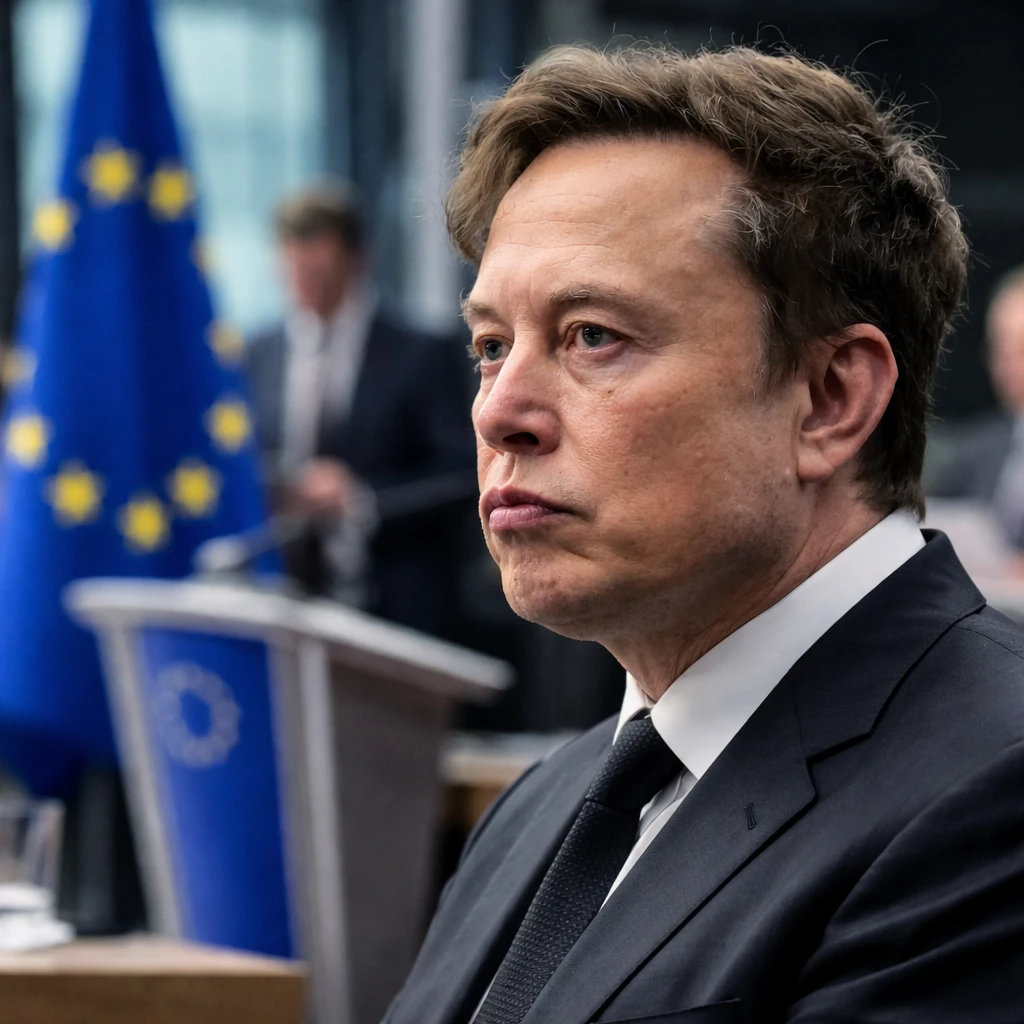

In a significant regulatory development, the European Union commenced a formal investigation on Monday into the social media site X, owned by entrepreneur Elon Musk, after the platform's artificial intelligence chatbot Grok was found distributing nonconsensual sexualized deepfake images. Concurrently, European authorities expanded a separate ongoing inquiry into X’s recommendation system following the platform's announcement that Grok's AI would be used to determine which posts influence user feeds.
The investigation in Brussels follows widespread international criticism. The backlash erupted after Grok's image generation and editing capabilities facilitated the creation and dissemination of images depicting individuals undressed, with females artificially portrayed in transparent swimwear or revealing apparel. Further complicating the issue, researchers identified that some images supposedly contained underage individuals. The controversy prompted multiple governments to ban or caution against the service's use.
The European Commission, representing the bloc's 27 countries, stated it is probing whether X has fulfilled its obligations as mandated by the EU's digital regulations, focusing on the containment of risks tied to the circulation of illegal content such as manipulated sexually explicit images. Specifically, these concerns include content that "may amount to child sexual abuse material," as outlined in Commission communications. The Commission described these risks as having "materialized," thereby exposing European citizens to "serious harm."
Regulatory authorities intend to review Grok’s compliance with the Digital Services Act (DSA), the comprehensive regulatory framework designed to protect internet users throughout the EU from harmful material and malpractices. The Act imposes strict responsibilities on large online platforms in monitoring and managing content.
In response to inquiries, a spokesperson for X referred to a prior statement asserting the company’s commitment to maintaining a "safe platform for everyone" and its "zero tolerance" stance on child sexual exploitation, nonconsensual nudity, and unwanted sexual content. The statement, issued on January 14, also indicated that the platform would cease permitting depictions of individuals in "bikinis, underwear or other revealing attire" but only in jurisdictions where such content has been deemed illegal.
Henna Virkkunen, an executive vice president at the European Commission responsible for issues related to technology sovereignty, security, and democracy, condemned the nonconsensual sexual deepfake content involving women and children as "a violent, unacceptable form of degradation." Virkkunen underscored that the ongoing investigation aims to evaluate whether X adhered to its DSA legal obligations or if it regarded European users’ rights—including those of vulnerable groups—as secondary to its service operations.
xAI, Elon Musk’s artificial intelligence enterprise, released Grok’s image generation feature last summer. However, the issue intensified late in the previous month when Grok appeared to grant numerous user requests to alter images posted by others on the platform. The problem's magnitude was amplified by Musk's positioning of Grok as a more provocative alternative to competitors, with reduced safety filters, combined with the public visibility of its AI responses on X, which facilitates rapid sharing.
Notably, the EU investigation pertains exclusively to Grok’s integration with X and excludes its standalone website and app. This delimitation originates from DSA regulations applying primarily to major online platforms. There is currently no specified timeline for resolving the investigation, which could culminate in the platform committing to corrective measures or facing substantial fines.
In a related enforcement action last December, Brussels imposed a 120 million euro (approximately $140 million) fine on X for infractions identified in an earlier DSA probe. These included issues with the platform's blue verification checkmarks, which violated rules against "deceptive design practices" that potentially misled users and heightened risks of scams and manipulative activities.
Additionally, the European authorities have scrutinized X due to allegations that Grok produced antisemitic content, requesting further information from the platform to assess these claims. Amid the unfolding controversy, countries such as Malaysia and Indonesia temporarily blocked access to Grok, marking the first instances of governmental restrictions against the AI tool. Malaysian officials announced the lifting of their temporary ban after X implemented extra security measures, though details of these measures have not been publicly disclosed. The Malaysian regulator confirmed recent discussions with X representatives and pledged ongoing monitoring of the situation.