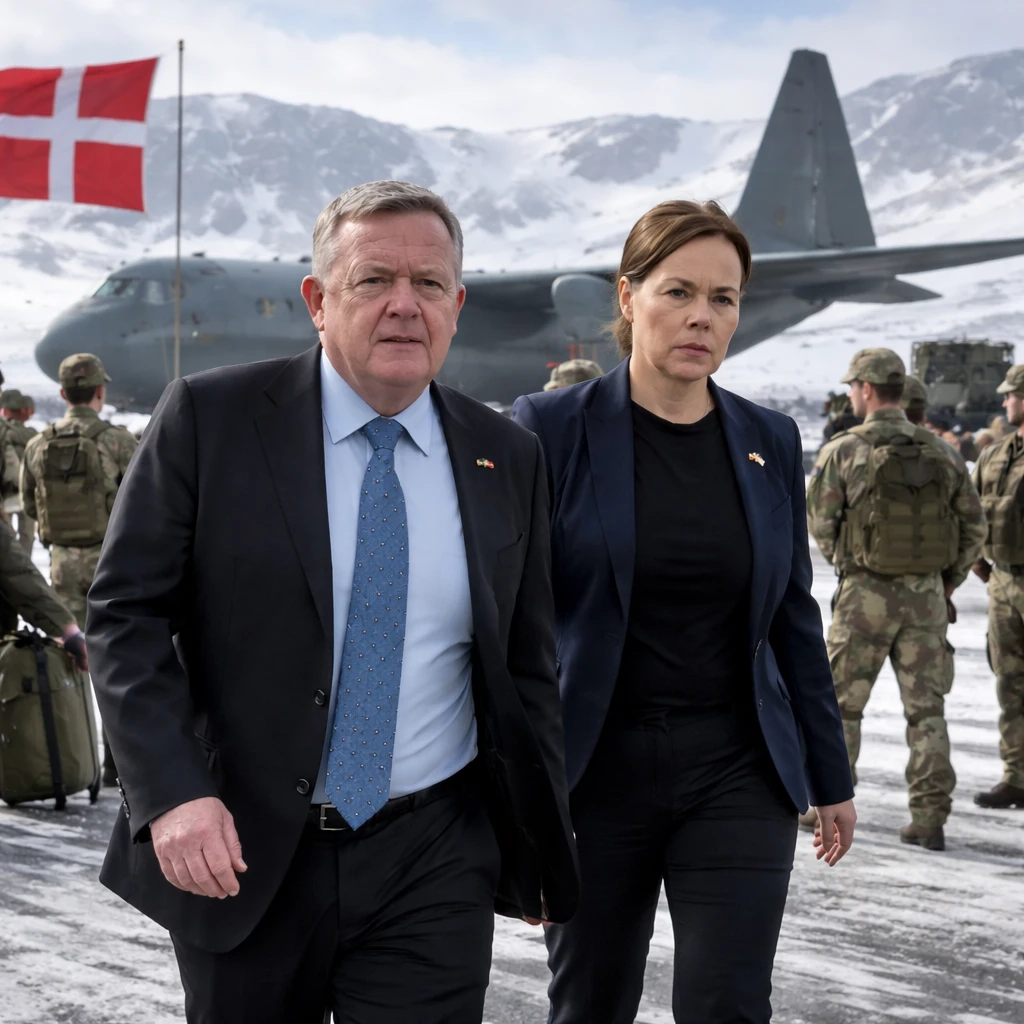
Military personnel from multiple European countries have been arriving in Greenland this week as part of a coordinated effort to support Denmark amid ongoing discussions concerning Arctic sovereignty. This buildup occurred alongside diplomatic engagements involving Denmark, Greenland, and the United States, which disclosed notable differences over the island's strategic future.
On Wednesday, Denmark declared plans to expand its military footprint in Greenland while Danish and Greenlandic foreign ministers readied for talks with representatives from the White House. In response, allied European countries including France, Germany, the United Kingdom, Norway, and Sweden either dispatched troops or committed to forthcoming deployments, signaling unity and reinforcing that NATO alliance suffices to maintain Arctic security against increasing Russian and Chinese activities.
French President Emmanuel Macron announced that French forces had already commenced arriving, with approximately 15 soldiers from a mountain infantry unit stationed in Nuuk to engage in military exercises. Similarly, Germany prepared to send a 13-person reconnaissance team to Greenland, with the Danish Defense Minister Troels Lund Poulsen noting intentions to establish a lasting Danish military presence supplemented by rotating forces from multiple NATO allies.
Diplomatic interactions in Washington at the White House featured Danish Foreign Minister Lars Løkke Rasmussen alongside Greenlandic Foreign Minister Vivian Motzfeldt. Despite productive engagement with Vice President JD Vance and Secretary of State Marco Rubio, Rasmussen acknowledged a "fundamental disagreement" with U.S. President Donald Trump concerning Greenland’s status. Rasmussen emphasized Trump's continued interest in exerting U.S. control over Greenland, though officials committed to sustaining high-level dialogue over the coming weeks.
On the ground in Greenland's capital, residents expressed a mixture of apprehension and cautious optimism. Greenland's Prime Minister Jens-Frederik Nielsen welcomed the diplomatic talks, affirming Greenland's steadfast position against any transfer of sovereignty to the United States, stating, "Greenland is not for sale," and underlining the islanders' desire to remain independent of U.S. governance.
Local individuals conveyed relief over European military support, viewing it as a protective measure aligned with Greenland's ties to Denmark and the NATO alliance rather than as a counteraction against the United States specifically. Many acknowledged that the disputes stem more from Greenland's untapped natural resources—including oil and minerals—than traditional national security concerns.
Danish Defense Minister Poulsen highlighted the necessity of increased military activity in and around Greenland amid an unpredictable security environment. He reported that aircraft, naval vessels, and soldiers, including those from NATO members, would augment the military presence to safeguard the Arctic region.
However, NATO agencies deferred questions regarding coordination and strategic intentions to Danish authorities while formally studying measures to enhance Arctic security. European military officials have not publicly framed troop insertions as deterrents to potential U.S. actions.
The Russian embassy in Brussels criticized these military deployments as provocative actions driven by ‘‘phantom threats’’ manufactured by Western actors, characterizing them as components of an anti-Russian and anti-Chinese agenda. The embassy reiterated Russia’s advocacy for the Arctic to remain a zone of peace, dialogue, and cooperative equality.
In response to ongoing disagreements, Rasmussen disclosed the establishment of a working group comprising Danish and American officials to seek resolution mechanisms. The group aims to reconcile U.S. security concerns while respecting Denmark's established boundaries on sovereignty matters.
Following the Washington talks, Rasmussen described the creation of this forum as a positive, albeit preliminary, development indicating progress. Nonetheless, concerns persist that dialogue alone does not alleviate all risks surrounding the Greenland question.
Greenlandic Member of Parliament Aki-Matilda Høegh-Dam conveyed the islanders' recognition of their critical role amidst shifts in international governance frameworks. She expressed hopes that military activities would avoid areas proximate to schools and kindergartens to minimize disruption.
Copenhagen resident Line McGee expressed guarded optimism, acknowledging there had been some diplomatic advancements without entirely dismissing the enduring threat.
In brief remarks, President Trump stated uncertainty about outcomes but anticipated a constructive resolution over time.