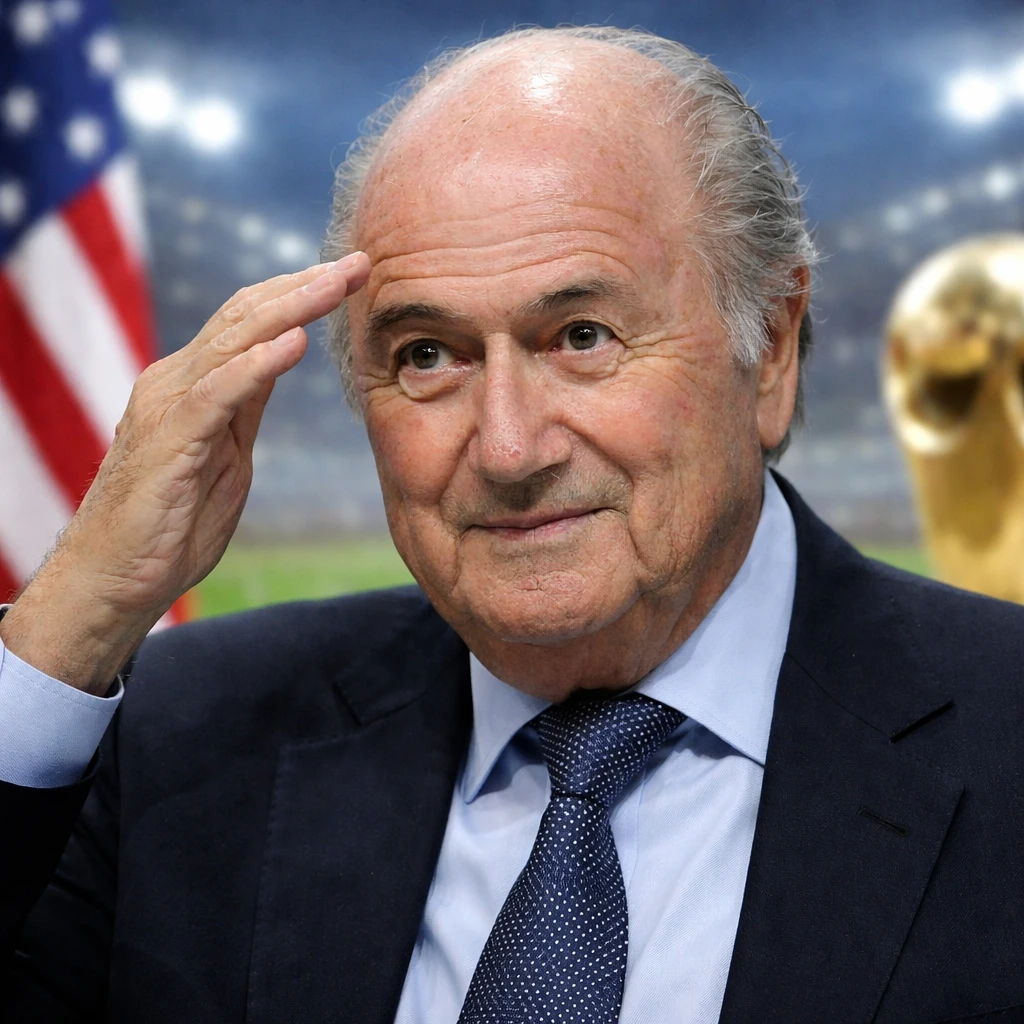

Ex-FIFA Chief Sepp Blatter Endorses Call to Boycott US-Hosted World Cup
January 26, 2026
News & Politics

Ex-FIFA Chief Sepp Blatter Endorses Call to Boycott US-Hosted World Cup

Concerns Arise Over Political Climate and Travel Restrictions Affecting Fan Attendance

Summary

Sepp Blatter, the former president of FIFA, has publicly supported a proposed boycott by fans of the upcoming World Cup matches in the United States, citing disapproval of the political actions of President Donald Trump's administration both domestically and internationally. This stance follows similar concerns raised by other soccer officials and experts regarding the suitability of the US as a host nation, especially amid recent travel bans impacting fans from several qualifying countries.

Key Points

Sepp Blatter has publicly supported a fan-led boycott of the World Cup matches in the United States due to dissatisfaction with the Trump administration's policies.
Mark Pieth, a noted anti-corruption expert and former FIFA oversight chair, has advised fans to avoid attending matches in the US amidst concerns about treatment and restrictions.
Travel bans imposed by the Trump administration threaten the ability of fans from several qualifying nations, including Senegal, Ivory Coast, Iran, and Haiti, to attend the World Cup in the US, complicating the event's global participation.

Former FIFA president Sepp Blatter expressed his support on Monday for a proposed boycott by fans of the World Cup games scheduled to take place in the United States. His endorsement was rooted in criticism of President Donald Trump's administration and its policies, which Blatter and others believe undermine the appropriateness of the US as a host for the global soccer tournament.

Blatter's position aligns with comments made last week by Mark Pieth, an attorney specializing in white-collar crime and an authority on anti-corruption measures. Pieth, who formerly led the Independent Governance Committee overseeing FIFA reforms, voiced his concerns in an interview with the Swiss newspaper Der Bund. In that interview, Pieth advised fans to avoid attending matches in the United States, suggesting they would have a better experience watching games on television instead. He also warned that fans who failed to comply with official expectations risked being deported promptly.

On the social platform X, Blatter quoted Pieth's remarks and added, “I think Mark Pieth is right to question this World Cup,” underscoring his agreement with the call for a boycott. Blatter served as FIFA president from 1998 until his resignation in 2015 amidst a corruption probe that cast a shadow over the soccer governing body.

The upcoming World Cup, which runs from June 11 to July 19, is to be hosted jointly by the United States, Canada, and Mexico. Despite this collaborative hosting arrangement, international soccer figures have raised alarms about the US component due to the Trump administration’s foreign and domestic policies. Critics highlight several contentious issues, including the administration's expansive territorial ambitions concerning Greenland, restrictive travel bans, and aggressive immigration enforcement actions in US cities such as Minneapolis, which sparked protests.

Recently, Oke Göttlich, a vice president of the German soccer federation, publicly stated in an interview with the Hamburger Morgenpost that serious consideration should be given to boycotting the World Cup as a response to these concerns.

Concerns intensified two weeks ago when fan travel plans from Senegal and Ivory Coast, countries with strong soccer followings, were disrupted by new US government restrictions. The Trump administration implemented a ban citing "screening and vetting deficiencies" as justification, effectively barring supporters from these nations who do not already hold valid visas from attending matches. Similar travel bans affect fans from Iran and Haiti as well, both qualifying countries included under earlier iterations of the US travel restrictions.

These developments have sparked a wider debate within the international soccer community about the US's ability to host a tournament that reflects the sport's global and inclusive spirit. The political climate and immigration controls appear to be creating barriers not only for fans eager to support their national teams but also for the sport’s unifying tradition.

Risks
  • Potential reduction in ticket sales and attendance for World Cup matches held in the United States could impact revenues for event organizers and local economies reliant on tourism and hospitality.
  • Strict travel restrictions and political controversies may damage the reputation of the US as a host for major international sporting events, affecting future opportunities to host and broader international relations in sports.
  • Fan boycotts and disrupted attendance due to travel bans expose vulnerabilities in organizing global events amid geopolitical tensions, potentially leading to financial losses in related sectors such as airlines, merchandise, and media rights.
Disclosure
This report is based entirely on publicly available statements and interviews related to the World Cup hosting concerns and does not incorporate additional analysis or information beyond these sources.
Search Articles
Category
News & Politics

News & Politics

Related Articles
Partisan Divide Deepens as White House Excludes Democratic Governors from NGA Meeting

The longstanding bipartisan forum of the National Governors Association (NGA) is facing disruption a...

Commerce Secretary Lutnick Clarifies Epstein Island Lunch Amid Scrutiny Over Relationship

Commerce Secretary Howard Lutnick acknowledged having a family lunch with convicted sex offender Jef...

FDA Initiates Review of BHA Food Additive Safety

The U.S. Food and Drug Administration (FDA) has announced plans to conduct a comprehensive reassessm...

Using Fireplace Ashes in Your Garden: Benefits and Considerations

Amidst a notably cold winter leading to increased fireplace use, many homeowners are seeking sustain...