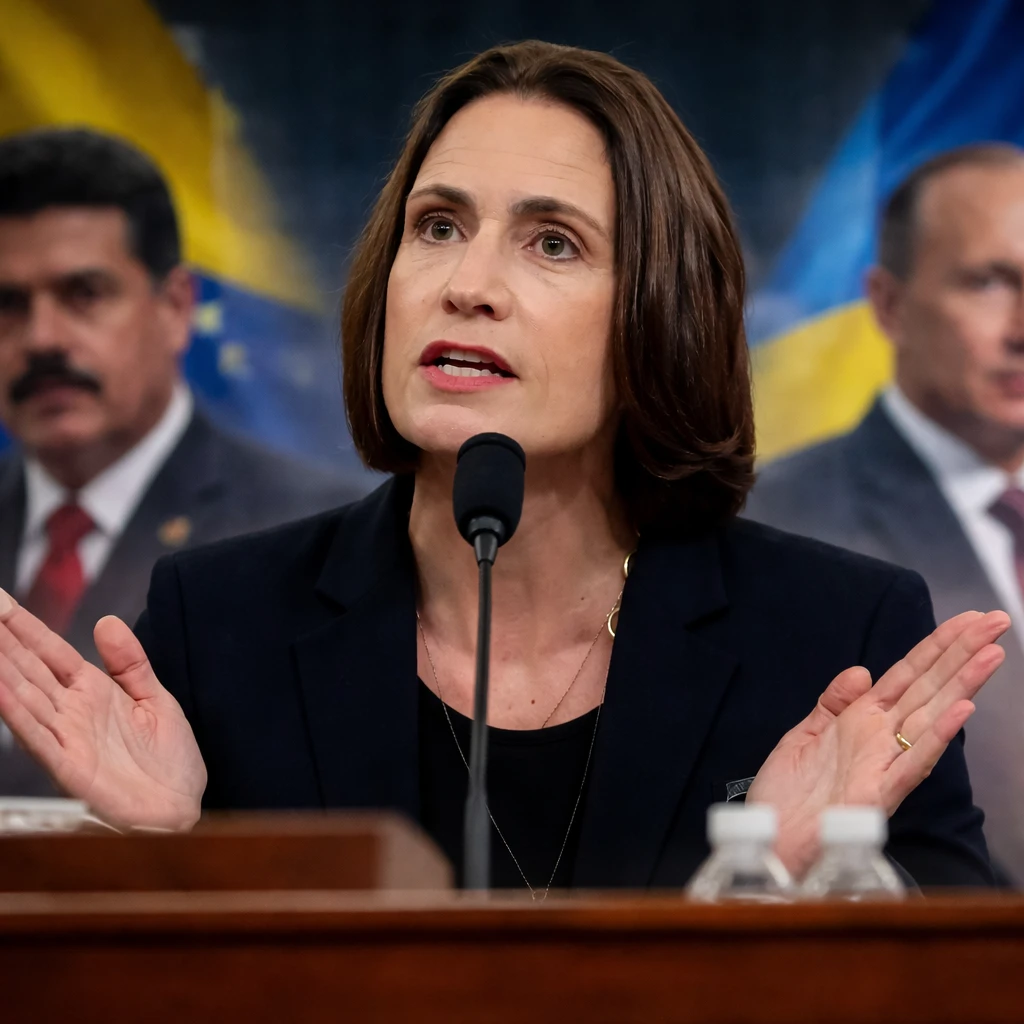

During 2019, high-ranking Russian representatives communicated to US officials that Moscow might be prepared to withdraw its backing from Venezuelan leader Nicolás Maduro in return for unrestricted US activities in Ukraine, according to Fiona Hill, who advised President Donald Trump at that time. Hill revealed these insights during a congressional hearing in 2019, referencing a notion the Russians described as a “very strange swap arrangement” linking Venezuela and Ukraine. This sequence of events gained renewed attention recently following the US clandestine operation targeting Maduro.
Hill observed that Russian media outlets propagated the idea referencing the Monroe Doctrine—a 19th century policy in which the US opposed European intervention in the Americas, reciprocally refraining from European affairs. This doctrine was cited by the Trump administration to rationalize the US intervention in Venezuela.
Although official Russian overtures remained informal, Anatoly Antonov, then Russia’s ambassador to the United States, conveyed through multiple suggestions that Russia was open to permitting American autonomy in Venezuelan matters, provided the US reciprocated regarding Russian interests in Europe. Hill clarified to The Associated Press this week that before a direct proposal was made, there were implicit suggestions hinting at a potential deal, which, at the time, did not spark US interest.
In April 2019, Trump tasked Hill, then his senior adviser on Russia and Europe, to travel to Moscow to communicate US skepticism regarding such an arrangement, emphasizing that the situations in Ukraine and Venezuela were unrelated. This stance aligned with the White House and allied governments’ position then, which recognized Venezuelan opposition figure Juan Guaidó as the country’s interim president.
The geopolitical context, however, has evolved significantly over seven years. Following the removal of Maduro from power, the US declared its intention to assert control over Venezuelan policy directly. Concurrently, Trump renewed provocative stances regarding territorial and military matters, including threats concerning Greenland—a Danish self-governing territory within NATO—and military intervention against Colombia for allegedly facilitating international cocaine trafficking.
Hill remarked that the Kremlin might welcome the idea of major powers like Russia, the United States, and China maintaining areas of dominant influence, interpreting it as validation of “might makes right.” She further argued that US intervention in Venezuela complicates efforts by Kyiv’s allies to denounce Russia’s actions in Ukraine as “illegitimate,” as the US itself has recently orchestrated a regime change on questionable grounds. While the Trump administration characterized its Venezuela operation as a law enforcement action asserting legality in Maduro’s capture, these developments highlight shifting norms in international conduct.
At present, the Russian Foreign Ministry has not provided an immediate response to Hill’s statements. President Vladimir Putin has remained silent on the US military action against Maduro; however, the Russian Foreign Ministry has issued condemnations categorizing US activity as “aggression.”