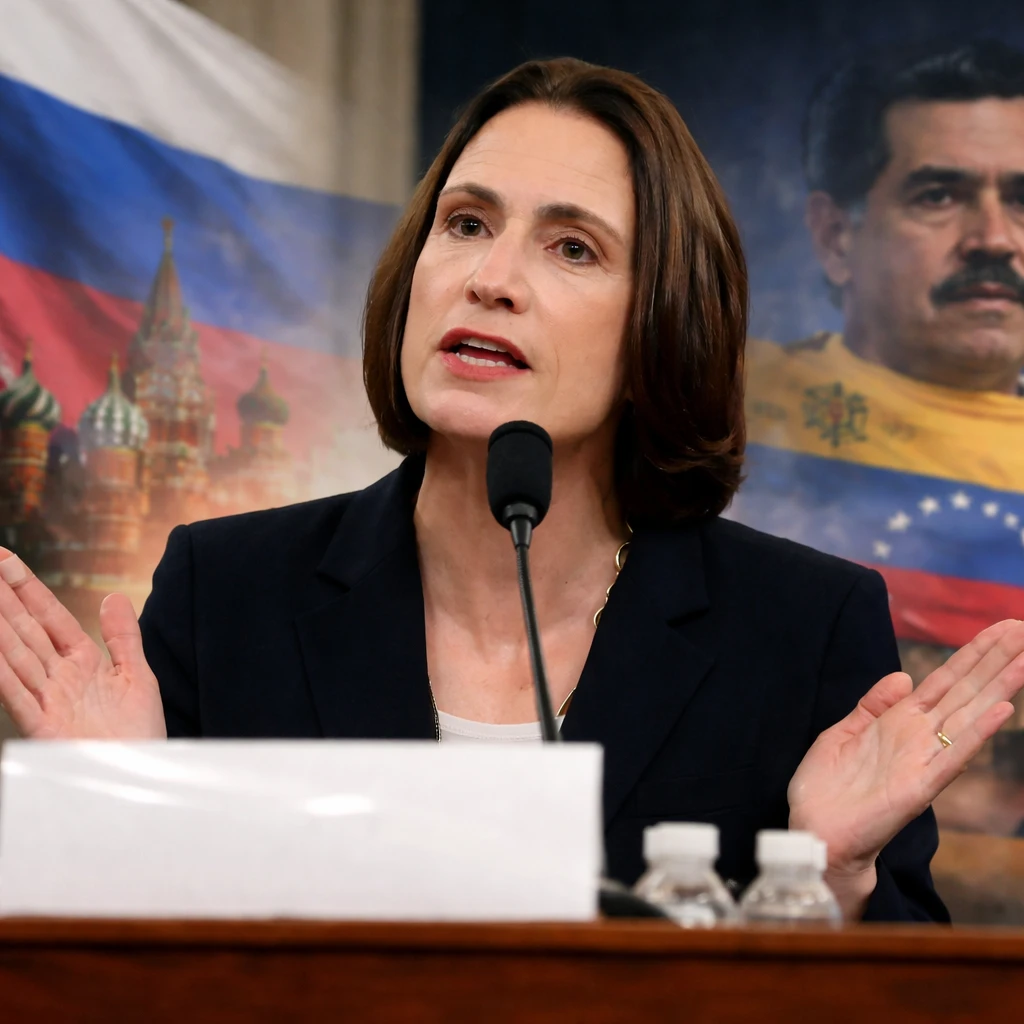
In 2019, Russian officials signaled to US representatives their readiness to retract support for the Venezuelan government led by Nicolás Maduro if the United States allowed Russia free rein in Ukraine, disclosed Fiona Hill, who served as a senior advisor on Russia and Europe to then-President Donald Trump.
During a Congressional hearing that year, Hill recounted that Russian proposals for a 'Venezuela for Ukraine exchange' surfaced repeatedly. These remarks have recently regained attention on social media following a US military operation to detain Maduro.
Hill explained that Russia amplified the notion through Russian media outlets, which invoked the Monroe Doctrine—a 19th-century policy opposing European interference in the Western Hemisphere while implicitly allowing exclusion from European affairs. The Trump administration had cited this doctrine to rationalize US intervention in Venezuela.
Although a formal proposal was never presented, Anatoly Antonov, then-Russian Ambassador to the United States, frequently hinted to Hill that Russia was amenable to the US pursuing its objectives in Venezuela if America reciprocated in Europe concerning Ukraine.
"The communication was subtle, with many hints and suggestions, but no official offer was extended," Hill conveyed to The Associated Press this week. She further noted that at that time, the United States showed little interest in engaging with these overtures.
In April 2019, Trump tasked Hill with delivering a clear message to Moscow emphasizing that "Ukraine and Venezuela are distinct and unlinked," signaling US reluctance to entertain a transactional approach linking the two matters. During this period, the White House coordinated with international allies in recognizing Venezuelan opposition leader Juan Guaidó as interim president.
However, the dynamics have evolved considerably in the intervening years. After US forces detained Maduro, Washington declared intent to guide Venezuela's political trajectory. Concurrently, Trump revived threats over Greenland—a Danish autonomous territory and NATO ally—and warned of military responses toward Colombia related to international narcotics control issues.
Hill observed that Moscow welcomes the concept of great powers like Russia, the United States, and China maintaining spheres of influence, viewing it as an affirmation that "might makes right."
She also highlighted that US interventions in Venezuela complicate efforts by allies supporting Ukraine to condemn Russian plans because America recently orchestrated a significant political transition in another country under contested legitimacy claims.
Trump's administration has framed the Venezuelan intervention as a legally justified operation. Meanwhile, Russia's Ministry of Foreign Affairs has yet to respond to inquiries about Hill's account. President Vladimir Putin has refrained from commenting on the US military action concerning Maduro, though the Russian Foreign Ministry has condemned what it describes as American aggression.