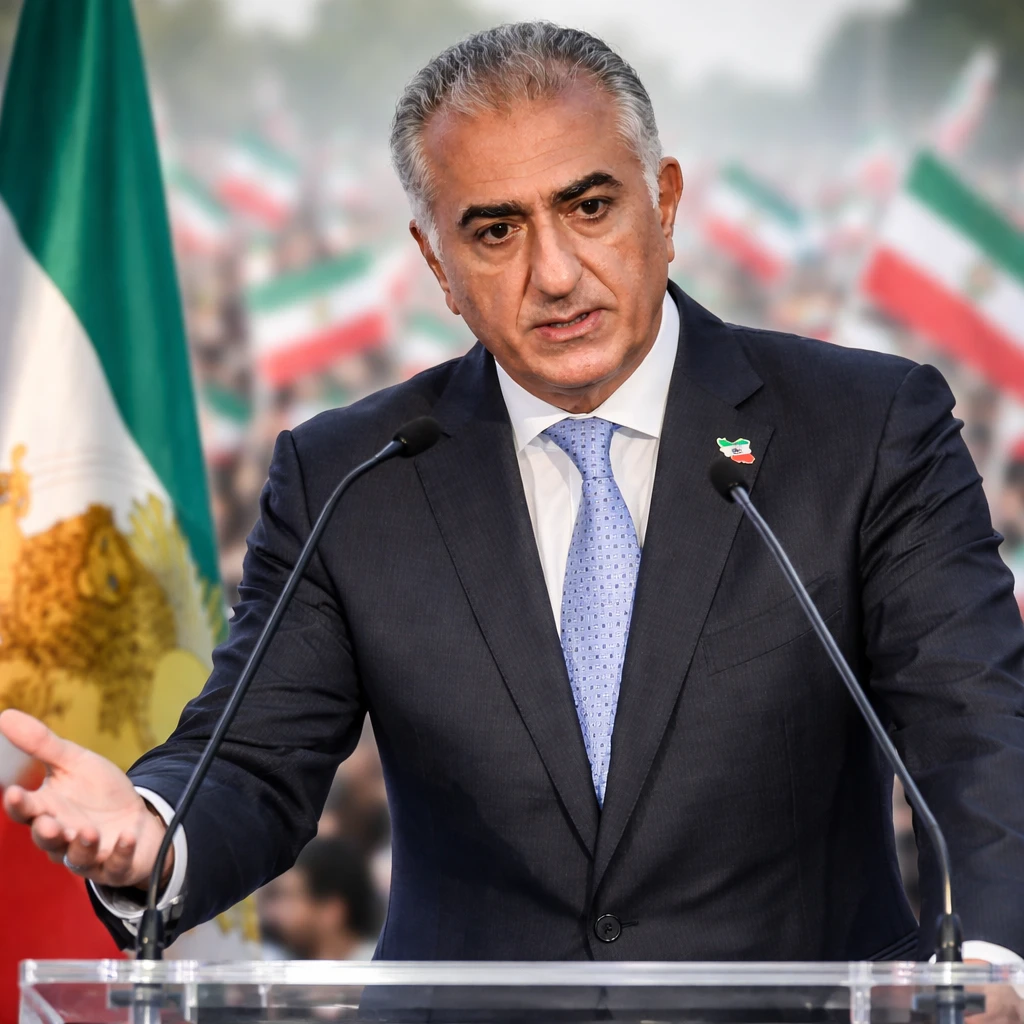

Reza Pahlavi, the former crown prince of Iran, who has lived in exile for close to 50 years, is seeking to influence the future of his homeland amid large protests sweeping the nation. Despite the fact that his father, Shah Mohammad Reza Pahlavi, was deposed following widespread public dissent in 1979, the 65-year-old prince has used his platform abroad to encourage significant public demonstrations in Iran, particularly in recent days.
The protests, initially triggered by the nation's faltering economy, have escalated into a serious challenge to the ruling Islamic Republic. This period of unrest follows years of widespread dissent and includes the aftermath of a 12-day conflict earlier this year initiated by Israel, during which the United States bombed Iranian nuclear sites. Pahlavi's calls, disseminated through Farsi-language satellite channels and websites outside Iran, have inspired crowds to return to the streets repeatedly, including a major mobilization Thursday night and subsequent gatherings Friday and planned demonstrations over the weekend.
Experts note a notable change in the ideological tenor of Iran's protest movement. Behnam Ben Taleblu, an expert with Washington's Foundation for Defense of Democracies, comments that the dissent has adopted a more nationalist stance over the past decade. He argues that the failures of the Islamic Republic have empowered opposition figures like Pahlavi, who draw stark contrasts between the nation's pre-revolutionary normalcy and the present difficulties faced by Iranians.
Despite increased visibility during the first term of U.S. President Donald Trump, Pahlavi has faced hesitance from international leaders wary of endorsing an exile leader estranged from his country for decades. Iranian state media have, for years, ridiculed him as disconnected and corrupt, condemning recent protests and attributing the unrest to "monarchist terrorist elements." Some recent demonstrations have turned violent, involving acts such as vehicle fires and attacks on police stations.
Born on October 31, 1960, Pahlavi grew up in an environment of affluence as the heir apparent to Shah Mohammad Reza Pahlavi. The Shah's dynasty had deep ties with Western powers, bolstered by a CIA-supported 1953 coup that solidified his reign. The prince's upbringing included education at a school within the Niavaran Palace and moments of cultural engagement, including playing rock music during a U.S. presidential visit.
Nevertheless, public discontent grew sharply in the 1970s due to economic inequality and political repression by feared intelligence agencies. These tensions culminated in mass protests that united various factions across Iranian society, including religious leaders, labor groups, and secular opposition. The Shah's failing health and poor political decisions hastened his downfall.
In 1978, Pahlavi departed Iran to pursue flight training in the United States; by the following year, the Islamic Revolution had toppled the monarchy and installed a theocratic regime. The new government, dominated by Shiite clerics, executed thousands of perceived opponents and cemented a harsh political order. After his father's passing, Pahlavi was declared Shah by exiled royalists in 1980 but remained abroad.
In his early addresses to Iranians, Pahlavi expressed empathy for their struggles and hope for a brighter future beyond the turmoil. Yet, since then, he has spent nearly fifty years living outside Iran, chiefly in the United States, while maintaining efforts to influence political discourse at home.
During his exile, Pahlavi's supporters reportedly received covert assistance, including clandestine broadcasts into Iran. Despite such efforts, his impact has been limited by multiple factors, including a historical legacy of distrust toward the Pahlavi regime, perceptions of cultural detachment, and the systematic suppression of dissent within Iran.
Younger generations, born after the revolution, experience Iran’s political and social realities differently, often facing significant restrictions and economic hardships under ongoing sanctions and government mismanagement. To engage these populations, Pahlavi has utilized social media and benefited from external Farsi-language media outlets, such as Iran International, which provide platforms to amplify his calls for change and even offer channels for security forces to consider defection.
While historically a proponent of monarchical restoration, Pahlavi has also discussed the possibility of a constitutional monarchy with elected leadership, emphasizing that the ultimate decision rests with the Iranian people. He has characterized the current regime as fundamentally resistant to reform, underscoring the public's growing appetite for profound political transformation.
Controversy surrounds Pahlavi's alliances, including his engagement with Israel, following his 2023 visit and meeting with Prime Minister Benjamin Netanyahu. Given Netanyahu's critical stance on the 2015 nuclear deal and leadership during military confrontations with Iran, Pahlavi’s outreach has drawn both support and criticism. He asserts that his overriding objective is Iran’s liberation, regardless of which international parties can contribute, so long as the nation’s independence remains intact.