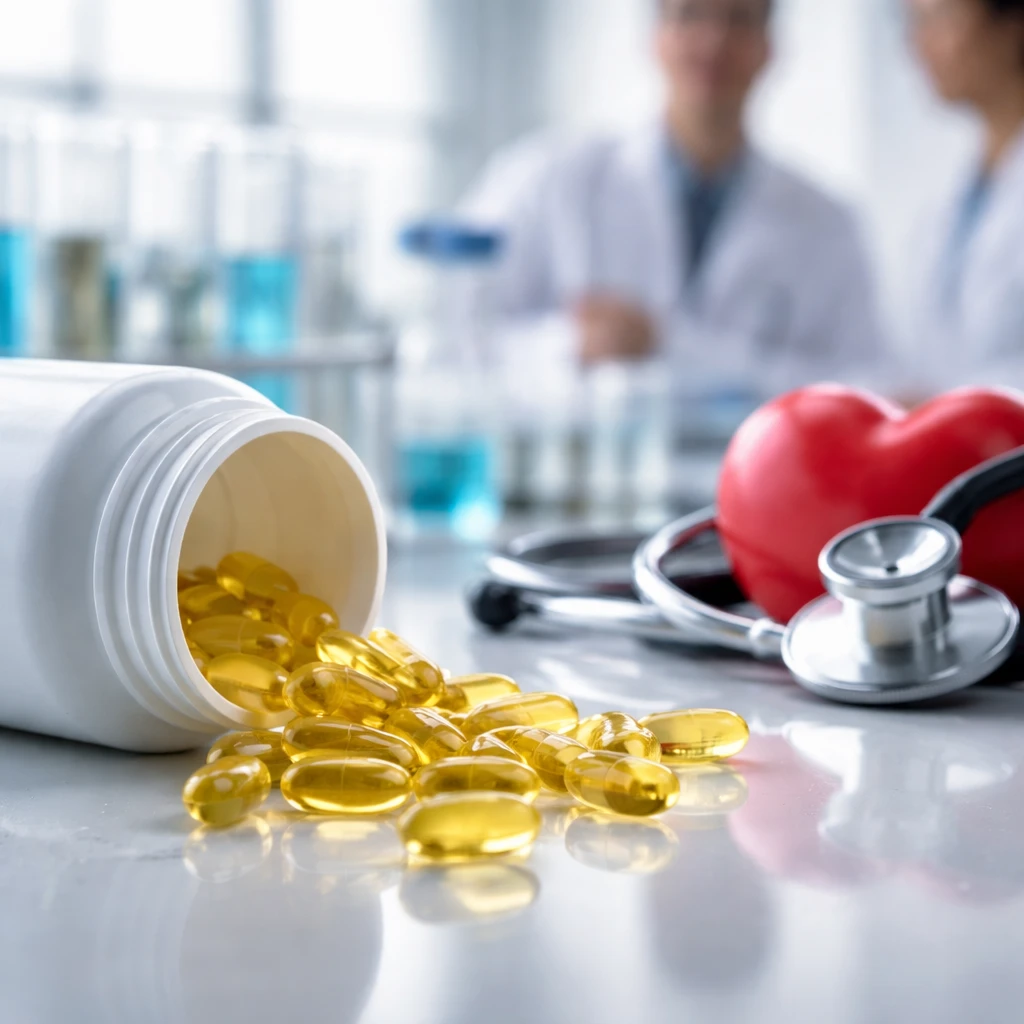

Researchers have reported significant success with enlicitide, an experimental pill designed to reduce LDL cholesterol — often termed "bad cholesterol" — in individuals at high risk of heart attacks who are already being treated with statins. Currently, only injectable medications are capable of facilitating cholesterol removal in the manner that enlicitide does, making this oral therapy a potentially groundbreaking option if approved by regulatory authorities.
Statins remain the foundational therapy for managing high cholesterol, functioning by inhibiting the liver's endogenous cholesterol production. Despite the maximum dosage use of statins, many patients fail to achieve recommended LDL cholesterol targets, necessitating additional pharmacological interventions.
In a large-scale clinical trial involving over 2,900 patients characterized by elevated cardiovascular risk, participants were randomized to receive either the enlicitide pill daily or a placebo, alongside their existing treatment regimens. The results showed enlicitide reduced LDL cholesterol levels by as much as 60% over the course of six months, as documented in the New England Journal of Medicine.
According to Dr. Ann Marie Navar, a cardiologist and principal investigator of the study at UT Southwestern Medical Center, no other oral medications offered alongside statins achieve LDL reductions comparable to those observed with enlicitide. The magnitude of cholesterol lowering exhibited by enlicitide closely approaches that attained by PCSK9 inhibitor injections, which currently serve as a potent adjunct in lipid management.
The therapeutic effect of enlicitide was sustained with only a modest diminution over one year, and the safety profile was comparable between the drug and placebo groups. A notable consideration is the requirement for the pill to be administered on an empty stomach to optimize efficacy.
Heart disease remains the leading cause of mortality nationwide, with elevated LDL cholesterol identified as a principal risk factor due to its role in promoting arterial plaque formation. While a level of 100 mg/dL is considered acceptable in healthy individuals, clinical guidelines recommend more aggressive LDL reduction to at least 70 mg/dL for those diagnosed with hypercholesterolemia or cardiovascular disease, with even lower targets for individuals deemed very high risk.
Standard treatments such as statins (including branded options like Lipitor and Crestor, as well as generics) effectively reduce LDL cholesterol. However, in cases requiring further reduction, injectable therapies that inhibit the PCSK9 protein — which impairs cholesterol clearance by the liver — are employed. Despite recent price declines for these injectable agents, utilization remains limited, due in part to patient aversion to injections and complexity in prescribing among physicians.
The study demonstrating enlicitide's efficacy was funded by Merck, which anticipates this data will support the submission for FDA approval. The FDA has recognized enlicitide for a priority review process aimed at expediting evaluation.
Dr. William Boden of Boston University and the VA New England Healthcare System, unaffiliated with the research, noted in commentary that the data presents compelling evidence for enlicitide’s cholesterol-lowering capacity analogous to PCSK9 inhibitors. However, he emphasized that current trials have not yet confirmed whether this cholesterol reduction translates into decreased incidence of heart attacks, strokes, or mortality, outcomes which require longer observation periods to establish.
To address this, Merck is conducting an ongoing, extensive trial involving more than 14,000 patients to evaluate the cardiovascular event outcomes associated with enlicitide use.