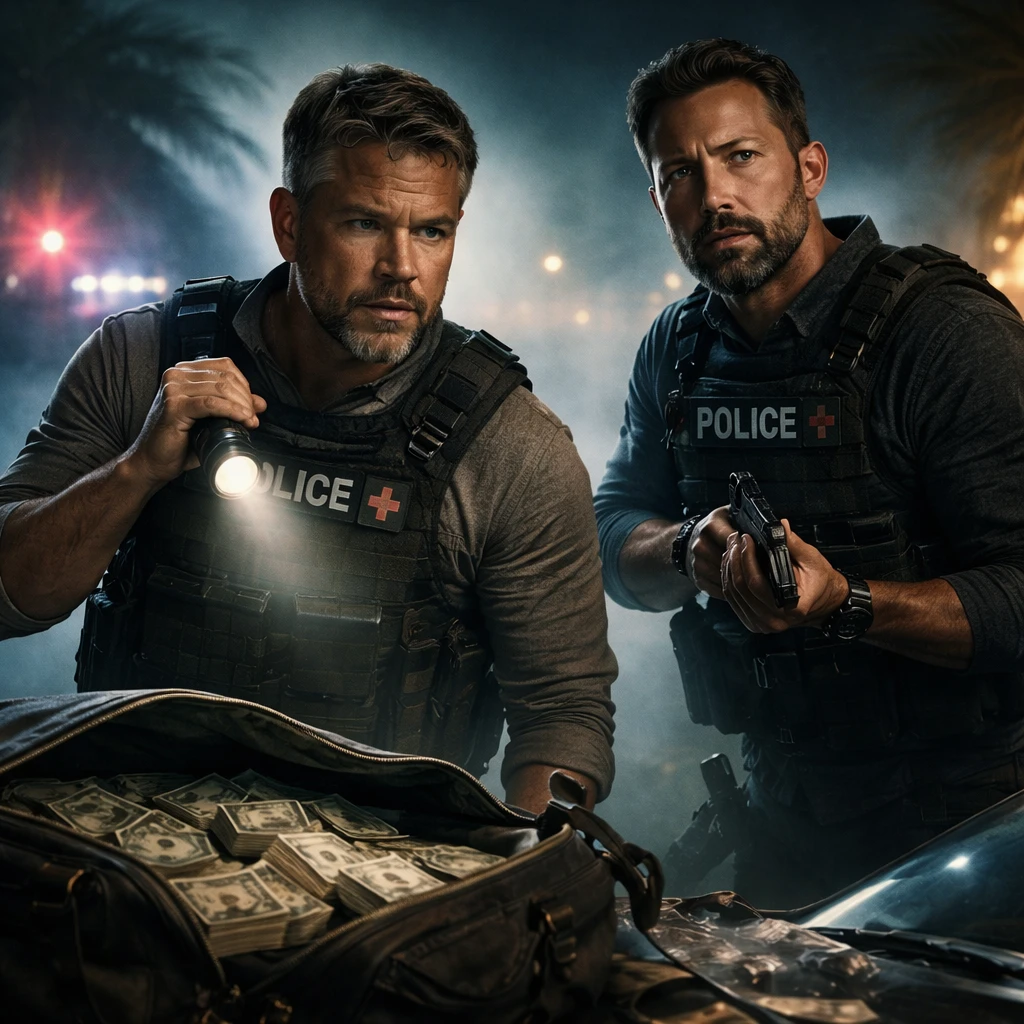

Joe Carnahan's "The Rip" unfolds over the course of a single fog-laden night in Miami, casting a shadow over the conventional distinctions between law enforcement and criminality. Stars Matt Damon and Ben Affleck portray narcotics officers whose discovery of a money stash intended for a drug cartel ignites a tense, high-stakes predicament. Initially suspecting approximately $150,000 concealed within the walls of the cartel’s safe house, Lt. Dane Dumars (Damon) and his team are stunned to find more than $20 million, transforming a routine operation into a fraught siege where suspicion runs rampant.
Known predominantly for their Boston connections, notably through projects such as the 2024 heist film “The Instigators,” Damon and Affleck venture into distinctly different terrain with this Miami-based narrative that evokes the atmosphere of classic crime dramas such as "Miami Vice" and the works of Elmore Leonard, departing from their typical New England settings like "Southie" and "The Town."
"The Rip," premiering on Netflix, wields a tightly controlled neo-noir aesthetic where virtually all characters are police officers caught in a web of ambiguous loyalties. Its central mystery revolves around discerning the genuine from the duplicitous within the force, underscored poignantly through a recurring motif: a tattoo on Dane's hand bearing the phrase "AWTGG"—"Are we the good guys?"—posed by a young woman at the stash house, played by Sasha Calle. The question encapsulates the film’s persistent exploration of morality amidst pervasive corruption.
Despite Damon and Affleck’s established screen personas and their producer roles in the film, "The Rip" subverts expectations by refusing straightforward answers to character allegiances. Alongside Affleck, Damon, Sasha Calle, Teyana Taylor, Steven Yeun, and Kyle Chandler contribute to a roster that enriches the film’s layered dynamics. However, the narrative provides minimal exposition, leaving most backstories underdeveloped and rendering many plot twists dependent on this ambiguity rather than concrete character development.
Carnahan initiates the story with an intense sequence of internal police interrogations tied to the fatal shooting of a detective portrayed by Lina Esco. Rapidly alternating scenes reveal a department rife with finger-pointing and distrust, creating an environment where even law enforcement personnel struggle to identify who can be deemed trustworthy. Dane’s candid expression of frustration, "I hate being a cop," to fellow officer Byrne, reflects the pervasive disillusionment.
The film portrays the convergence of various law enforcement agencies, including DEA agent Mateo "Matty" Nix (Kyle Chandler) and FBI agent Del Byrne (Scott Adkins), highlighting systemic dysfunction exacerbated by the omnipresence of drug cartels. This milieu has engendered corruption that taints the Miami Police Department, figuratively transforming it into its own criminal enterprise. During the sequence where Dane and his team investigate a CrimeStopper tip, their casual demeanor—gathering around with drinks and arriving in civilian rather than official vehicles—subtly conveys this blurred professionalism.
Alongside the lead duo, the team comprises detectives JD Byrne (Affleck), Mike Ro (Steven Yeun), Numa Baptiste (Teyana Taylor), and Lolo Salazar (Catalina Sandino Moreno). While subtle hints denote tight bonds, especially between Dane and JD, the tone shifts dramatically upon discovering the vast sum of money. Rather than following protocol to report the find, Dane opts for secrecy, confiscating the team's phones and prompting suspicion about his intentions. The narrative tension escalates with a cryptic threat demanding the surrender of $150,000, under the ominous warning that refusal will result in fatal consequences—not from the cartel, but an unknown entity.
Carnahan, who crafted the screenplay and helmed the production, revealed that the story draws inspiration from accounts relayed by a Miami detective, grounding the film in an element of reality. However, the unfolding events and character choices may strain credulity for some viewers. Nonetheless, Carnahan’s skillful creation of a dense, claustrophobic atmosphere, reminiscent of his earlier work such as "The Grey," suffuses “The Rip” with a compelling moral ambiguity that resonates. The ongoing collaboration between Damon and Affleck has produced multiple films together, frequently featuring them in ensemble roles that challenge their typical heroic images. Their production company, Artists Equity, further distinguishes itself through unique profit-sharing arrangements benefitting cast and crew members.
While "The Rip" functions as a modest B-movie anchored by its two marquee stars, it remains a flawed yet earnest genre piece. Damon and Affleck's dynamic on screen continues to engage audiences, even when narrative elements falter. Set against the contrasting backdrop of Miami’s murky criminal underbelly, the film offers a 133-minute runtime rated R by the Motion Picture Association for its violence and pervasive language, delivering a cautionary tale about trust and integrity within law enforcement.