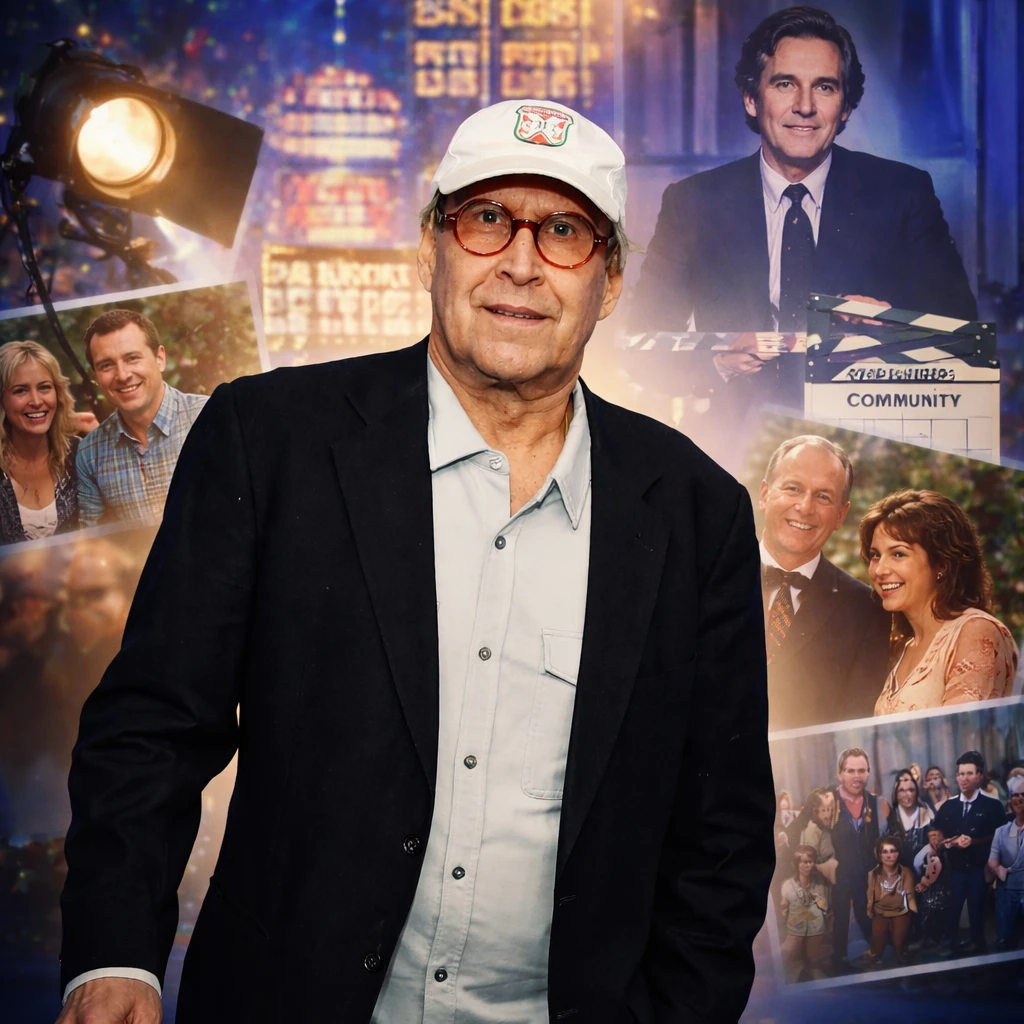

Chevy Chase, known for his distinctive blend of physical comedy and biting wit, steps into the spotlight through a revealing documentary helmed by filmmaker Marina Zenovich titled "I'm Chevy Chase and You're Not," which debuted on CNN. At their very first encounter, Chase's confrontational style emerged when he dismissed the director's ability to understand him, stating without hesitation, "You're not bright enough, how's that?" This initial exchange sets the tone for a film that aims to peel back layers of a man whose reputation often precedes him.
Zenovich, acclaimed for profiling complex figures such as Roman Polanski and Robin Williams, was drawn to Chase's enigmatic persona. "He’s one of those people everybody thinks they know," she reflects. "He has a reputation that precedes him and there’s something underneath that you want to get to. So it was a great challenge to try to get there." The documentary chronicles Chase’s trajectory, beginning with a difficult childhood marked by episodes of neglect and abuse, traversing through the groundbreaking era of "Saturday Night Live," and culminating in his turbulent stint on the television series "Community."
Insightful perspectives enrich the narrative, with contributions from notable industry figures including Dan Aykroyd, Beverly D’Angelo, Goldie Hawn, Lorne Michaels, Ryan Reynolds, Martin Short, alongside personal accounts from his wife Jayni Chase, their three daughters, and his brother Ned. These voices collectively frame a portrait of Chase as a comedian possessing sharp intelligence and an often acerbic attitude, attributes that both captivated audiences and alienated colleagues.
In candid interviews, Chase acknowledges the intricacies of his character, stating, "I’m complex and I’m deep and I can be hurt easily." This vulnerability contrasts with his public persona and opens a window into the emotional undercurrents influencing his work and relationships.
The film features archival footage capturing key moments from his career alongside intimate glimpses into his personal life — scenes of Chase interacting with a cat, playing piano and chess, reading fan mail including a birthday card from President Bill Clinton, and moments in a flower shop. These vignettes supplement the narrative, offering a more humanized and multidimensional view of the comedian.
Chase openly appreciates the documentary's balanced portrayal. Comparing it to a massage, he notes, "Sometimes it hurts, but the massage is so lovely," underscoring his willingness to confront uncomfortable truths.
Central to Zenovich’s exploration is the impact of Chase’s early life experiences. She recounts that as a child, he suffered physical and emotional abuse, including confinement to a basement and frequent beatings by his stepfather and mother. "I think the whole key to Chevy is his childhood. I hate to use the word trauma, but I think he’s traumatized," Zenovich observes. "Humor is his way of dealing with it." This psychological lens sets the context for understanding the complexities and contradictions visible throughout Chase’s career and personal interactions.
The documentary does not shy away from Chase's contentious relationships within the entertainment world. He has had public disputes with fellow comedians such as Joel McHale and Bill Murray, as well as on-set conflicts during his time on "Community," where allegations of using offensive language and targeting co-star Donald Glover contributed to his departure. These incidents reflect a pattern where Chase's tendency toward caustic humor sometimes crosses into perceived meanness, a transition noted by writer and actor Alan Zweibel: "The old Chevy could make you laugh putting you down and there was a little bit of a wink there, so you were in on the joke. Now it just comes off as mean."
Zenovich further comments that Chase’s darker tendencies were exacerbated by periods of drug use. In conversations, Chase reveals a struggle to fully understand himself, remarking on moments where he attempts to probe deeper but ultimately pulls back. "He goes to a certain point, and then something stops him," the director explains, highlighting an unresolved internal conflict.
At 82, Chase remains aware of his contentious reputation but expresses a dismissive stance toward critics, branding such disputes as "just Hollywood stuff" that "never really bothered me." The film examines not only his professional ups and downs but also his reflections on missed opportunities, such as his regret over leaving "Saturday Night Live" prematurely and feelings of exclusion during the show's 50th anniversary celebrations.
Moreover, the documentary depicts moments of affirmation and appreciation, including scenes where Chase enjoys standing ovations at screenings of "National Lampoon’s Christmas Vacation." The presence of his three daughters, described as insightful and humorous, highlights a personal dimension marked by familial warmth despite past hardships.
Concluding on a contemplative note, Zenovich suggests that Chase has, in some measure, succeeded in breaking free from the generational cycles of trauma that affected his upbringing. She states, "I think the one thing he really did was he was able to break that generational trauma. There I go again, using the word. But that’s quite a feat, right?" The film thus serves as an empathetic examination of a complicated individual whose humor has left an indelible mark on comedy, shaped by profound personal challenges.