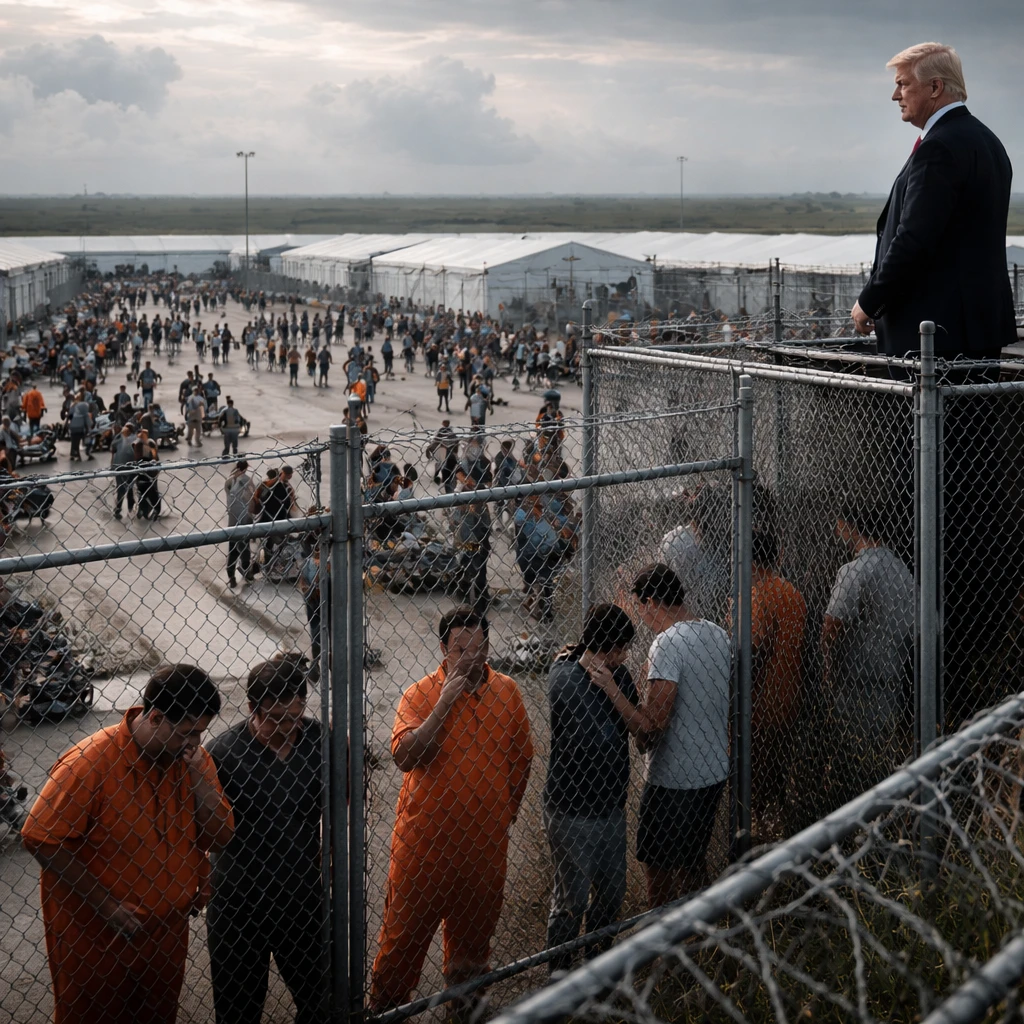

Felipe Hernandez Espinosa, an asylum seeker from Nicaragua, endured a 45-day stay at a Florida immigration facility known informally as "Alligator Alcatraz," plagued by unsanitary conditions including contaminated food, malfunctioning toilets, overwhelmed sewage systems, and pervasive insect infestations. Following this, he has been detained for over five months at an immigration center on the Fort Bliss Army base in El Paso, Texas, where two migrant deaths occurred in January. Human rights organizations report that conditions at Fort Bliss mirror those of "Alligator Alcatraz," contributing to growing distress among detainees.
Hernandez has repeatedly sought repatriation to Nicaragua but was instructed that a court hearing was mandatory before any release could be granted. Nearly seven months after his detention began, his immigration hearing was slated for February 26. This extended holding period illustrates a broader trend intensifying during President Donald Trump’s second term, where protracted detainment in immigration facilities has become more common due to a policy restricting immigration judges’ authority to release detainees while their removal proceedings progress through heavily congested courts. Many detainees, including Hernandez, express profound despair, having exhausted efforts to remain in the United States.
"I came to this country expecting support, yet I have been detained for six months despite not committing any crime," Hernandez said in a phone interview from Fort Bliss. "The duration has become unbearable. I am desperate."
The Supreme Court’s 2001 ruling established that Immigration and Customs Enforcement (ICE) should not detain immigrants indefinitely, indicating a six-month cap on reasonable detention periods. However, ICE data reveals that as of mid-January, the total number of people in ICE detention surpassed 70,000 for the first time. Among them, 7,252 individuals had been detained for six months or longer, including 79 held for more than two years. These figures represent a more than twofold increase from December 2024, the final full month of former President Joe Biden’s term, when 2,849 detainees had remained in custody for at least six months.
Despite the Trump administration presenting voluntary departure incentives including airfare and a payment of $2,600, detainees like Hernandez report being unable to accept such offers without a prior judicial hearing. Legal professionals indicate these occurrences of extended detention without timely hearings are not isolated incidents.
Attorney Ana Alicia Huerta, senior counsel at the California Collaborative for Immigrant Justice, observed during her legal visits to the McFarland ICE facility that detainees who had signed voluntary departure forms awaited deportation without understanding the delay. "This situation is unprecedented in my experience," she stated, noting a Chinese detainee held for over a year without court review despite expressing willingness to depart.
The Department of Homeland Security declined to comment on the causes behind longer detention durations exceeding six months.
Sui Cheng, executive director at Americans for Immigrant Justice, remarked that the poor conditions in detention facilities often compel detainees to abandon legal challenges. Deportation timelines vary by country, with routine removals to Mexico contrasted by resistance from nations such as Cuba, Nicaragua, Colombia, and Venezuela to accept returned individuals.
Among those detained long-term are individuals who have been granted protection under the United Nations Convention Against Torture, prohibiting deportation to countries where they face danger. Previously, such detainees were released and eligible for work authorization; however, Sarah Houston, managing attorney at Immigrant Defenders Law Center, has clients protected under this convention detained for over six months, including one from El Salvador held for three years post-case victory.
"These individuals are effectively held indefinitely," Houston said, emphasizing repeated but denied requests for their release. "We are witnessing people who have won immigration cases languishing in detention facilities."
Hernandez, without legal representation, reported signing multiple forms requesting repatriation to Nicaragua or transfer to Mexico but faced canceled court hearings and prolonged uncertainty about his case status. Arrested during a work break in South Florida in July, Hernandez and his wife sought asylum crossing from Mexico in 2022 after facing death threats linked to political activism against Nicaragua's ruling leadership. His files indicate a pending status, with plans to relocate to Panama or Spain should deportation occur due to fears for their safety.
Similarly, Yashael Almonte Mejia from the Dominican Republic has experienced eight months of detention since the U.S. government moved to dismiss his asylum claim in May 2025. He has been transferred among detention centers in Florida, Texas, and New Mexico. During this period, Almonte married his pregnant American partner via video conference and became a father to a child he has not seen. He also missed his sister’s funeral amid emotional hardship.
Almonte, aged 29, who fears returning to his home country, passed an initial asylum interview in January but remains detained. Another detainee, a Mexican man, was held for a year despite being granted protection under the U.N. torture convention. He endured significant psychological stress, uncertainty, and lack of information before a federal court petition led to his release approximately seven months after a judge ordered it.
The compounding effects of detention length, harsh living environments, and legal impediments result in severe mental and physical tolls on detainees. Hernandez expressed trauma and ongoing distress, continually contemplating his release during the indefinite detention at Fort Bliss.