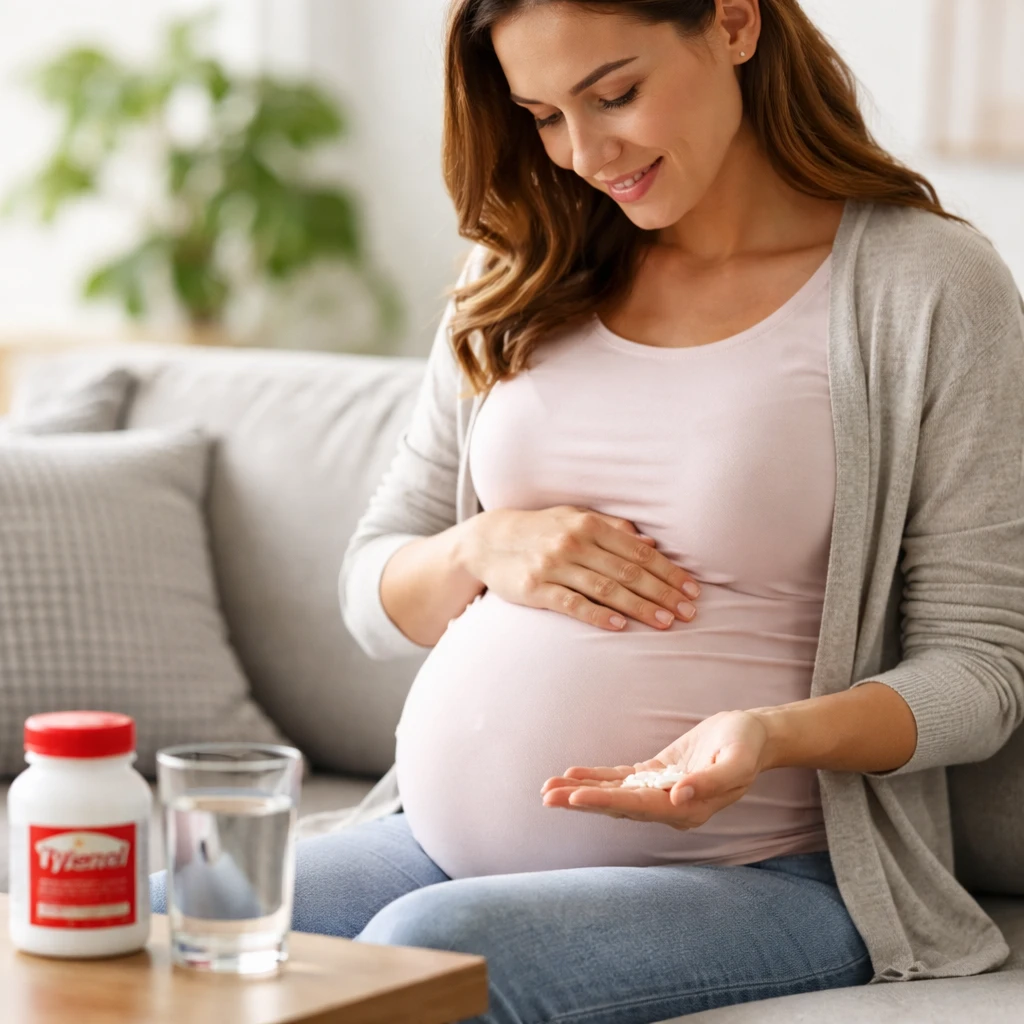

Recent scientific scrutiny has examined the impact of acetaminophen, commonly known as Tylenol, when used during pregnancy, focusing on its possible link to developmental disorders such as autism spectrum disorder (ASD), attention-deficit/hyperactivity disorder (ADHD), and intellectual disabilities. The latest analysis, published in The Lancet Obstetrics, Gynecology & Women’s Health, assessed data from 43 studies to address these concerns, concluding that high-quality, methodologically sound research dismisses any causal relationship between prenatal acetaminophen use and these neurodevelopmental outcomes.
Dr. Asma Khalil, a fetal medicine expert and lead author based at St. George’s Hospital in London, emphasized that acetaminophen remains a safe option for pregnant women requiring treatment for pain or fever, affirming it as the recommended first-line therapy. This assertion stands in contrast to claims made during the previous U.S. administration, which suggested a potential risk. Notably, former President Donald Trump advised against Tylenol use by expectant mothers, linking it to autism despite a lack of conclusive scientific support.
While certain individual studies have suggested a possible association between prenatal acetaminophen administration and heightened risk of neurodevelopmental disorders, these are outnumbered by research that finds no significant connection. For instance, a previous review published in BMJ concluded that current evidence does not definitively associate acetaminophen use during pregnancy with an increased incidence of autism or ADHD in offspring. Similarly, an analysis in the Journal of the American Medical Association indicated no correlation with autism, ADHD, or intellectual disability when evaluating data from sibling comparisons.
Despite this prevailing consensus, some investigations cited by government sources have suggested a link. One such paper, referenced on an official White House webpage, assessed 46 prior studies and reported evidence supporting an association between acetaminophen exposure during gestation and increased cases of neurodevelopmental disorders. However, researchers acknowledged the ongoing importance of the medication for managing fever and pain in pregnant women, recommending cautious and limited use.
Experts like Dr. Khalil have expressed reservations about the breadth and interpretation of research cited to support these claims, highlighting that many such studies involve small cohorts or are vulnerable to bias. Potential confounding factors, including maternal fever—as a reason for acetaminophen use—that independently elevates the risk of autism, complicate the ability to definitively attribute causation. Additionally, retrospective recall bias—where mothers of children diagnosed with autism may inaccurately report medication usage—presents significant hurdles for interpretation.
The methodological strength of studies plays a critical role in interpreting these associations. Rigorous approaches that compare siblings help control for genetic and environmental variables, and studies utilizing such methodologies have not demonstrated a relationship between prenatal acetaminophen use and increased autism risk. Genetic factors remain the most substantial known contributors to autism, followed by paternal age, preterm birth, and maternal health issues during pregnancy.
In an accompanying commentary to the latest review, independent researchers from institutions including the London School of Hygiene and Tropical Medicine and Children's Hospital Colorado cautioned against discouraging acetaminophen use during pregnancy without clear evidence. Inadequate management of maternal pain or fever could produce detrimental effects on both maternal and fetal health. They underscored that untreated fever and infections pose established risks to fetal survival and neurological development.
The ongoing debate underscores the need for carefully balanced communication regarding medication safety during pregnancy, emphasizing that decisions should be guided by the most rigorous scientific data available to protect both mother and child.