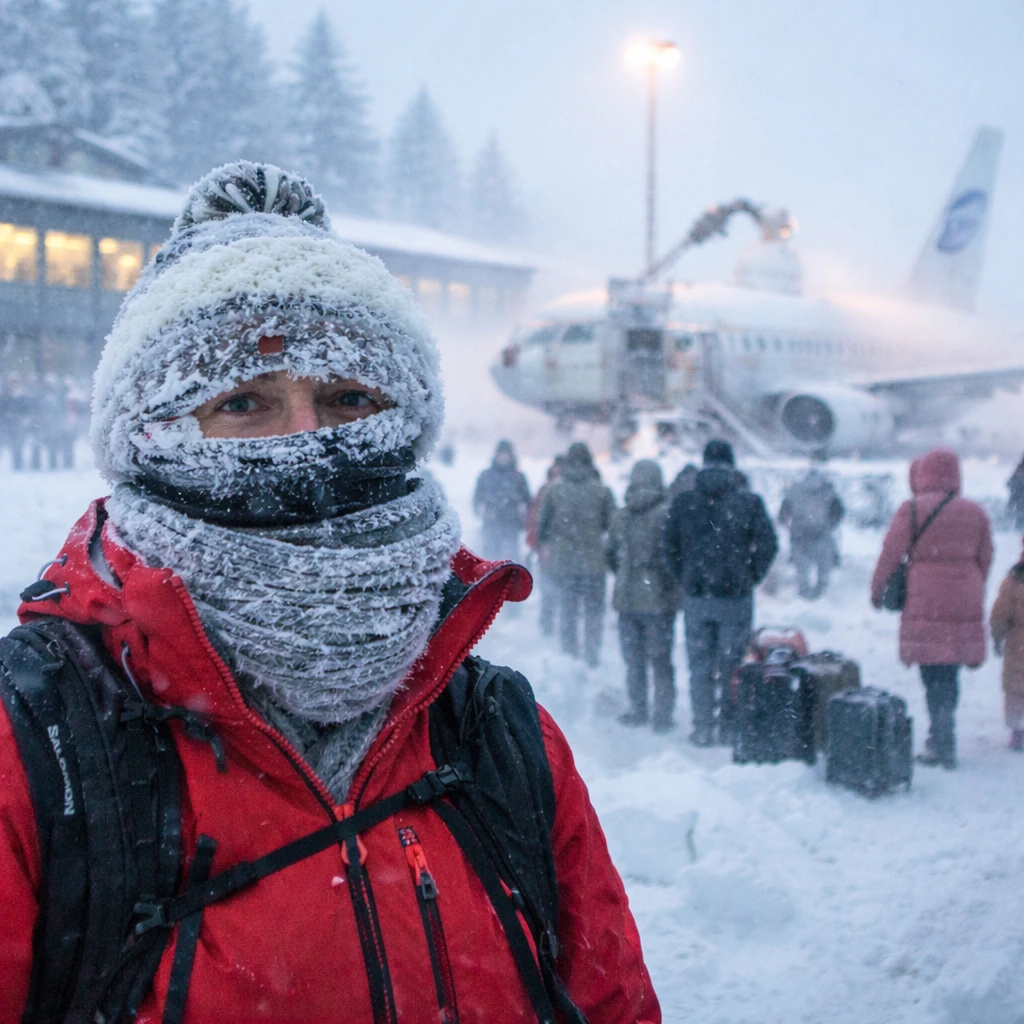

Kittilä, located in Finnish Lapland, is currently witnessing extreme weather conditions that have severely hindered air travel, leaving a large number of tourists stranded. Temperatures on Sunday morning plunged to approximately minus 37 degrees Celsius (minus 34.6 degrees Fahrenheit), complicating essential airfield activities such as de-icing aircraft and general airport operations. This follows several days of sustained severe cold in the region.
The Finnish Meteorological Institute has forecast that this intense cold snap will persist into Monday, with temperatures expected to drop further to nearly minus 40 degrees Celsius (minus 40 degrees Fahrenheit). While residents of Finland are accustomed to frigid winters, this year's cold wave is noted as particularly harsh, affecting broad sections of northern, central, and eastern Europe.
These severe conditions have not only disrupted air travel but also impacted ground transportation across the continent. Germany illustrates these challenges with ongoing complications in rail travel. After Deutsche Bahn, the country's major rail operator, suspended all northern services on Friday due to heavy snowfall, passengers continued to face considerable delays and cancellations on Sunday.
Authorities across various regions are taking precautionary measures. In North Rhine-Westphalia, Germany's most populous state located in the west, all schools were mandated to remain closed on Monday, with education shifting to online platforms. This decision is in response to forecasts predicting icy road conditions that could jeopardize safety.
Further east in the Baltic region, Estonia and Lithuania's governments have urged motorists to refrain from undertaking nonessential journeys in light of imminent blizzard conditions. Similarly, Latvia has placed its western areas under a snow alert, underpinning a broader regional threat to safe and efficient transport.
The combination of severe cold, substantial snowfall, high winds, and icy surfaces across numerous European regions continues to disrupt not only travel but also daily schedules and economic activities, presenting ongoing challenges until weather patterns moderate.