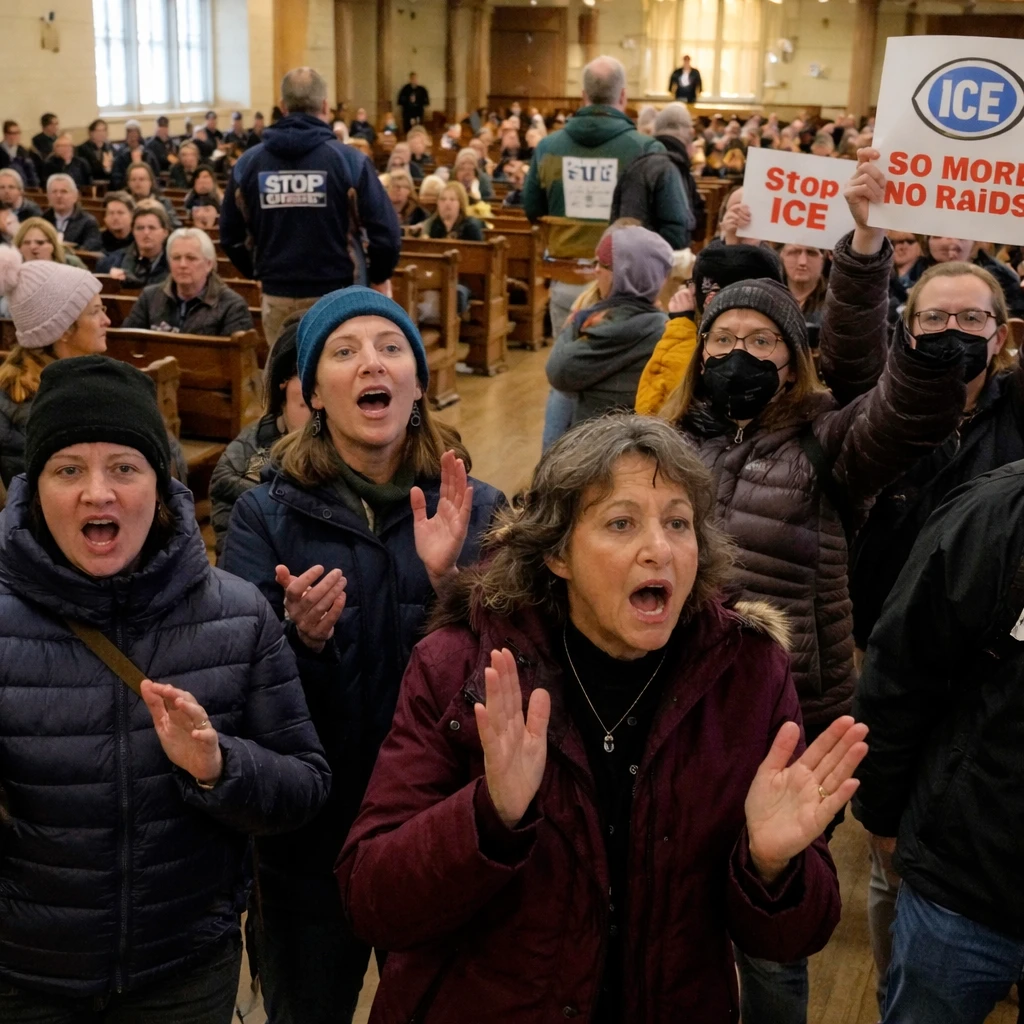

A recent demonstration against immigration enforcement disrupted a Sunday service at Cities Church, a Southern Baptist congregation located in St. Paul, Minnesota, prompting concern from faith leaders about safeguarding the rights of worshippers alongside offering compassion to migrant families. Approximately thirty-six protesters entered the church as the service proceeded, with some advancing towards the pulpit and others chanting slogans such as "ICE out" and referencing Renee Good, a woman who died following a fatal shooting by an ICE agent on January 7 in Minneapolis during an enforcement operation.
David Easterwood, one of the church's pastors, also serves as the leader of the local Immigration and Customs Enforcement (ICE) field office. Among the protest organizers was Nekima Levy Armstrong, a recognized local activist and an ordained reverend. The Minnesota-Wisconsin Baptist Convention publicly condemned the event, labeling it an "unacceptable trauma" for those involved.
In a communication with The Associated Press, Trey Turner, head of the convention, emphasized the necessity of two concurrent actions: encouraging churches to deliver compassionate pastoral support to affected migrant families and firmly defending the sanctity and security of houses of worship. Notably, Cities Church is affiliated with this convention.
According to protest footage and other recorded evidence, the intensity of the disruption compelled the church to halt its services earlier than planned. The demonstrators were seen directing hostile insults and accusations toward the congregation, which included youth and families. This conduct has deeply unsettled many in the faith community.
The U.S. Department of Justice has initiated a civil rights inquiry into the incident, reflecting increased tensions in Minnesota where more than 2,000 federal immigration officers engage regularly with an active network of community activists opposing enforcement measures. The escalation in operations has become a point of contention between the Trump Administration and Minnesota officials.
Kevin Ezell, president of the North American Mission Board, condemned the protest in strong terms, stating that no political cause justifies "the desecration of a sacred space or the intimidation and trauma inflicted on families gathered peacefully in the house of God." He articulated that the actions constituted "lawless harassment," not legitimate protest. Ezell reaffirmed his organization’s full support for Jonathan Parnell, the pastor presiding over the service at the time, noting Parnell's role as a missionary serving multiple Southern Baptist churches in the region. Attempts to receive comment from Cities Church were not successful.
The issue touches on broader divisions within Christian communities in the United States regarding immigration enforcement. The emergence of approximately eleven million individuals residing without legal status, coupled with increased border crossings and asylum claims, has fostered varied ethical and legal debates among believers and leaders. Differences manifest notably between conservative white evangelical groups favoring robust enforcement and Catholic hierarchy members advocating for migrant protections.
The Southern Baptist Convention, the largest Protestant denomination in the country, aligns with conservative evangelical theology. Miles Mullin, director of the Ethics and Religious Liberty Commission of the Southern Baptist Convention, acknowledged that religious leaders have historically engaged in protests addressing social concerns but underscored a firm boundary prohibiting interference with worship services. Mullin stressed that such disruptions "should not happen in America," affirming the sanctity of Baptist worship.
Federal policies pertaining to immigration enforcement in sensitive locations, such as houses of worship, schools, and hospitals, experienced changes under the Trump administration, which in January ended broader protections against arrests in these settings. Although there have been no known immigration raids during church services recently, some churches in the Twin Cities have publicly declared that ICE and Border Patrol personnel are unwelcome inside. These changes, alongside enforcement surges, have reportedly led to decreased attendance in some congregations.
Following the disruption at Cities Church, Harmeet Dhillon, Assistant Attorney General for Civil Rights at the U.S. Department of Justice, publicly condemned the event and affirmed an ongoing investigation into potential violations of the federal Freedom of Access to Clinic Entrances (FACE) Act. The statute forbids interference, intimidation, or obstruction aimed at individuals exercising their First Amendment rights within religious spaces. Dhillon described the incident as "un-American and outrageous."
White House press secretary Karoline Leavitt also denounced the protest, labelling it "despicable" and warning that the President would not tolerate intimidation of Christians within their sacred places.
Several pastors have reacted by highlighting the urgent need for enhanced security measures at churches considering the current volatile political landscape. The Reverend Joe Rigney, a founding pastor of Cities Church who served until 2023, prioritized the safety of congregants as a paramount concern, particularly recalling the fatal shooting at a Minneapolis Catholic school Mass the previous summer that heightened community anxieties.
This incident underscores the challenges faced by faith communities amid the intersection of immigration policy enforcement and the protection of religious freedoms, revealing ongoing tensions and divergent perspectives within the American Christian population.
David Easterwood, one of the church's pastors, also serves as the leader of the local Immigration and Customs Enforcement (ICE) field office. Among the protest organizers was Nekima Levy Armstrong, a recognized local activist and an ordained reverend. The Minnesota-Wisconsin Baptist Convention publicly condemned the event, labeling it an "unacceptable trauma" for those involved.
In a communication with The Associated Press, Trey Turner, head of the convention, emphasized the necessity of two concurrent actions: encouraging churches to deliver compassionate pastoral support to affected migrant families and firmly defending the sanctity and security of houses of worship. Notably, Cities Church is affiliated with this convention.
According to protest footage and other recorded evidence, the intensity of the disruption compelled the church to halt its services earlier than planned. The demonstrators were seen directing hostile insults and accusations toward the congregation, which included youth and families. This conduct has deeply unsettled many in the faith community.
The U.S. Department of Justice has initiated a civil rights inquiry into the incident, reflecting increased tensions in Minnesota where more than 2,000 federal immigration officers engage regularly with an active network of community activists opposing enforcement measures. The escalation in operations has become a point of contention between the Trump Administration and Minnesota officials.
Kevin Ezell, president of the North American Mission Board, condemned the protest in strong terms, stating that no political cause justifies "the desecration of a sacred space or the intimidation and trauma inflicted on families gathered peacefully in the house of God." He articulated that the actions constituted "lawless harassment," not legitimate protest. Ezell reaffirmed his organization’s full support for Jonathan Parnell, the pastor presiding over the service at the time, noting Parnell's role as a missionary serving multiple Southern Baptist churches in the region. Attempts to receive comment from Cities Church were not successful.
The issue touches on broader divisions within Christian communities in the United States regarding immigration enforcement. The emergence of approximately eleven million individuals residing without legal status, coupled with increased border crossings and asylum claims, has fostered varied ethical and legal debates among believers and leaders. Differences manifest notably between conservative white evangelical groups favoring robust enforcement and Catholic hierarchy members advocating for migrant protections.
The Southern Baptist Convention, the largest Protestant denomination in the country, aligns with conservative evangelical theology. Miles Mullin, director of the Ethics and Religious Liberty Commission of the Southern Baptist Convention, acknowledged that religious leaders have historically engaged in protests addressing social concerns but underscored a firm boundary prohibiting interference with worship services. Mullin stressed that such disruptions "should not happen in America," affirming the sanctity of Baptist worship.
Federal policies pertaining to immigration enforcement in sensitive locations, such as houses of worship, schools, and hospitals, experienced changes under the Trump administration, which in January ended broader protections against arrests in these settings. Although there have been no known immigration raids during church services recently, some churches in the Twin Cities have publicly declared that ICE and Border Patrol personnel are unwelcome inside. These changes, alongside enforcement surges, have reportedly led to decreased attendance in some congregations.
Following the disruption at Cities Church, Harmeet Dhillon, Assistant Attorney General for Civil Rights at the U.S. Department of Justice, publicly condemned the event and affirmed an ongoing investigation into potential violations of the federal Freedom of Access to Clinic Entrances (FACE) Act. The statute forbids interference, intimidation, or obstruction aimed at individuals exercising their First Amendment rights within religious spaces. Dhillon described the incident as "un-American and outrageous."
White House press secretary Karoline Leavitt also denounced the protest, labelling it "despicable" and warning that the President would not tolerate intimidation of Christians within their sacred places.
Several pastors have reacted by highlighting the urgent need for enhanced security measures at churches considering the current volatile political landscape. The Reverend Joe Rigney, a founding pastor of Cities Church who served until 2023, prioritized the safety of congregants as a paramount concern, particularly recalling the fatal shooting at a Minneapolis Catholic school Mass the previous summer that heightened community anxieties.
This incident underscores the challenges faced by faith communities amid the intersection of immigration policy enforcement and the protection of religious freedoms, revealing ongoing tensions and divergent perspectives within the American Christian population.