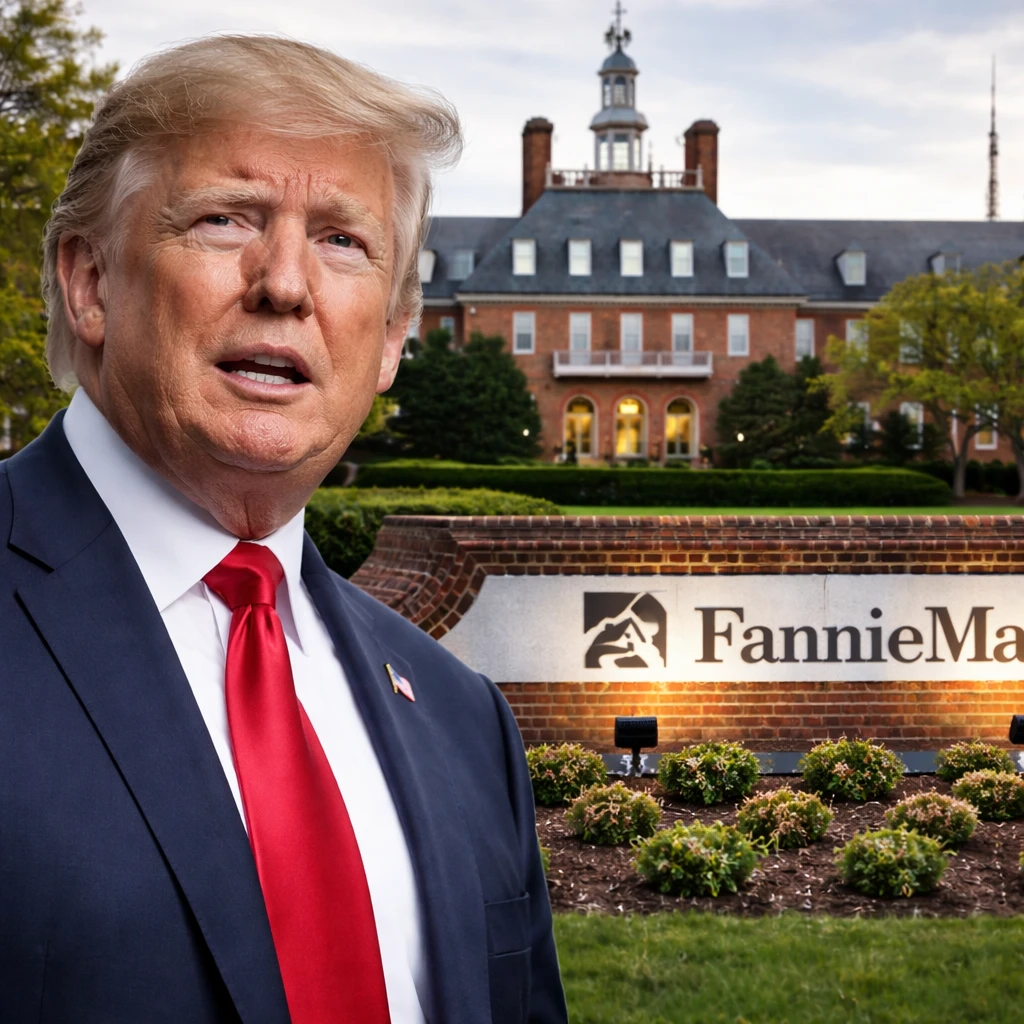

In New York, a recent advertisement for Fannie Mae broadcasts a voice resembling that of former President Donald Trump, yet the narration is synthesized using artificial intelligence technology. The clip includes a disclaimer confirming that the voice is AI-generated, and it was produced with explicit authorization from the former president.
The advertisement promotes an "all new Fannie Mae," labeling the institution as the "protector of the American Dream," and emerges during a period when the government is actively demonstrating to the public its commitment to tackling affordability issues, particularly in housing. Alongside this, Trump is slated to address housing topics during his participation at the World Economic Forum in Davos, Switzerland—a gathering of global political leaders and business executives.
This marks a continued trend within the Trump family of utilizing AI to replicate voices; recently, First Lady Melania Trump partnered with AI firm Eleven Labs for the audio edition of her memoir. However, specific details regarding the creator responsible for the AI voice cloning in the Fannie Mae advertisement have not been disclosed.
Last month, Trump publicly announced an intention to introduce what he termed as "some of the most aggressive housing reform plans in American history" during a prime-time broadcast. In the Fannie Mae ad, the digital Trump voice states, "For generations, home ownership meant security, independence, and stability. But today, that dream feels out of reach for too many Americans not because they stopped working hard but because the system stopped working for them."
Fannie Mae, alongside its counterpart Freddie Mac, has remained under federal conservatorship since the 2008 financial crisis. These two government-sponsored enterprises purchase mortgages that meet their risk criteria from financial institutions, thus providing necessary liquidity that supports the housing market. Together, they underwrite approximately half of the United States' $13 trillion mortgage market, serving as a fundamental component of the national economy.
The commercial highlights Fannie Mae’s intent to collaborate with lending institutions to expand mortgage approvals for prospective homebuyers. Key figures, including Trump and Bill Pulte, the leader of the Federal Housing Finance Agency, have publicly expressed interest in taking Fannie Mae and Freddie Mac public through stock exchange listings; however, definitive plans have not been finalized.
Further proposals floated by Trump and Pulte involve lengthening mortgage durations from the traditional 30 years to 50 years to reduce monthly payments. Nonetheless, following criticism that extended mortgages might impede home equity accumulation and wealth building, Trump appeared to step back from advocating this measure.
Additionally, Trump announced via social media intentions to direct the federal government to acquire $200 billion in mortgage-backed securities, aiming to lower mortgage rates amid pervasive concerns over home affordability. Trump claimed that Fannie Mae and Freddie Mac possess $200 billion in cash reserves that would facilitate such purchases.
Earlier this month, Trump suggested implementing restrictions to prevent large institutional investors from purchasing single-family homes, positing that such limits would improve opportunities for younger buyers aiming to acquire their first residences.
Notably, Trump's endorsement of using AI-generated voice in the advertisement contrasts with his prior criticisms of the Biden administration's use of autopen devices for signing official documents. An autopen mechanically replicates an authorized signature, but a House Republican report has found no conclusive evidence of unauthorized autopen usage for President Biden’s signature.