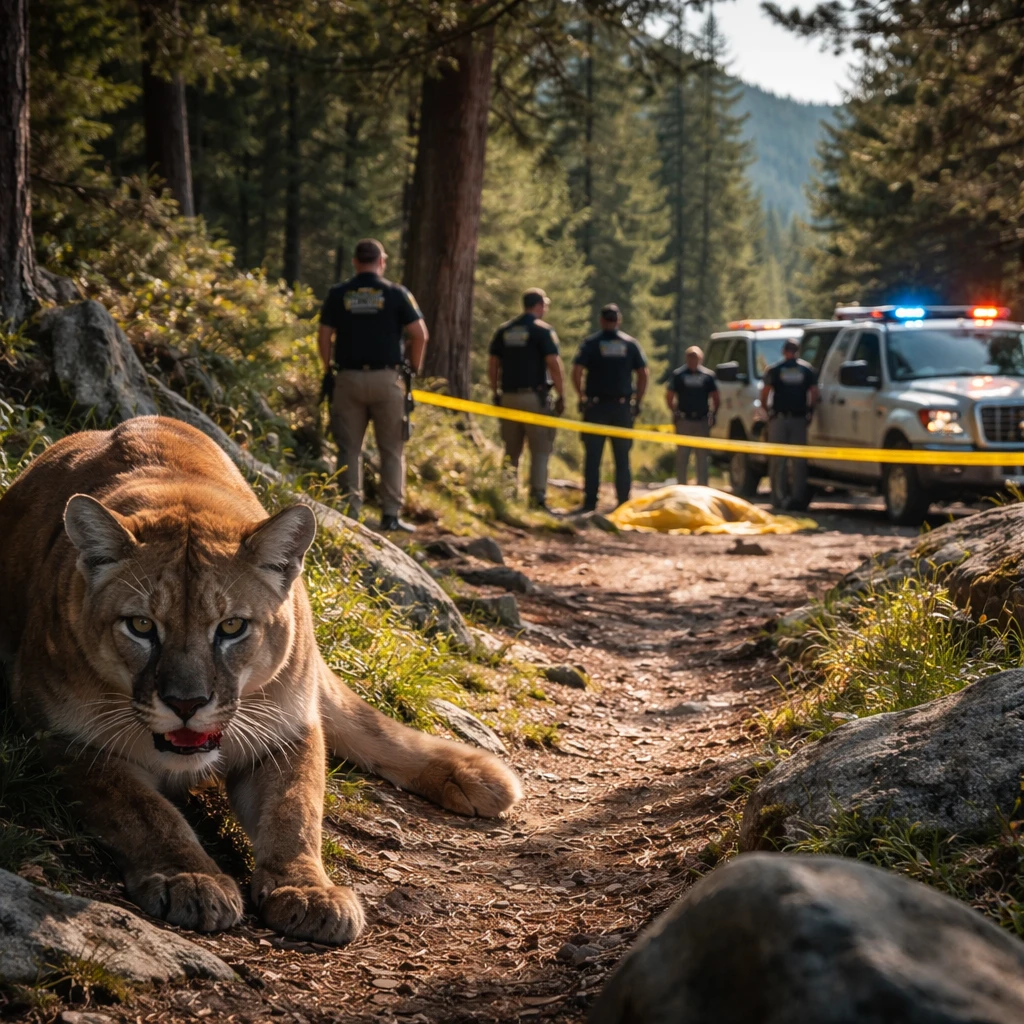

On Thursday, a solitary female hiker was found dead in the mountainous region south of Glen Haven, Colorado, with authorities attributing her death to a probable mountain lion attack. This tragedy stands as the first fatal mountain lion incident recorded in the state in over 25 years, underscoring the infrequency but potential danger of such predator encounters.
Colorado Parks and Wildlife spokeswoman Kara Van Hoose confirmed that wildlife officers, responding to the attack, located two mountain lions within the vicinity and subsequently fatally shot them. The attack took place along a remote segment of the Crosier Mountain trail, situated on a national forest area approximately seven miles northeast of Estes Park — known as the eastern gateway to Rocky Mountain National Park.
The incident unfolded shortly before noon when two hikers came upon a mountain lion near the victim's body. They reacted by throwing rocks at the animal to drive it away, enabling them to attempt to provide assistance. Among the hikers was a physician who administered aid but was unable to detect a pulse.
Details about the woman’s injuries and the precise cause of death remain unavailable as investigations proceed. Wildlife officials are actively searching for any additional mountain lions in the region. Decisions regarding the fate of other animals encountered will depend on situational assessments.
Mountain lion sightings are relatively common in this forest habitat, particularly within Larimer County, which offers ideal terrain for these predators. The area is characterized by wooded, rocky landscapes featuring significant variations in elevation, making it a frequent location for mountain lion reports and observations.
Despite the frequency of sightings, documented attacks on humans remain exceedingly rare. The last suspected fatal mountain lion attack in Colorado occurred in 1999, involving a three-year-old child. Prior to that, in 1997, a 10-year-old boy was attacked and killed while hiking with family in Rocky Mountain National Park.
Comparable incidents have occurred outside Colorado as well. For example, last year in Northern California, a pair of brothers were stalked and subsequently attacked by a mountain lion, resulting in the death of one brother.
Mountain lions, also known by names such as cougars and catamounts, can grow to lengths exceeding six feet (1.8 meters) and weigh around 130 pounds (60 kilograms). Their diet primarily consists of deer. Colorado’s estimated population of these big cats ranges between 3,800 and 4,400, and they are classified as a big game species within the state, subject to regulated hunting policies.