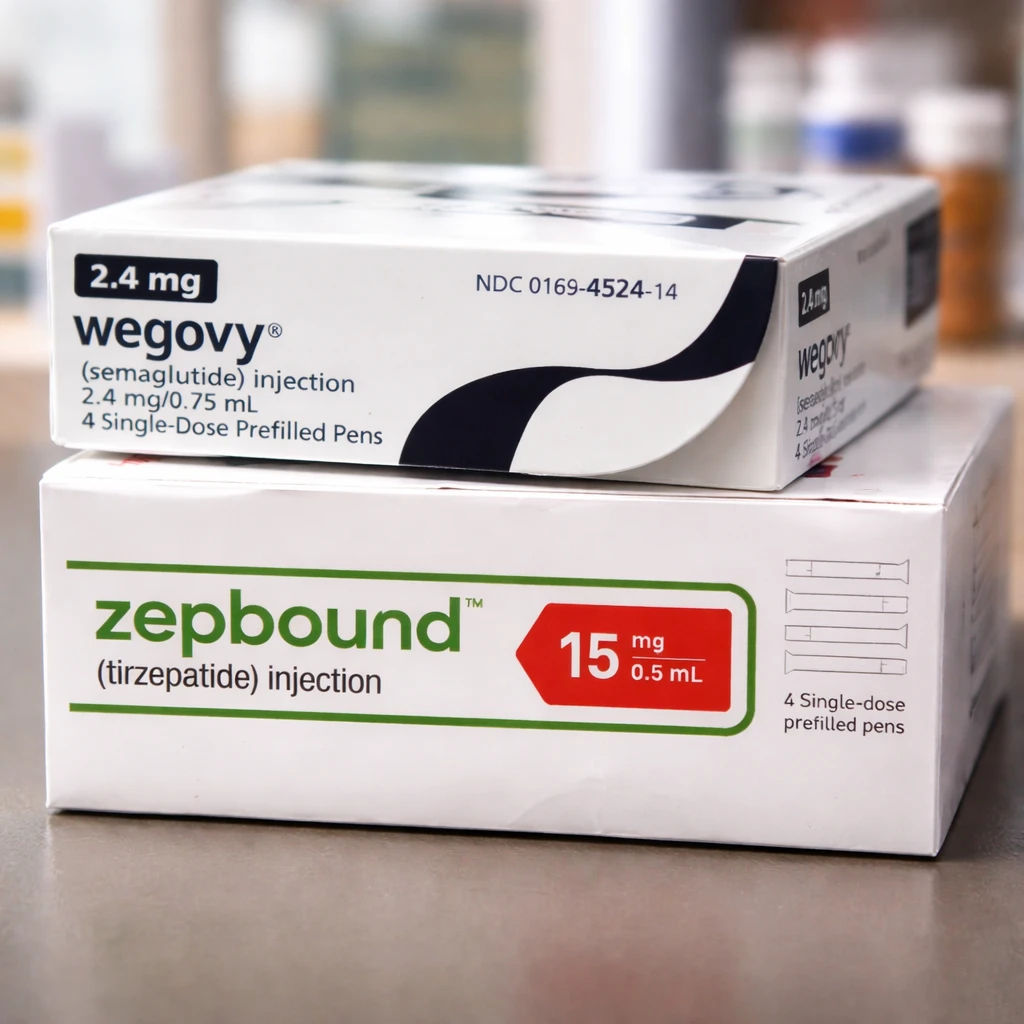

The U.S. Food and Drug Administration (FDA) has officially instructed pharmaceutical firms Novo Nordisk and Eli Lilly to remove cautionary statements concerning the risk of suicidal ideation and behaviors from the packaging of their leading weight management medications.
These medications, categorized as glucagon-like peptide-1 (GLP-1) receptor agonists, include Novo Nordisk’s Wegovy and Saxenda, alongside Eli Lilly’s Zepbound, all of which have achieved widespread use in obesity treatment.
The FDA disclosed that an extensive review of safety data found no evidence suggesting an increased risk of suicide-related outcomes associated with these drugs. This conclusion follows an initial assessment in January 2024 that found no definitive association between usage of these compounds and suicidal thoughts or actions, although early officials had acknowledged the possibility that a minor risk could not be completely dismissed at that stage.
With the current comprehensive analysis, however, the FDA has resolved these uncertainties, firmly indicating that the suicide risk warnings are unwarranted.
Moreover, the FDA emphasized that other GLP-1 receptor agonists, which are already approved for the treatment of diabetes, have not carried such warnings on their labels. This recent directive aims to ensure uniformity in the safety information presented to healthcare providers and patients across all GLP-1 RA medications authorized by the agency.
Officials from the FDA stated, “Today’s FDA action will ensure consistent messaging across the labeling for all FDA-approved GLP-1 RA medications.”
This step represents an important alignment in regulatory communications that may affect prescribing practices and patient confidence in these pharmacological options for weight and metabolic conditions.