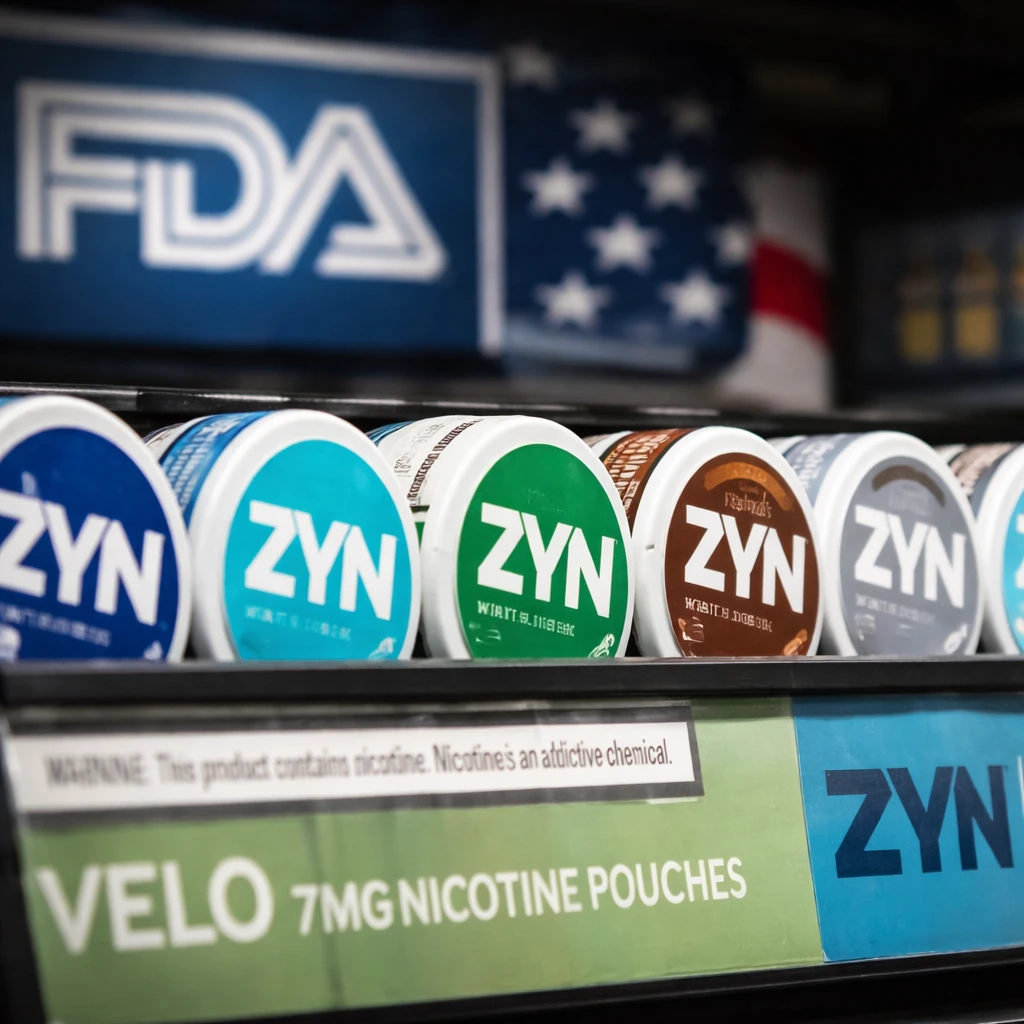

In Washington, the regulatory spotlight is focusing on Zyn, a popular flavored nicotine pouch product manufactured by Philip Morris International, as the Food and Drug Administration (FDA) convenes a public meeting to determine whether these pouches can be promoted as a less harmful nicotine alternative for adults who smoke cigarettes.
Zyn, available in a variety of flavors such as mint, coffee, and citrus, contains nicotine powder without tobacco leaves and has amassed billions in sales with widespread exposure on social media platforms. The FDA’s deliberations, scheduled for Thursday, will provide an opportunity for external health experts to review Philip Morris’s application and question representatives from both the firm and the regulatory agency. Preliminary government documentation suggests the FDA staff might endorse the request, but the final determination will consider external inputs.
The drive to reclassify Zyn’s marketing approach stems from Philip Morris’s desire to include explicit claims that its pouches significantly reduce the risk of major smoking-related illnesses such as mouth cancer, lung cancer, heart disease, and stroke. This authorized messaging would bolster Zyn’s market presence in the United States, where it commands a dominant share of nicotine pouch sales.
Last year, the FDA initially granted authorization for Zyn to continue sales after an extensive review period. It was recognized as less harmful than cigarettes and traditional tobacco products, making it the first nicotine pouch brand to achieve such clearance. Approval of Philip Morris’s request would permit advertising centered on harm reduction specifically targeted at adults who smoke or use tobacco products.
While nicotine pouch use remains limited to under 1% of the adult U.S. population, these products constitute the tobacco industry’s fastest-growing sector. This growth contrasts with the broader trending decline in cigarette and chewing tobacco consumption. According to market research analyzed by Goldman Sachs, Zyn accounted for over $3.24 billion in U.S. retail sales last year, representing more than two-thirds of the nicotine pouch market. The next largest competitor, on!, produced by Altria, received FDA market authorization in December.
Philip Morris’s investor communications reveal that the typical Zyn user tends to be between 30 and 40 years old with comparatively higher income levels than those who smoke cigarettes or use e-cigarettes.
FDA scientists have preliminarily evaluated Philip Morris’s submission and expressed that the evidence supports the accuracy of claims that Zyn can decrease the risk of diseases linked with smoking. The company’s portfolio includes snus, a type of oral tobacco pouch long sold in Scandinavian countries, where epidemiological studies have observed lower incidence rates of tobacco-related cancers and diseases among snus users compared with smokers.
Philip Morris argues Zyn poses even fewer health risks than snus because it contains no tobacco leaves, only nicotine, and analyses found unquantifiable amounts of 36 out of 42 harmful chemicals commonly present in tobacco products. The quantities of the remaining six chemicals were determined by FDA reviewers to be below thresholds considered harmful.
In addition to assessing benefits for adult smokers, the FDA must evaluate risks that the product’s marketing might pose to non-smokers and youth. Advocacy groups raise concern over the substantial viewership of social media content featuring young consumers adopting Zyn, sometimes referred to as “Zynfluencers.” A recent report by the Truth Initiative, an anti-tobacco nonprofit, noted that viral TikTok videos corresponded with sales spikes, albeit with unclear causality.
Despite these social media trends, recent federal survey data indicate that approximately 2.4% of high school students use nicotine pouches, suggesting relatively limited teenage adoption to date.
The FDA’s advisory panel, comprising independent public health professionals, will thoroughly discuss these complex issues in a full-day session. Their recommendations will inform but do not bind the agency’s ultimate decision, which currently has no set deadline.