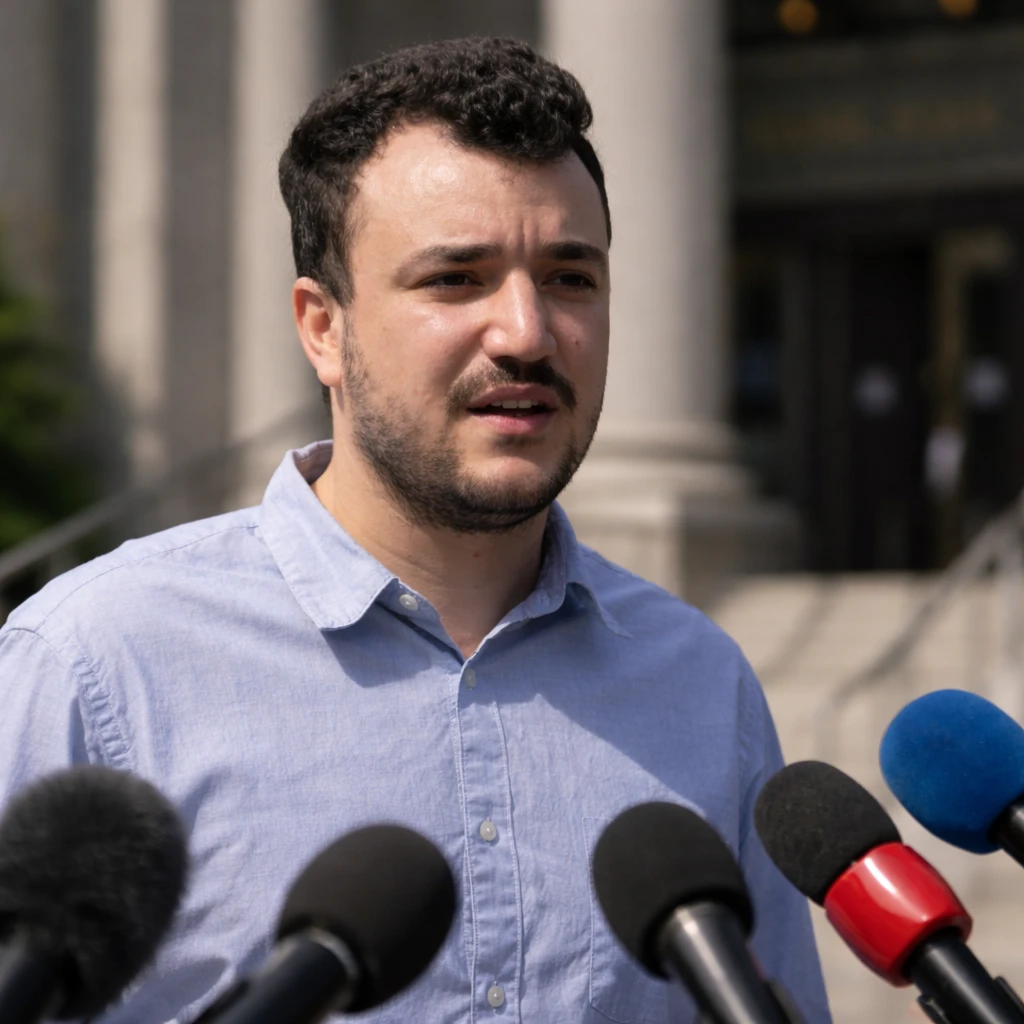

On Thursday, a three-judge panel from the U.S. Court of Appeals for the Third Circuit reversed a lower court’s order that freed Mahmoud Khalil, a Palestinian activist and former graduate student at Columbia University, from immigration detention. This action moves the government closer to reinstating his detention and advancing deportation efforts against him.
The appellate panel, in a 2-1 decision, did not rule on the central constitutional question concerning the Trump administration's initiative to expel Khalil based on his activism and criticism of Israel during his time on campus. Instead, the judges held that the district court in New Jersey lacked jurisdiction to review the matter at this stage. They emphasized that federal law mandates the completion of proceedings within the immigration court system before a detainee can escalate challenges to federal courts.
"That scheme ensures that petitioners get just one bite at the apple — not zero or two," the majority explained. "But it also means that some petitioners, like Khalil, will have to wait to seek relief for allegedly unlawful government conduct."
[Embedded media and promotional content excluded]
The ruling does not enact an immediate return to detention for Khalil, a legal permanent resident, although authorities have yet to clarify whether they intend to detain him again during ongoing litigation. A Department of Homeland Security representative, Tricia McLaughlin, described the decision as "a vindication of the rule of law," stating the department's resolve to enforce the removal order and urging Khalil to voluntarily leave the country prior to potential arrest.
Responding through a statement shared by the American Civil Liberties Union, Khalil expressed deep disappointment with the appeals court's ruling. He reaffirmed his dedication to advocating for Palestine and pursuing justice and accountability, asserting he will exhaust every legal option to defend his rights and those of similarly situated individuals.
Baher Azmy, an attorney from the Center for Constitutional Rights representing Khalil, criticized the ruling as diverging from other federal court decisions and maintained that legal remedies remain available despite the setback. The ACLU also noted that federal law prohibits re-detention until the removal order formally takes effect, a status that remains pending as Khalil pursues immediate appeals.
His legal team may petition for a rehearing by the full Third Circuit or appeal directly to the Supreme Court to contest the appellate panel’s decision.
Khalil gained prominence as a vocal pro-Palestinian organizer at Columbia University. He was arrested in March of the previous year and spent three months detained at an immigration facility in Louisiana, missing the birth of his first child. Federal authorities have accused him of engaging in activities linked to Hamas, although they have not presented evidence substantiating criminal conduct. Additionally, the government claimed he failed to disclose certain information on his green card application.
The legal basis for Khalil’s arrest is a rarely invoked immigration statute permitting expulsion of noncitizens whose political beliefs are considered detrimental to United States foreign policy interests. Last June, a New Jersey federal judge ruled that application of this statute in Khalil’s case was likely unconstitutional and ordered his release.
However, the Trump administration appealed, arguing that such deportation decisions fall exclusively within the jurisdiction of immigration courts rather than federal district courts.
Khalil has denied the government’s allegations, labeling them unfounded and asserting that his detention resulted directly from his exercise of free speech in advocating for Palestinian rights and opposing violence in Gaza.
Zohran Mamdani, New York City’s mayor, publicly supported Khalil’s continued freedom, condemning his prior arrest as an assault on constitutional rights and warning against renewed attempts to detain him amid what he termed a crackdown on pro-Palestinian expression.
In a dissenting opinion, Judge Arianna Freeman criticized the majority's ruling, arguing that Khalil is presenting urgent legal claims that warrant immediate attention by the district court despite incomplete immigration proceedings. Freeman's dissent highlighted concerns that the decision leaves Khalil without relief against potentially unlawful detention.
The majority judges, both appointed by Republican presidents, dismissed these concerns, explaining that the legal system regularly requires petitioners, even with valid claims, to await proper procedural stages before seeking judicial intervention.
Meanwhile, an immigration appeals board is currently reviewing prior findings that Khalil could face deportation to Algeria, where he holds citizenship through a relative, or Syria, where he was born in a refugee camp to a Palestinian family. Khalil’s legal counsel argues that he would be at severe risk of harm if returned to either nation.
As this contentious case unfolds, it underscores the complex intersection of immigration law, national security policies, and constitutional rights related to political activism.
Additional reporting contributed by Larry Neumeister and Anthony Izaguirre.