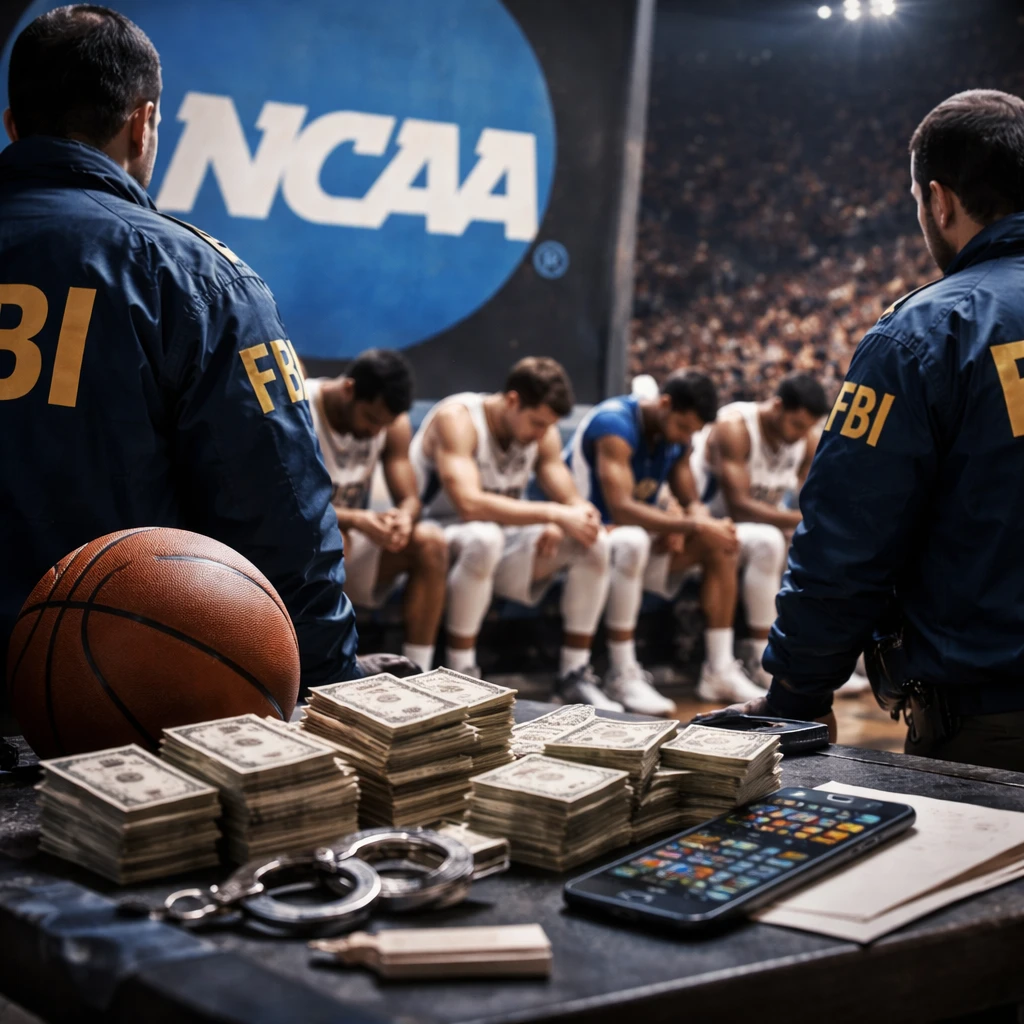

A broad and complex illegal gambling conspiracy was exposed by federal authorities in Philadelphia, linking 26 people in a plot to manipulate basketball games in both the NCAA and the Chinese Basketball Association (CBA). According to prosecutors, over a dozen college basketball players were involved in rigging games as recently as the 2024-25 NCAA season.
The scheme featured fixers who sought out players by offering substantial bribes ranging from $10,000 to $30,000 per game. These players would then intentionally underperform during specific games, enabling the fixers to place large bets against the affected teams. This coordinated effort successfully deceived sportsbooks and other bettors, resulting in significant financial fraud, as detailed in the indictment unveiled Thursday.
The operation reportedly began with two CBA games in 2023 and expanded to impact NCAA contests as late as January 2025. Among the charged players, four—Simeon Cottle, Carlos Hart, Oumar Koureissi, and Camian Shell—were active members of their respective college basketball teams as recently as weeks ago, though their alleged misconduct does not pertain to the current season.
U.S. Attorney David Metcalf described the conspiracy as an "international criminal conspiracy," emphasizing the gravity of the attack on sports integrity. He highlighted the significant corruption resulting from the scheme, which undermined the fundamental fairness of basketball competitions.
In total, prosecutors identified 15 defendants who played for NCAA Division 1 basketball teams during the 2024-25 season, including some currently active players. An additional five had competed in NCAA basketball during the 2023-24 season. The indictment also includes former NBA player Antonio Blakeney, who played in the Chinese Basketball Association in the 2022-23 season.
The group also comprises five fixers with varied roles: two individuals involved in basketball player training and development, a trainer and former coach, a former NCAA player, as well as two persons characterized as gamblers, influencers, and sports handicappers.
Authorities noted that many bets placed on the fixed games yielded payouts, which sportsbooks honored unaware of the manipulation. The indictment asserted, "The sportsbooks would not have paid out those wagers had they known that the defendants fixed those games." Conversely, uninformed bettors suffered losses they would not have risked had the scheme been exposed.
The charges filed in federal court include bribery, wire fraud, and conspiracy, underscoring the wide-ranging criminal nature of the operation.
Amidst rising sports gambling revenues—surpassing $11 billion in the first three quarters of last year and growing over 13% from the prior year—concerns about gambling-related corruption in college sports have intensified. The NCAA prohibits athletes and staff from betting on college games. Although there was a brief allowance last year for student-athletes to wager on professional sports, this policy was reversed by November.
This latest indictment follows earlier NCAA investigations, which resulted in lifetime bans for at least 10 players involved in betting scandals that sometimes concerned their own performances and teams. The NCAA has said that over 30 players faced investigation regarding gambling allegations. Similarly, over 30 individuals were charged in a previous federal crackdown on illegal gambling tied to professional basketball.
The ongoing scrutiny reflects the increased vulnerability of the college basketball ecosystem and the broader sports industry to gambling-related corruption, particularly as legalized betting expands within various states. The involvement of active players, fixers with sports training backgrounds, and the use of international games as initial targets underscore the multilayered challenges faced by regulators and sports organizations.