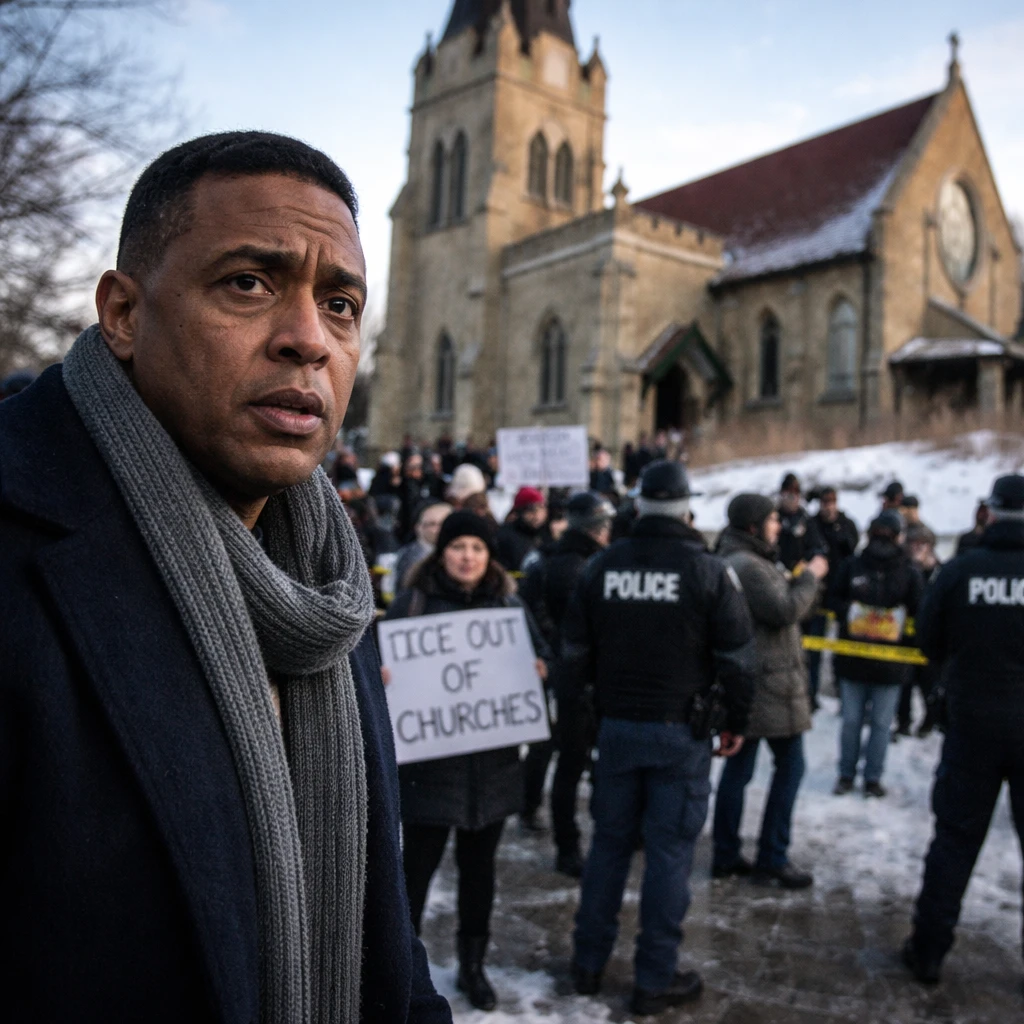

In Minnesota, seven people have been federally charged for their roles in a protest that disrupted a worship service at Cities Church in St. Paul earlier this month. Among those charged are former CNN anchor Don Lemon and an independent journalist, Georgia Fort. The protest targeted the fact that the pastor of the church also heads a local U.S. Immigration and Customs Enforcement field office.
The protest erupted during the service on January 18, drawing swift criticism from political figures including President Donald Trump and Attorney General Pam Bondi, as well as diverse religious leaders nationwide. Lemon and Fort were on site covering the protest when federal complaints were filed against them along with five other organizers. However, many details concerning the allegations remain undisclosed due to sealed parts of the case files.
The arrests of Lemon and Fort have sparked concerns among legal scholars and journalism organizations. These groups warn of a potentially chilling effect on the media’s ability to report on matters involving the current administration. David Harris, a criminal law professor at the University of Pittsburgh, noted that while charges against protesters invoking federal laws prohibiting disturbance of worship services might hold, allegations against journalists are cause for concern.
"Journalists covering disruptions are not necessarily participants in those disruptions," Harris explained. "Don Lemon and other reporters serve as the public’s eyes and ears, providing vital coverage of events. This enforcement could intimidate journalists from fulfilling their essential role."
The complaints cite two federal statutes enacted over a century apart with distinct origins but broader applications in protecting rights today. One is the Freedom of Access to Clinic Entrances (FACE) Act, passed in 1994, originally to ensure safe access to abortion clinics amid protest-related violence. This legislation also includes provisions penalizing disruption of religious worship services.
The FACE Act has been a subject of political debate, particularly among anti-abortion conservatives who criticize its restrictions. The Trump administration reduced prosecutions under this law, contending the law had been weaponized, though the Supreme Court declined to overturn it despite overturning Roe v. Wade.
In 2025, 42 House Republicans supported legislation to repeal the FACE Act, highlighting concerns that it suppresses anti-abortion protest activity and arguing the worship service disruption element had not been previously enforced. Nonetheless, the Department of Justice has applied the FACE Act in cases beyond clinics, including a 2025 lawsuit against demonstrators outside a synagogue.
Penalties under the FACE Act range from fines and up to one year imprisonment for first offenses to more severe consequences if injuries or property damage occur.
The second statute referenced is the Conspiracy Against Rights law, stemming from the post-Civil War era designed to counteract intimidation tactics by groups like the Ku Klux Klan. It prohibits interference with constitutional rights through intimidation or force. This law has been applied to cases ranging from civil rights-era murders to political conspiracies and hate crimes.
The Conspiracy Against Rights charge carries penalties of up to 10 years imprisonment, increasing with severity in cases involving injury or destruction.
Professor Harris emphasized the importance of journalists’ presence in such events, stating, "They allow the public to witness and assess actions firsthand rather than rely solely on official narratives, which can sometimes be misleading."
The incident and subsequent charges highlight ongoing tensions involving freedoms of worship, protest, and press coverage, underscoring complex intersections of civil rights and legal protections in contemporary American society.
Additional contributions to the coverage were made by reporter Tiffany Stanley. The work receives support through partnerships with academic and philanthropic organizations, with full editorial responsibility residing with the journalist and their team.
The protest erupted during the service on January 18, drawing swift criticism from political figures including President Donald Trump and Attorney General Pam Bondi, as well as diverse religious leaders nationwide. Lemon and Fort were on site covering the protest when federal complaints were filed against them along with five other organizers. However, many details concerning the allegations remain undisclosed due to sealed parts of the case files.
The arrests of Lemon and Fort have sparked concerns among legal scholars and journalism organizations. These groups warn of a potentially chilling effect on the media’s ability to report on matters involving the current administration. David Harris, a criminal law professor at the University of Pittsburgh, noted that while charges against protesters invoking federal laws prohibiting disturbance of worship services might hold, allegations against journalists are cause for concern.
"Journalists covering disruptions are not necessarily participants in those disruptions," Harris explained. "Don Lemon and other reporters serve as the public’s eyes and ears, providing vital coverage of events. This enforcement could intimidate journalists from fulfilling their essential role."
The complaints cite two federal statutes enacted over a century apart with distinct origins but broader applications in protecting rights today. One is the Freedom of Access to Clinic Entrances (FACE) Act, passed in 1994, originally to ensure safe access to abortion clinics amid protest-related violence. This legislation also includes provisions penalizing disruption of religious worship services.
The FACE Act has been a subject of political debate, particularly among anti-abortion conservatives who criticize its restrictions. The Trump administration reduced prosecutions under this law, contending the law had been weaponized, though the Supreme Court declined to overturn it despite overturning Roe v. Wade.
In 2025, 42 House Republicans supported legislation to repeal the FACE Act, highlighting concerns that it suppresses anti-abortion protest activity and arguing the worship service disruption element had not been previously enforced. Nonetheless, the Department of Justice has applied the FACE Act in cases beyond clinics, including a 2025 lawsuit against demonstrators outside a synagogue.
Penalties under the FACE Act range from fines and up to one year imprisonment for first offenses to more severe consequences if injuries or property damage occur.
The second statute referenced is the Conspiracy Against Rights law, stemming from the post-Civil War era designed to counteract intimidation tactics by groups like the Ku Klux Klan. It prohibits interference with constitutional rights through intimidation or force. This law has been applied to cases ranging from civil rights-era murders to political conspiracies and hate crimes.
The Conspiracy Against Rights charge carries penalties of up to 10 years imprisonment, increasing with severity in cases involving injury or destruction.
Professor Harris emphasized the importance of journalists’ presence in such events, stating, "They allow the public to witness and assess actions firsthand rather than rely solely on official narratives, which can sometimes be misleading."
The incident and subsequent charges highlight ongoing tensions involving freedoms of worship, protest, and press coverage, underscoring complex intersections of civil rights and legal protections in contemporary American society.
Additional contributions to the coverage were made by reporter Tiffany Stanley. The work receives support through partnerships with academic and philanthropic organizations, with full editorial responsibility residing with the journalist and their team.