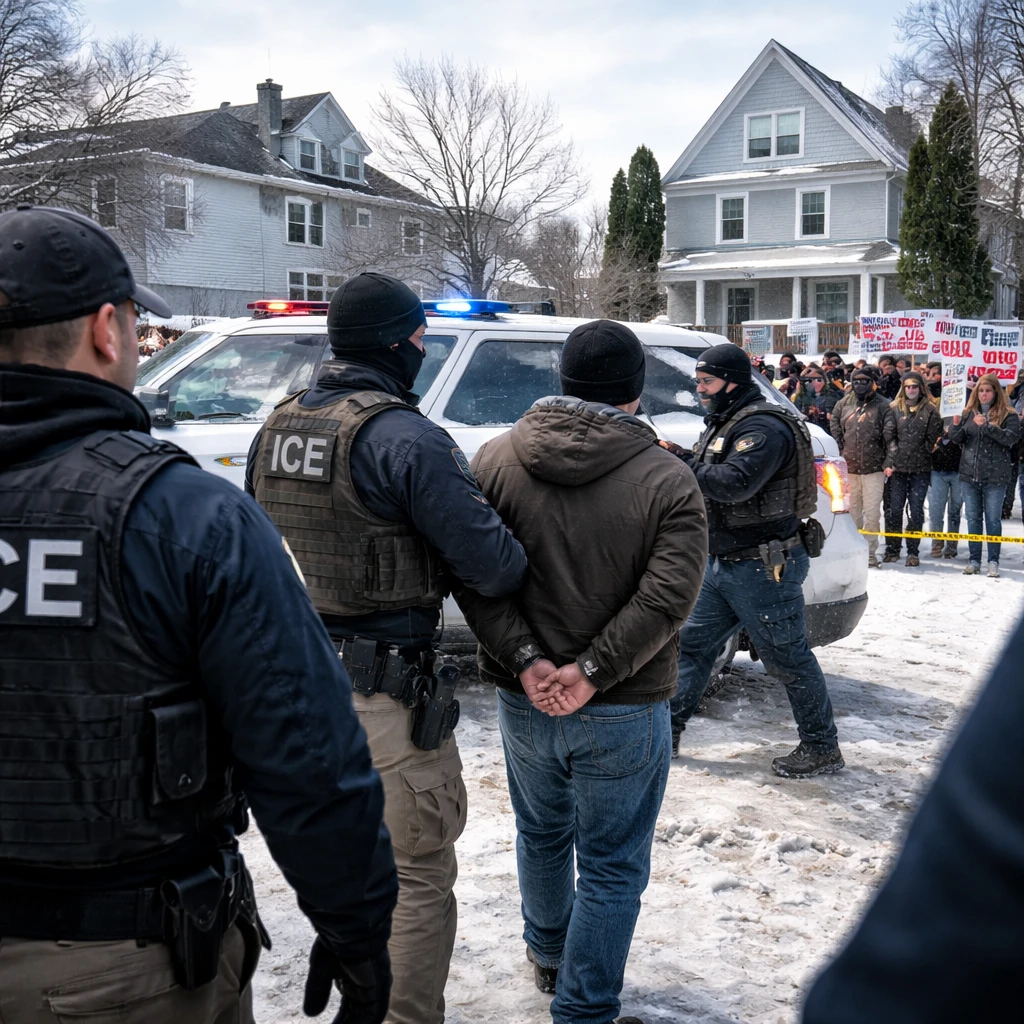

A federal judiciary authority in Minnesota has opted not to suspend an intensified immigration enforcement campaign underway in the state and its Twin Cities, allowing the operation to proceed while a lawsuit challenging it remains unresolved. This decision was delivered by Judge Katherine M. Menendez on a Saturday ruling, which dismissed a preliminary injunction motion initiated earlier this month by Attorney General Keith Ellison along with the mayors of Minneapolis and St. Paul.
The lawsuit claims that the Department of Homeland Security's current enforcement actions infringe upon constitutional protections, specifically pointing to overreach beyond federal authority. The plaintiffs sought immediate judicial intervention to either stop or at least curtail the scope of these federal actions. Meanwhile, legal representatives for the U.S. Department of Justice have publicly described the suit as without legal merit.
The judge's ruling concentrated substantially on assessing the probability that the lawsuit’s constitutional arguments would ultimately prevail. The state officials allege violations of the 10th Amendment, which safeguards state sovereignty by limiting the extent of federal power. Conversely, federal representatives defended the enforcement surge—identified as Operation Metro Surge—as essential for the removal of criminal immigrants, claiming previous federal efforts had been thwarted by regional sanctuary regulations and policies.
State and municipal leaders contend that the surge represents a retaliatory tactic following failed attempts by the federal government to leverage funding in order to compel local cooperation with immigration enforcement. They further charge that such actions have illegally drained local and state resources, with repercussions including the closure of educational institutions and businesses, ostensibly prompted by what officials describe as aggressive and inadequately trained armed federal personnel.
Highlighting the judicial reasoning, Judge Menendez noted the presence of compelling evidence supporting arguments from both parties, making it difficult to decisively favor granting an immediate injunction. She acknowledged the current indeterminacy surrounding the deeper merits of the legal dispute.
The judge’s decision was also influenced by a recent appellate court outcome that lifted her prior constraints on immigration officers’ use of force against peaceful protestors in Minnesota. She remarked that if the prior injunction was perceived as overly broad, halting the entire enforcement operation would be an even more extreme remedy.
Despite denying the injunction, Menendez underscored that the lawsuit presents a strong case regarding the significant and, at times, tragic consequences of the enforcement operation on Minnesota’s residents. She referenced multiple fatal shootings by federal agents in the state and documented instances suggestive of racial profiling and excessive force by Customs and Border Protection and Immigration and Customs Enforcement officials.
Reactions to the ruling were swift among involved parties. U.S. Attorney General Pam Bondi hailed the decision as a substantial legal victory for the Justice Department in a public social media message. Department of Homeland Security Secretary Kristi Noem also expressed satisfaction with the court’s recognition of lawful federal action and indicated an intention to collaborate more closely with local law enforcement and state leaders.
Conversely, local authorities expressed dismay and condemnation. Minneapolis Mayor Jacob Frey described the enforcement as an unwelcome intrusion that has engendered fear and disruption rather than enhancing public safety, calling for the operation to end. Attorney General Ellison pledged continued legal contestation, framing the federal agents’ presence as an unconstitutional effort to intimidate Minnesota and subvert its autonomy under the Tenth Amendment.
Tension in Minnesota remains high, notably in Minneapolis where federal officers fatally shot two individuals earlier in January—Renee Good and Alex Pretti—intensifying public outcry and mass demonstrations. On the day of the ruling, protesters gathered in a local park, expressing a blend of frustration and resolve despite the judicial setback. Some community members lamented the impact on daily life, including diminished school attendance due to fear triggered by the enforcement activities, while others vowed to persist in their opposition.
The case continues to unfold with the judicial system yet to determine the broader constitutional implications of Operation Metro Surge and its alignment with state sovereignty protections.