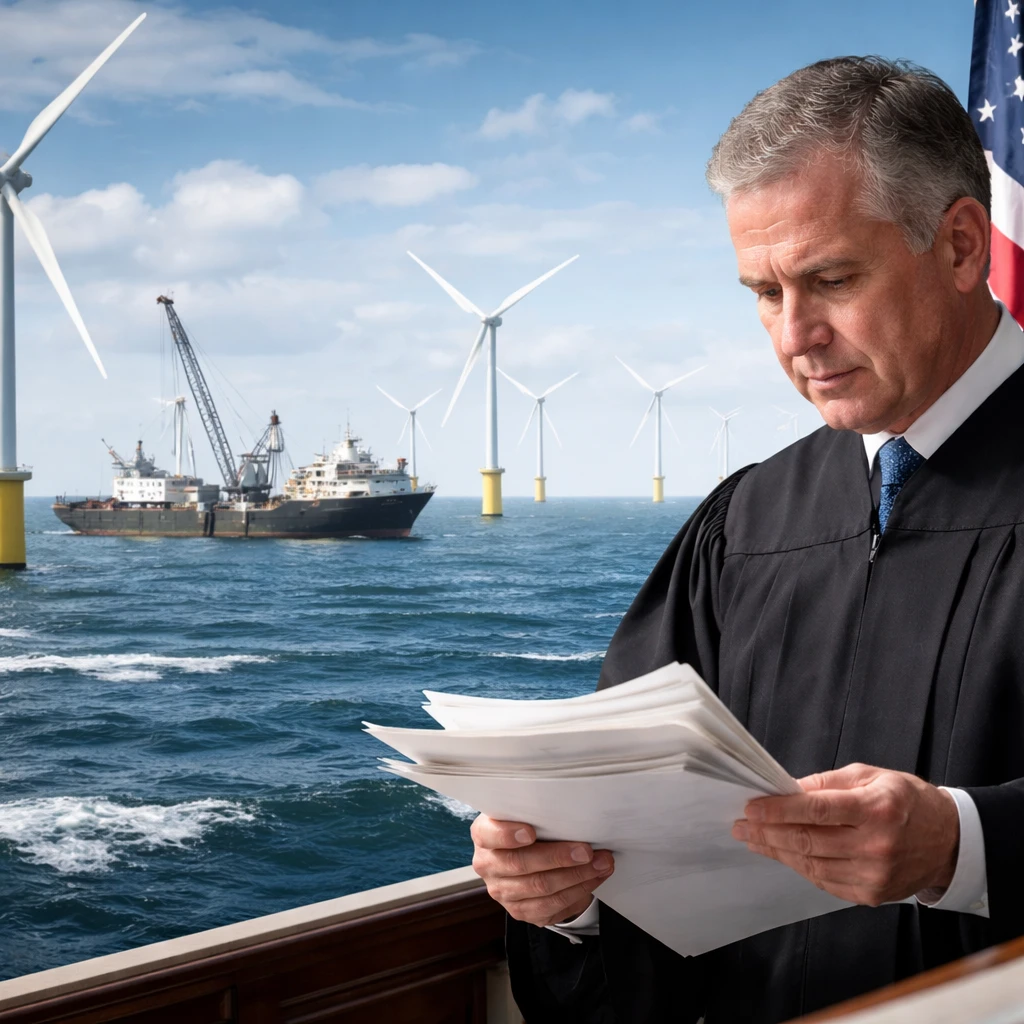

In Washington, a federal court is currently evaluating whether to invalidate an executive order issued by the former administration that paused the construction of a significant offshore wind project near New York. The initiative, known as Empire Wind, is designed to deliver power to more than 500,000 households but now risks stalling, with its developer cautioning that the directive threatens to terminate a project that has reached roughly 60% completion.
The project is managed by Norwegian energy firm Equinor, which has indicated that the suspension severely impacts operations due to the scarce availability of specialized vessels required for construction, alongside substantial financial setbacks. Empire Wind is one among five major offshore wind installations along the U.S. East Coast whose development was frozen shortly before Christmas by the former administration, citing national security issues. In response, multiple project developers and state governments have initiated lawsuits seeking to overturn the pause order.
District Judge Carl J. Nichols, nominated by President Trump, presided over the hearing convened on Wednesday and is expected to issue a ruling on Thursday. During proceedings, it emerged that the government submitted its national security rationale under confidential conditions for judicial review. No public disclosure has been made regarding the specific concerns; moreover, some analysts note that these projects have undergone extensive permitting over several years, inclusive of reviews by the Department of Defense.
Judge Nichols highlighted that the primary governmental apprehension appeared centered on the operation phase of the wind turbines rather than their construction, a point the government later contested. The judge further criticized the government for not adequately addressing critical arguments presented by Empire Wind, including allegations of procedural irregularities and arbitrary decision-making by the former administration.
In court, Nichols remarked on the omission of the term "arbitrary" in the government’s legal brief and expressed disapproval of the administration's stance, stating, "This is not the way we do things." The arbitration over Empire Wind marks the second in a series of three legal challenges being heard this week against the suspension, following a judgment that allowed a different offshore wind project serving Rhode Island and Connecticut to recommence.
Former President Trump has consistently opposed offshore wind initiatives since his return to office, most recently branding wind farms as economically unviable enterprises that harm landscapes and avian populations. This approach toward offshore wind and renewable energy more broadly conflicts with policies pursued by numerous other countries, and experts emphasize that an expansive buildout of renewable electricity infrastructure is essential for addressing global climate change.
Photographic evidence from a staging terminal in Portsmouth, Virginia, depicts wind turbine components prepared for another offshore wind development, indicating the ongoing industrial activity in this sector despite legal and administrative hurdles.