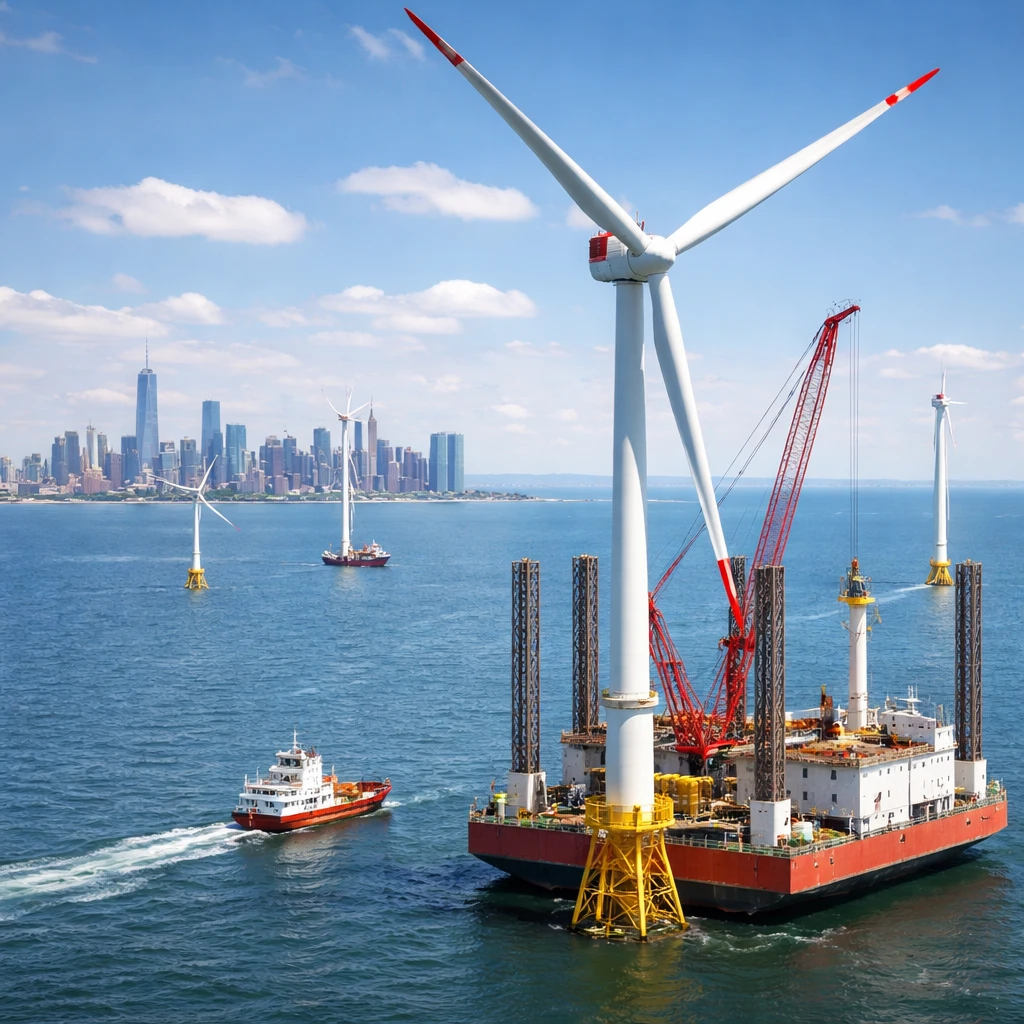

In a significant judicial decision on Thursday, a Washington federal judge cleared the way for the Empire Wind offshore wind project, located off the coast of New York, to restart construction activities. This development represents a triumph for the Norwegian energy company Equinor, the project's owner, which had argued that the Trump administration's order to halt the project would result in its near-immediate demise.
Judge Carl J. Nichols, appointed by former President Donald Trump, allowed construction to proceed while he continues to review the government's suspension order on its merits. Critically, the judge noted that the government had failed to adequately respond to essential arguments presented in Empire Wind's court filings, including allegations of procedural violations during the suspension decision.
Equinor welcomed the court's ruling, with spokesman David Schoetz affirming their intention to continue collaborating with relevant authorities. This judicial victory comes shortly after another developer won a similar legal battle earlier in the week, highlighting growing resistance to federal actions impeding offshore wind projects.
These controversies stem from a sweeping freeze on five major offshore wind initiatives along the U.S. East Coast ordered just before Christmas, based on stated national security concerns. Former President Trump, throughout his tenure and subsequent tenure, has consistently criticized offshore wind developments, describing them as economically unviable and ecologically detrimental due to their effect on landscapes and bird populations.
Several state governments and developers responded by filing lawsuits to challenge and seek injunctions against the administration's suspension mandates. These large-scale, ocean-based wind farms are integral components of renewable energy strategies, particularly in East Coast states where opportunities for onshore wind and solar projects are limited.
Meanwhile, New York Governor Kathy Hochul expressed strong approval of the court's decision, denouncing the prior halts as based on unfounded national security allegations. Governor Hochul demanded clarity from federal authorities regarding any purported threats near New York's coastline, highlighting the absence of substantive national security evidence presented by the administration.
This judicial development echoes an earlier ruling on Monday that permitted Danish company Orsted to resume work on the Revolution Wind project situated offshore from Rhode Island and Connecticut. Senior Judge Royce Lamberth ruled that the government had not sufficiently justified a total construction stoppage. Revolution Wind is nearing completion and is expected to supply approximately 20 percent of Rhode Island's electricity demand and 5 percent of Connecticut's.
Orsted has also initiated legal proceedings against the federal suspension of its Sunrise Wind project off New York, with hearings pending. In addition, Dominion Energy Virginia, developer of the Coastal Virginia Offshore Wind project, is preparing a court request scheduled for Friday to challenge the suspension order and resume work on its offshore wind initiative.
Despite personal criticisms from former President Trump, the Empire Wind and Sunrise Wind projects are positioned well offshore, at 14 miles and 30 miles respectively, reducing concerns about visual impacts along the coast.
The fifth paused project, Vineyard Wind, under development in Massachusetts by a joint venture of Avangrid and Copenhagen Infrastructure Partners, joined lawsuits challenging the administration's suspension, filing a complaint in federal district court in Boston.
While these U.S. projects face gridlock, the global offshore wind market continues to expand robustly. China is the foremost nation in new offshore wind installations, underscoring a global trend toward renewable energy. Nearly all new electricity generation capacity added worldwide in 2024 has been renewable sources. Recently, the UK government announced a record-setting 8.4 gigawatts secured in an offshore wind auction, representing enough power for over 12 million households.
Opposition remains entrenched in some quarters within the United States. Robin Shaffer, president of Protect Our Coast New Jersey, supported the Trump administration's suspension on national security grounds and urged immediate appeals against unfavorable court decisions. Opposition groups in New Jersey are notably vocal and well-organized, presenting ongoing challenges for offshore wind development in the region.