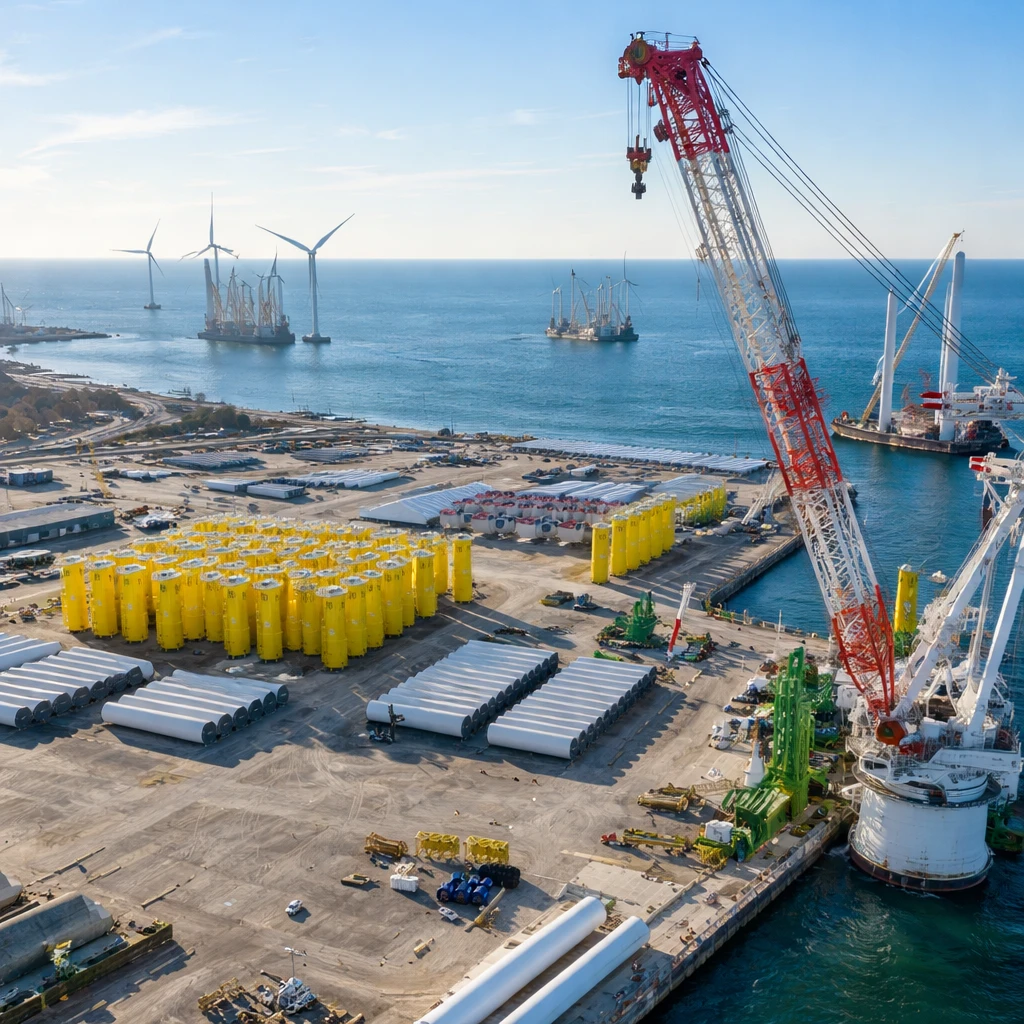
In a significant development for offshore wind initiatives on the U.S. East Coast, a federal judge ruled on Friday allowing construction work on a notable Virginia offshore wind project to proceed. This ruling represents a third judicial success this week for developers contesting a federal government suspension of offshore wind lease activities initiated by the previous administration.\n\nLast month, the Trump administration announced a minimum 90-day pause on leases associated with five offshore wind projects along the East Coast, citing unspecified national security concerns. This suspension applied broadly but details regarding the nature of the concerns were not disclosed publicly at that time. The announcement prompted swift legal action from the affected developers and states, aiming to prevent the halt. Among them, Dominion Energy Virginia, responsible for developing the Coastal Virginia Offshore Wind project, was the first to challenge the order in court.\n\nOn Friday, in federal court within Virginia, a judge granted a preliminary injunction in favor of Dominion Energy, as documented in hearing records. This legal measure permits construction activities to continue while the company pursues its challenge of the federal suspension order. This decision restores project momentum for the Richmond-based utility, which has been actively developing the wind farm to support regional energy needs.\n\nConcurrently, federal courts in the District of Columbia have delivered similar rulings enabling construction on other flagship offshore wind projects. These include the Empire Wind project affiliated with Norwegian energy firm Equinor in New York, as well as the Revolution Wind initiative, operated by Danish firm Orsted, serving regions in Rhode Island and Connecticut.\n\nThese court decisions collectively represent a notable reaffirmation for the offshore wind sector, which is critical to the renewable energy strategies of East Coast states. Large-scale offshore wind farms are viewed as essential components given the limited availability of suitable land for onshore wind turbines and solar arrays in these densely populated coastal states.\n\nOrsted has also taken legal steps addressing the suspension of its Sunrise Wind project in New York, illustrating the widespread impact of the federal order on multiple stakeholders within the emerging offshore wind marketplace.\n\nAnother significant project affected by the lease pause is Vineyard Wind, located off the coast of Massachusetts. Managed by a joint venture between Avangrid and Copenhagen Infrastructure Partners, Vineyard Wind recently joined other developers by filing a federal complaint in Boston, challenging the federal government’s suspension directive.\n\nThe Coastal Virginia Offshore Wind project itself commenced construction efforts early in 2024. Once operational, it is planned to feature 176 offshore wind turbines capable of generating sufficient electricity to power approximately 660,000 households. Dominion Energy has characterized the government suspension as arbitrary and capricious, asserting that the action is unconstitutional. Following the favorable court ruling, Dominion Energy indicated its intent to prioritize the resumption of work to enable the project to start delivering much-needed energy within weeks. The company emphasizes that the project is vital to accommodating rapidly increasing electricity demand, driven in part by the expansion of data centers in the region.\n\nDespite criticisms from President Donald Trump, labeling offshore wind projects as visually unappealing, this particular wind farm is situated roughly 27 miles (43 kilometers) offshore from Virginia Beach, thereby diminishing visual impact concerns.\n\nSean McGarvey, president of North America’s Building Trades Unions, praised the recent court rulings for allowing union workers to return to project sites. He underscored the importance of maintaining power generation capacity amid rising energy demand and costs, highlighting that NABTU members are actively engaged in constructing offshore wind projects throughout the United States under solid labor agreements. The rulings, according to McGarvey, facilitate continued progress toward delivering affordable, clean, and reliable energy to communities along the East Coast.
January 16, 2026
News & Politics
Federal Court Permits Resumption of Virginia Offshore Wind Project Construction
Legal victories restore momentum to key East Coast offshore wind initiatives amid federal lease suspensions

Priya Menon
Industrials & Aerospace Analyst
Summary
A federal judge in Virginia has authorized the continuation of construction on the Coastal Virginia Offshore Wind project, marking the third successful legal challenge against the federal government’s suspension of East Coast offshore wind leases. This decision enables Dominion Energy Virginia to proceed with development as litigation over the administration's order moves forward. Similar rulings have supported projects in New York, Rhode Island, and Connecticut, reinforcing the ongoing commitment to expand renewable energy offshore.
Key Points
Federal judges have permitted the resumption of construction on three major East Coast offshore wind projects after government lease suspensions citing national security concerns.
Dominion Energy Virginia’s Coastal Virginia Offshore Wind project has been authorized to continue development, powering approximately 660,000 homes once operational.
Offshore wind farms remain critical components of renewable energy strategies for East Coast states with limited onshore wind and solar development options.
Risks
- The federal government's suspension of offshore wind leases citing national security concerns introduces uncertainty for project timelines across the offshore wind sector.
- Ongoing litigation against the federal order could delay development and increase costs for affected offshore wind projects.
- Political opposition and regulatory reviews could impact future offshore wind initiatives, influencing investment decisions in the renewable energy and construction sectors.
Disclosure
This article is based on publicly available federal court rulings and statements from involved parties regarding the status of offshore wind projects. No speculative or non-disclosed information has been included.