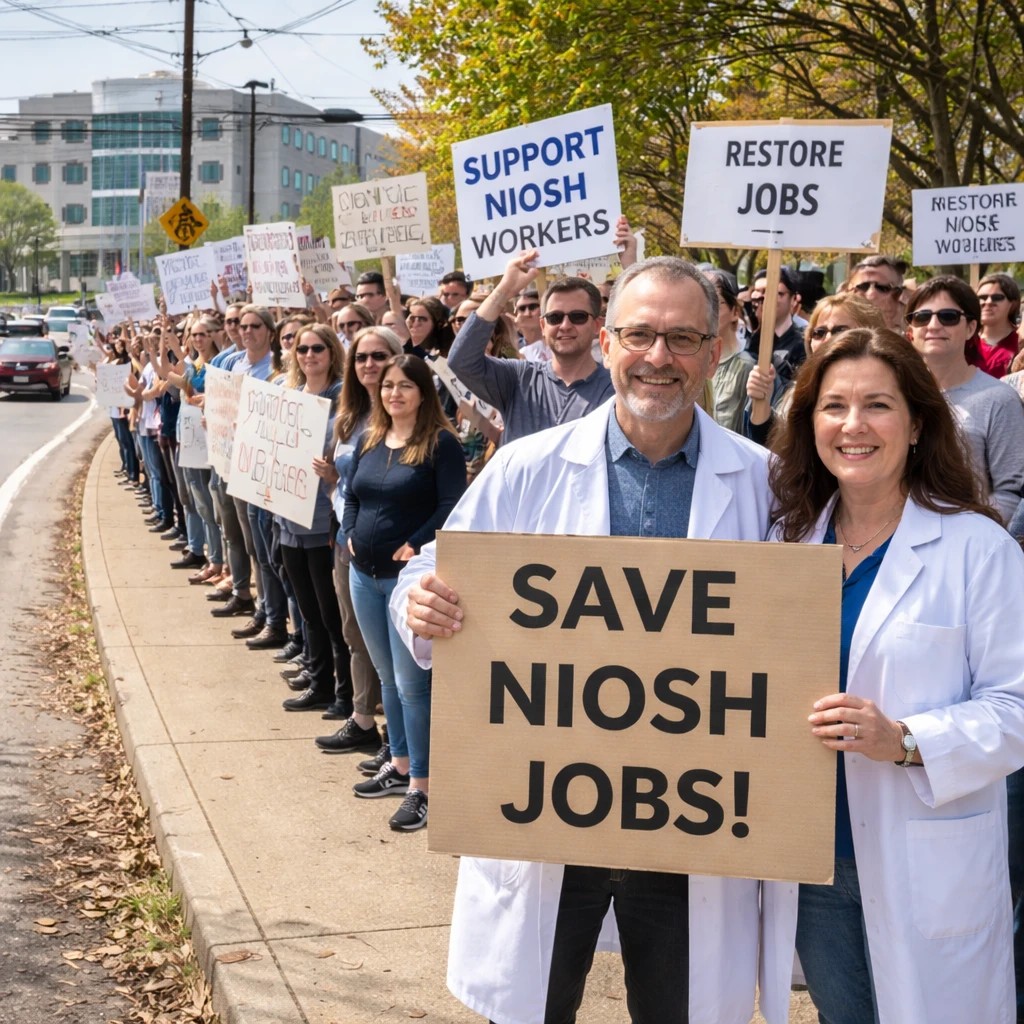

In a significant policy reversal, federal authorities have restored the employment of nearly all researchers and staff who were laid off from the National Institute for Occupational Safety and Health (NIOSH) last year. These employees, numbering approximately 900, were part of a previously reduced workforce aimed at supporting American worker safety and health.
The reductions occurred in April under the administration of former President Donald Trump. The layoffs were drastic, reducing the agency’s workforce from about 1,000 to nearly 100 employees. NIOSH employs a variety of professionals, including scientists and engineers, dedicated to researching and proposing methods to prevent occupational injuries, illnesses, disabilities, and fatalities.
These staffing cuts were a component of a broader initiative spearheaded by then-adviser Elon Musk and the Department of Government Efficiency to restructure federal agencies. The move elicited strong criticism from a diverse group of stakeholders, such as firefighters, coal miners, and manufacturers of medical equipment. The backlash highlighted widespread concern regarding the agency’s diminished capacity to perform its essential functions.
Following legal challenges and political advocacy, partial rehiring began for certain crucial roles, particularly those involved in health monitoring programs for workers, like miners in West Virginia. Now, according to the American Federation of Government Employees (AFGE), which represents NIOSH and Centers for Disease Control and Prevention staff, all prior terminations have been rescinded and employees reinstated.
AFGE national president Everett Kelley condemned the initial layoffs as "shameful and illegal," emphasizing that much of NIOSH’s work is mandated by law. This restoration arrives amid concerns about the delay in medical screenings and interventions due to workforce depletion.
When contacted, a spokesman for the U.S. Department of Health and Human Services confirmed the reinstatement. Andrew Nixon stated that the Trump Administration remains committed to maintaining crucial services across public health domains, including supporting service workers such as coal miners and firefighters and conducting research on communicable diseases. However, he did not disclose the number of employees returning, the specific reasons for the layoffs, or the rationale behind the decision to reverse them.
Uncertainties remain regarding how many former employees have permanently left government service, either securing other employment or retiring, and thus will not return to their previous roles. Michael Barasch, an attorney who represents families affected by the 9/11 disaster and assists clients with NIOSH's World Trade Center Health Program, described the layoffs as "horrifying." He noted that delays in diagnosis and treatment stemming from these cuts could have resulted in deaths.
At the close of the previous year, the Centers for Disease Control and Prevention employed around 10,800 full-time personnel, representing a decrease of approximately 20% from pre-layoff figures in April. This data underscores the broader impact on federal public health infrastructure resulting from staffing decisions.