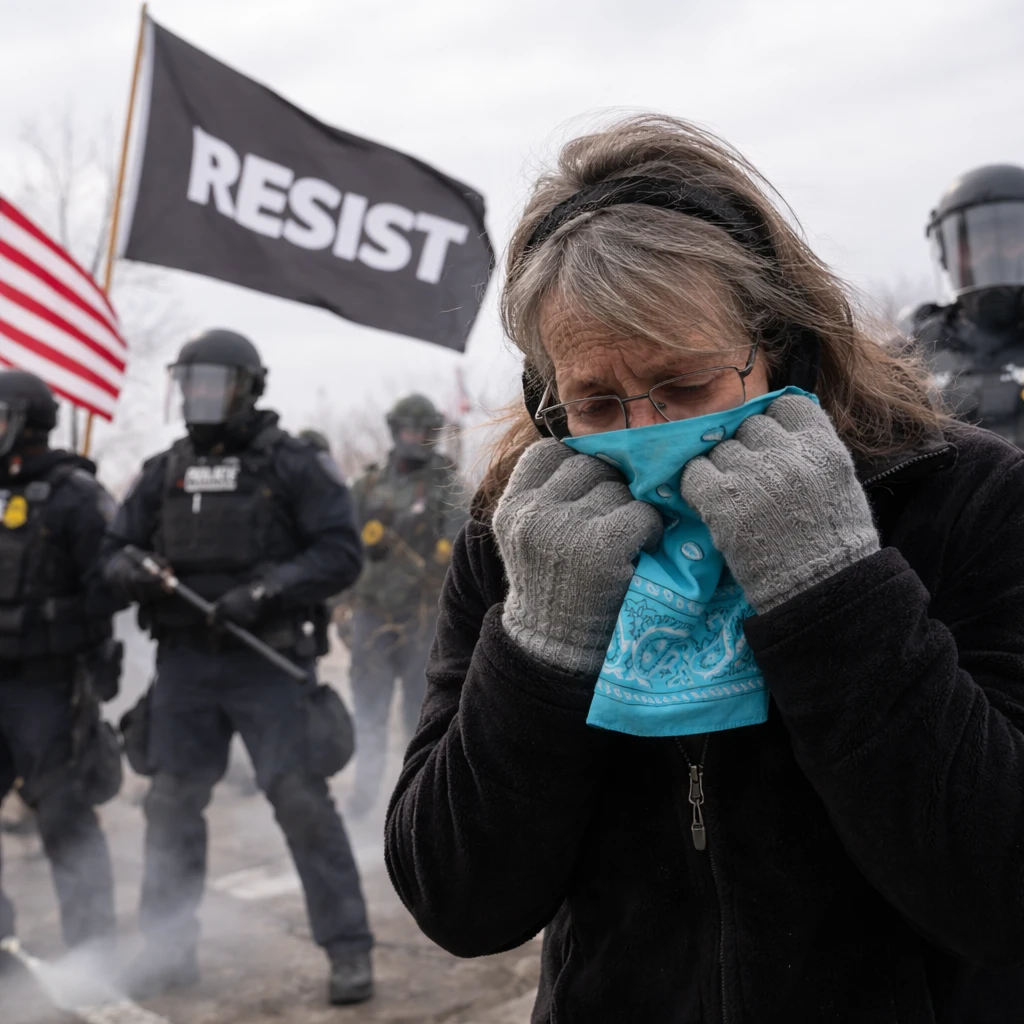

Federal immigration enforcement officers recently deployed to Minneapolis have engaged in assertive crowd-control measures that have become a chief focus following the fatal shooting of a woman in her vehicle last week. Observers report that these agents have aimed rifles at protestors, deployed chemical irritants early in altercations, smashed vehicle windows, removed vehicle occupants forcibly, and engaged physically with demonstrators by shoving them to the ground. Federal authorities justify these tactics as necessary defensive measures to guard officers against violent threats. Nevertheless, these confrontations have exacerbated tensions among protesters, particularly as numerous videos of these encounters circulate on social media platforms.
The situation in Minneapolis is indicative of a broader federal initiative where immigration officers and investigators are increasingly tasked with controlling demonstrations—a role usually filled by local police departments with specialized training in managing public order and crowd de-escalation. Experts warn this approach may conflict with established de-escalation principles and poses risks of escalating protests into violent situations.
These developments follow an extensive deployment of more than 2,000 officers from various Department of Homeland Security agencies to the Minneapolis-St. Paul area, ordered in early December by the Trump administration. These officers typically focus on immigration arrests, deportations, and criminal investigations rather than managing dynamic and potentially volatile public gatherings.
Tensions significantly heightened after the fatal shooting of 37-year-old Renee Good, who was killed by an immigration agent. Federal officials maintain the shooting was an act of self-defense, citing claims that Good used her vehicle as a weapon. The incident has intensified protests and increased scrutiny toward the federal enforcement approach.
Amid this, the American Civil Liberties Union of Minnesota sought judicial intervention, filing a lawsuit on behalf of six residents to obtain an emergency injunction limiting federal agents’ conduct during protests. The suit calls for restrictions on the use of chemical agents, prohibiting the pointing of firearms at individuals who are not posing threats, and preventing disruption of lawful video recording by citizens.
Sarah Saldaña, former director of Immigration and Customs Enforcement (ICE), remarked that current tactics represent a departure from traditional immigration enforcement methods. She emphasized that during her tenure, officers were trained on interacting with observers and those recording events, but rarely had to manage crowds or protests. Saldaña expressed concern that the agency might not have adequately adapted its training to the evolving situation, which has been influenced by a more aggressive leadership approach.
Ian Adams, assistant professor of criminal justice, highlighted that comprehensive crowd management training primarily resides at the local police level, typically within departments equipped with public order specialties. He suggested that ordinary ICE agents are unlikely to possess extensive experience in managing public order situations.
Department of Homeland Security Secretary Tricia McLaughlin stated that ICE officer candidates undergo extensive training over eight weeks, covering conflict management and de-escalation, with many candidates having prior military or law enforcement experience. She noted that candidates receive rigorous training at the Federal Law Enforcement Training Center, including instruction in de-escalation techniques, firearm use, and driving operations. Candidates in Homeland Security Investigations receive specialized training exceeding 100 days.
Meanwhile, criminology professor Ed Maguire, who has researched law enforcement crowd management, described recent federal training materials as alarming, although he has not reviewed ICE's current curriculum directly. Maguire characterized the practices seen in Minneapolis as deficient, failing to meet even widely accepted law enforcement standards, and noted an apparent lack of accountability measures.
Maguire indicated that the tactics deployed could escalate tensions unnecessarily. Adams remarked that contemporary police departments have shifted away from the mid-20th-century approach of meeting protests aggressively, recognizing that such forceful responses often exacerbate disturbances. Current best practices include establishing dialogue with protest organizers, setting clear boundaries, and exercising restraint to prevent a chain reaction of escalation between officers and demonstrators.
Despite advancements in training, the absence of a universal national standard leaves variability in policies. Some departments restrict using pepper spray directly on individuals exercising their constitutional rights or ban chemical agents in residential communities. Experts emphasize the need for written policies updated regularly and reinforced through simulations.
Humberto Cardounel, senior director of training and technical assistance at the National Policing Institute, explained that officers often receive initial training but may lack ongoing refresher experiences to maintain appropriate conduct. Adams underscored the importance of local law enforcement’s sustained relationship with communities, establishing a presence that extends beyond individual incidents, which helps in managing public order more effectively.
Saldaña highlighted the growing hostility from both federal agents and protesters, cautioning against behaviors that escalate conflict. She advised that neither civilians should confront armed officers physically nor impede their duties, and noted rising aggressiveness on both sides as cause for concern.