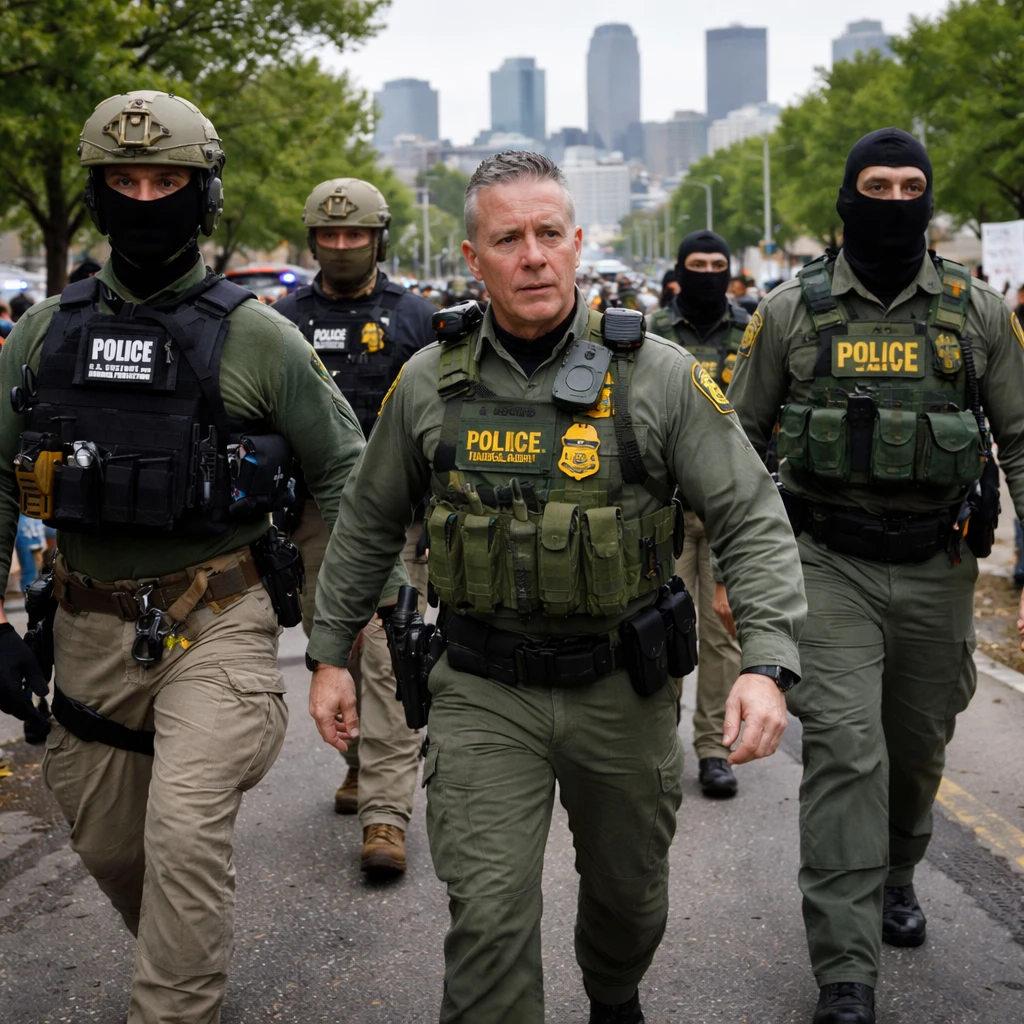

Federal immigration enforcement agents have departed from an extensive operation in Louisiana to redeploy in Minneapolis, indicating a notable change in the ongoing immigration control efforts. The Louisiana campaign, known as "Catahoula Crunch," initially began in December with over 200 agents and aimed to execute thousands of arrest warrants over several months, lasting through February. However, the operation led to widespread protests in New Orleans and other affected areas, with community members expressing concerns about the impact on immigrant populations.
Documentation reviewed shows that the federal agents in Louisiana continued their movement to Minneapolis late in the week, suggesting a wind-down of the Louisiana focus and a strategic pivot. The Department of Homeland Security (DHS) declined to disclose specific operational details, citing safety concerns for law enforcement personnel during active missions.
In parallel, the federal government has escalated its presence in Minnesota, dispatching thousands of agents as part of an unprecedented immigration enforcement initiative. This increased deployment in Minnesota, reportedly the largest of its kind ever conducted, partly addresses allegations of fraud involving Somali-American residents. The arrival of over 2,000 agents has sparked significant public outcry and demonstrations, especially following the fatal shooting of a woman by an Immigration and Customs Enforcement (ICE) officer earlier in the week.
The "Catahoula Crunch" operation, under the command of Border Patrol Chief Gregory Bovino—a figure associated with aggressive immigration enforcement in other major cities—initially planned for 5,000 arrests. By mid-December, around 370 arrests had been recorded, most involving individuals without criminal records, according to DHS figures. Authorities actively monitored online commentary and protests related to the operation.
Political responses have been divided: Louisiana's Republican Governor Jeff Landry welcomed the enforcement actions, while Democratic leaders in New Orleans deemed the arrest goals unrealistic and criticized tactics employed during the raids, including instances of agents pursuing individuals in public spaces. Furthermore, while local Democratic officials have opposed the federal operation, they have been more supportive of the National Guard deployment requested to help combat rising crime, with troops being stationed shortly before the anniversary of a deadly vehicle attack in Bourbon Street.
Within the immigrant community in Louisiana's Kenner neighborhood, many businesses and restaurants temporarily closed as the operation began, driven by fears that customers could be subject to racial profiling or wrongful detention regardless of their legal status. Some establishments have started reopening, though concerns linger. For example, Carmela Díaz, a Salvadoran-American business owner, kept her restaurant closed over a month due to the uncertain enforcement climate but is considering reopening soon based on customer interest.
The transitions in operations reflect the DHS's balancing act between prioritizing large-scale immigration enforcement and responding to political, social, and potentially volatile reactions from affected communities, particularly as enforcement strategies move from one region to another.