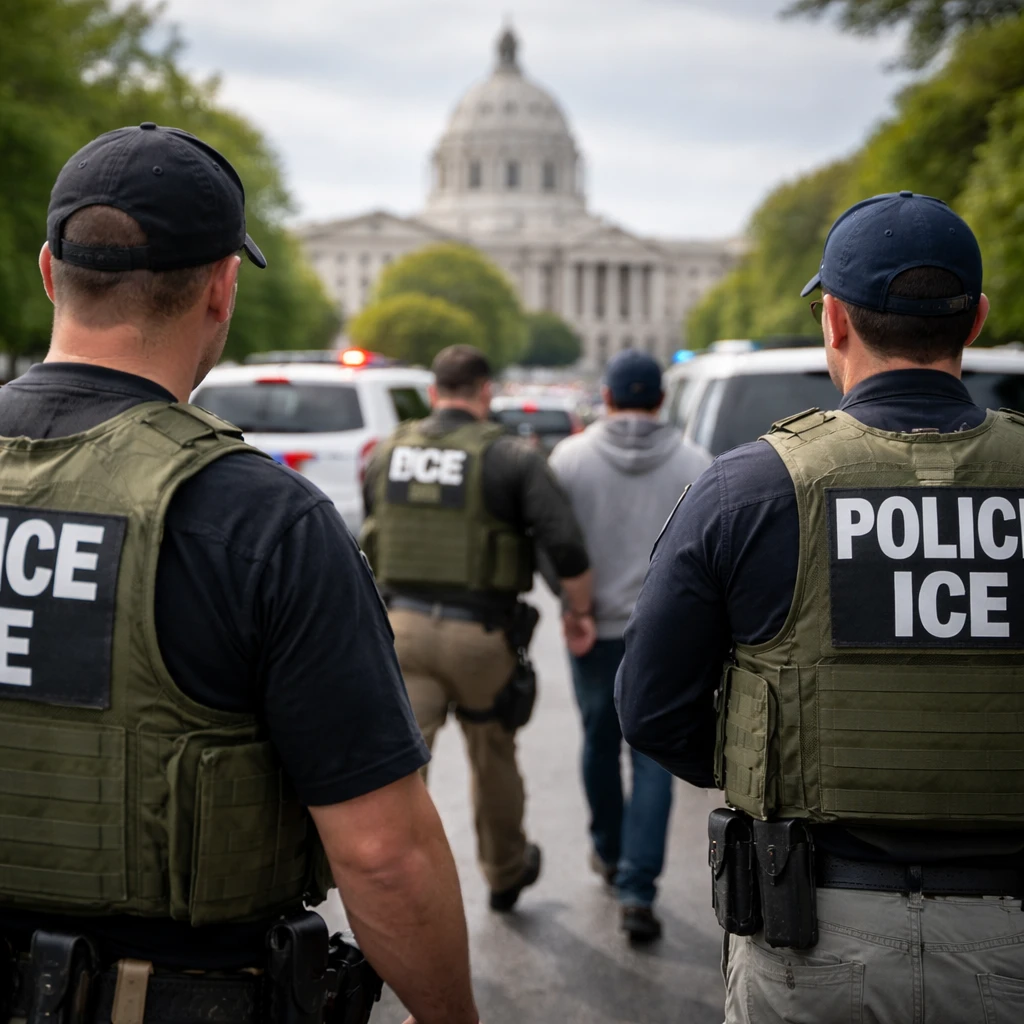

The Trump administration announced a recalibration of its immigration enforcement force in Minnesota, with approximately 700 federal officers set to be withdrawn immediately. This reduction follows successful collaboration with state and local officials who agreed to facilitate the transfer of arrested immigrants to federal custody. Tom Homan, the administration's border czar, stated that this drawdown represents about a quarter of the total immigration officers deployed in Minnesota. However, he emphasized that the enforcement operation, which has experienced heightened visibility and tension since early January, would persist with an estimated 2,000 personnel remaining active in the state.
This current enforcement surge, described by the Department of Homeland Security as its largest ever, began amid sharp community backlash, particularly after federal agents were involved in fatal shootings of two U.S. citizens, Renee Good and Alex Pretti, in Minneapolis. The deployment involved heavily armed officers operating in masked attire, which has provoked resistance from locals concerned by what they viewed as aggressive policing tactics.
Homan indicated that a broader withdrawal of enforcement officers will depend heavily on the cessation of protest activities that obstruct federal operations. State and city leaders, including Governor Tim Walz and Minneapolis Mayor Jacob Frey—both Democrats and critics of the immigration surge—consider the partial drawdown a preliminary progress but advocate for the termination of the entire federal effort in the state.
Governor Walz expressed on social media the necessity for a more extensive and expedited reduction of federal forces, alongside state-led investigations into the deaths of Pretti and Good. Vice President JD Vance clarified in an interview that the reduction pertains mainly to protective personnel in Minneapolis and affirmed that immigration enforcement activity was not being diminished.
Taking charge of the Minnesota operation in late January, Homan highlighted increased cooperation between federal and local authorities as a factor enabling the withdrawal of personnel. He particularly stressed the value of local jails notifying Immigration and Customs Enforcement (ICE) about detainees eligible for deportation, as this process reduces the need for federal officers to actively seek individuals outside of custody.
The administration has long criticized jurisdictions with sanctuary policies that limit cooperation with immigration authorities, suggesting that such policies hinder the arrest of criminal immigrants. In Minnesota, state prisons and most county sheriffs reportedly cooperate with federal immigration enforcement. However, the two largest county jails serving Minneapolis and St. Paul had not met ICE’s full cooperation standards before this operation, although they transfer inmates to federal authorities when court warrants are issued. The Hennepin County Sheriff's Office maintained that its policies remain unchanged, while the Ramsey County Sheriff's Office did not provide comment.
Regarding the operation's outcomes, Homan asserted the mission was successful in enhancing public safety by detaining individuals wanted for violent crimes. He admitted the operation was not perfect but remained firm that the federal government would continue pursuing its immigration enforcement agenda, despite ongoing public protests he described as disruptive to communities.
On a related legal front, two Minnesota school districts and a teachers union have filed a lawsuit seeking to bar immigration enforcement activities at or near schools, alleging disruptions to education, threats to student safety, and family displacements. They argue that the current operation breaks with prior policies limiting enforcement in "sensitive locations" such as schools. Homeland Security authorities have yet to comment on these legal actions.