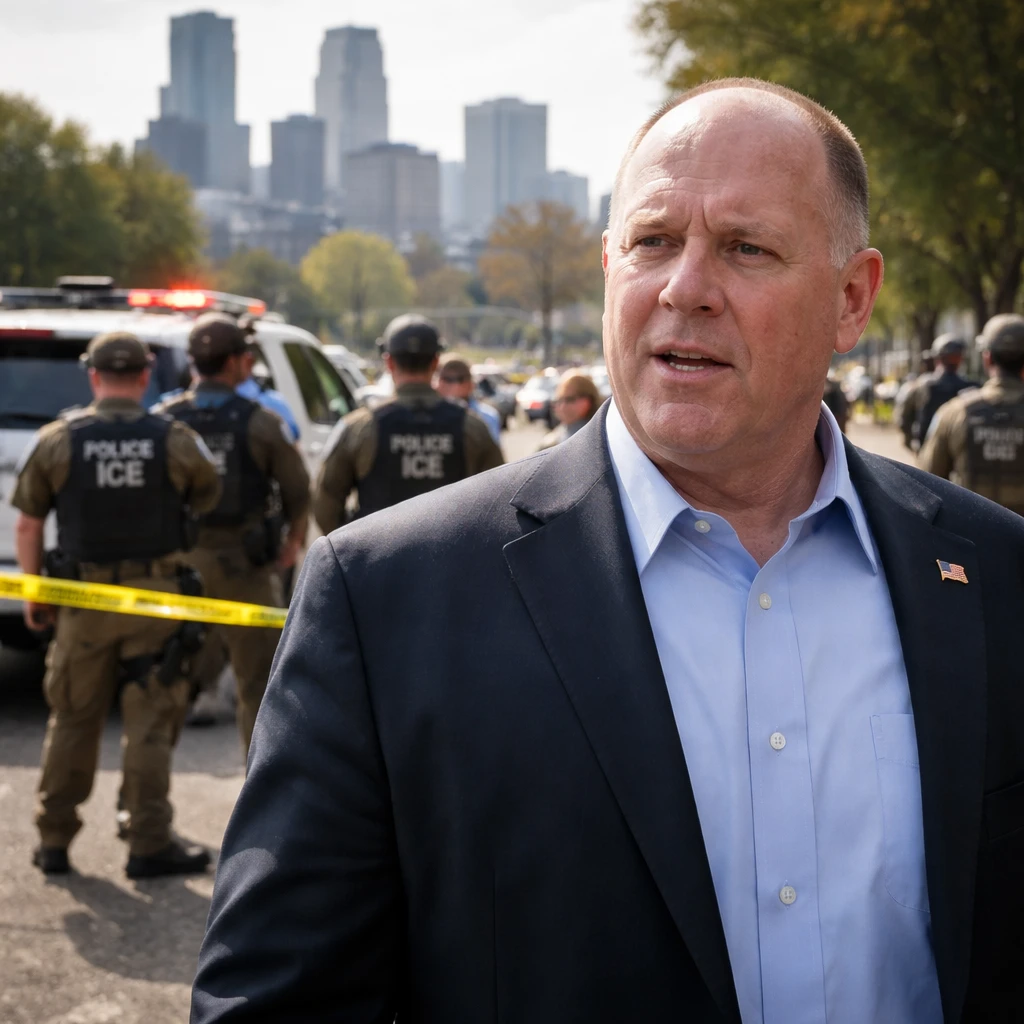

Tom Homan, the administration’s appointed border czar, articulated on Thursday that the federal government may consider withdrawing some immigration enforcement officers from Minnesota. However, this reduction hinges on the cooperation of state and local officials and the cessation of interference from protesters. His remarks represent the first time since his deployment to Minneapolis following the recent fatal shooting of protester Alex Pretti, marking the second fatality this month linked to federal operations in the Twin Cities.
Homan maintained a strict stance against any protesters who physically assault federal officers or disrupt the ongoing immigration enforcement activities. He underscored that while mistakes have occurred, the administration is steadfast in its crackdown on illegal immigration and is prepared to enforce consequences against those obstructing federal officers.
In a nuanced acknowledgment, Homan conceded that the operation has not been flawless, stating, “I do not want to hear that everything that’s been done here has been perfect. Nothing’s ever perfect.”
Regarding the scale of enforcement personnel, Homan intimated that the sizable contingent of about 3,000 federal officers in Minnesota could be significantly reduced. Nonetheless, he linked such a drawdown directly to receiving explicit cooperation from state and municipal leaders and a tangible decrease in protest-related interference.
He stated, “The drawdown is going to happen based on these agreements. But the drawdown can happen even more if the hateful rhetoric and the impediment and interference will stop.”
Additionally, Homan mentioned plans to reform internal processes within federal immigration law enforcement to enhance mission efficiency, though he refrained from providing detailed explanations. “The mission is going to improve because of the changes we’re making internally,” he said, emphasizing that no agency structure is without flaws.
Simultaneously, Minneapolis Mayor Jacob Frey expressed optimism over a potential reduction in federal agents stationed in the city. Frey emphasized that local police would fulfill their duties independently, signaling a reluctance to extend responsibilities to federal law enforcement.
Despite President Donald Trump toning down his rhetoric about Minnesota officials and expressing alignment with their views, there have been no overt signs of significant operational shifts. Protests continue outside the federal facility serving as the center for the enforcement operation.
Notably, Pretti, aged 37, was fatally shot during an altercation with Border Patrol agents. Earlier this month, Renee Good, also 37, suffered a fatal shooting by an Immigration and Customs Enforcement (ICE) officer.
In advocating for collaboration, Homan reiterated the importance of correctional facilities notifying federal immigration authorities about inmates eligible for deportation. He argued that transferring such individuals directly to ICE custody is safer and decreases the number of field officers required to locate undocumented individuals.
The administration attributes difficulties in apprehending criminal immigrants to 'sanctuary' jurisdictions—states and local governments that limit cooperation with federal authorities. Homan implored, “Give us access to illegal aliens, public safety threats in the safety and security of a jail.”
However, Minnesota officials dispute this depiction. Paul Schnell, chief of Minnesota’s Department of Corrections, described the federal narrative as a fundamental misunderstanding or, at worst, propaganda. He clarified that state prisons routinely honor 'detainers'—requests from federal agencies to hold inmates until federal agents take custody.
Most county sheriffs in Minnesota cooperate with immigration enforcement, but exceptions include those in Hennepin and Ramsey counties. These two do not comply fully but do surrender inmates to federal agents if judicial warrants are presented.
After Border Patrol chief Greg Bovino departed from his field leadership role, Homan indicated a potential refocus on “targeted strategic enforcement operations” prioritizing individuals with criminal histories or public safety threats. This approach seeks to arrest specific individuals rather than conducting broad, indiscriminate raids.
Despite ICE’s framing of its methods as targeted and public safety-oriented, some critics challenge this rationale. Sameera Hafiz, policy director with the Immigrant Legal Resource Center, suggested that Homan’s statements reveal awareness of declining public support for ICE yet questioned the claim that deportations enhance community safety. She pointed out that evidence demonstrates deportations disrupt families, destabilize communities, and harm economic conditions.
When asked about the duration of his presence in Minnesota, Homan replied, “I’m staying until the problem’s gone,” indicating ongoing engagement through meetings with community members, law enforcement, and elected officials to seek common ground, and suggesting some progress has been made.