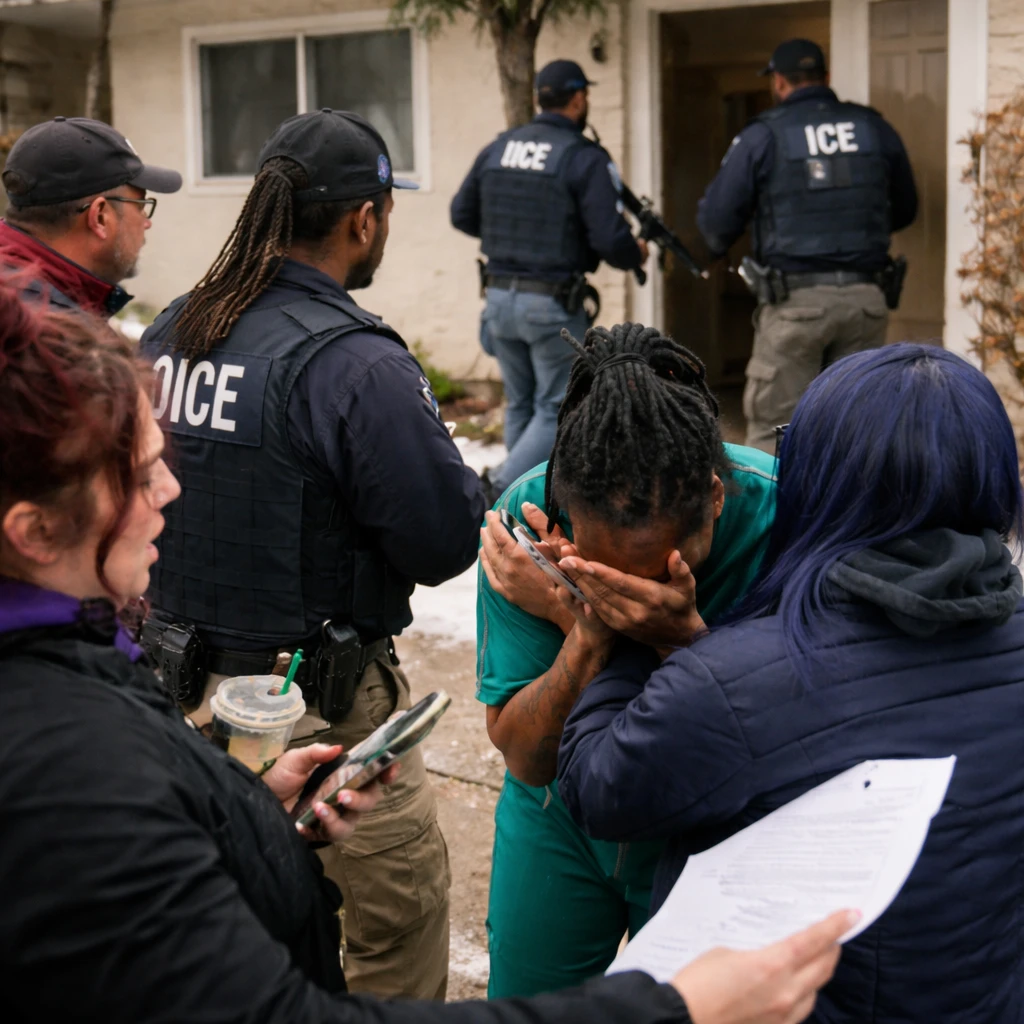

As immigration enforcement measures escalate across the United States, a spotlight has been cast on the legal parameters that govern federal agents' entry into private residences to carry out arrests. The issue has sparked vigorous debate nationwide, especially in urban centers like Minneapolis, where a significant federal presence has coincided with protests and violent encounters, drawing critical attention to the scope of legal authority behind immigration detentions at private dwellings.
The central legal contention revolves around the nature of warrants used by immigration authorities to authorize arrests. The majority of arrests conducted by federal immigration officers are backed by administrative warrants, internal documents that permit the detainment of specified individuals. However, these warrants do not authorize forced entry onto private property without consensual access. In contrast, judicial warrants, which are sanctioned by a judge or magistrate, empower law enforcement to enter homes or businesses without prior consent to effectuate an arrest.
Immigration and Customs Enforcement (ICE) and the Customs and Border Protection (CBP), along with other federal law enforcement bodies, operate under the Fourth Amendment, which protects individuals from unreasonable searches and seizures. This constitutional provision requires valid warrants for intrusion upon private property or for arrests, irrespective of a person's immigration status.
However, the distinction between administrative and judicial warrants introduces complications. Judicial warrants are court-issued and allow entry to private spaces to locate and arrest individuals, while administrative warrants, typically employed in immigration cases, lack this entry authorization. Consequently, individuals can legally deny entry to immigration agents presenting only administrative warrants.
There are limited circumstances where agents may bypass this restriction, such as instances involving immediate danger, active pursuit of a suspect, or emergency assistance requests from within a residence. These exceptions do not commonly apply in routine immigration arrest scenarios.
John Sandweg, a former acting director of ICE, notes that agents receive training on the legal parameters for forced entry. Yet, as immigration enforcement responsibilities have expanded, more Border Patrol personnel, who may not be as thoroughly trained in these legal nuances, are involved in operations traditionally conducted by ICE. This shift heightens the risk of agents misapplying entry rules, increasing incidents of confrontations and legal challenges.
The complexities of warrant authority surfaced prominently during a recent incident in Minneapolis, where immigration agents conducted a forceful entry into a private home resulting in an arrest. Official documentation revealed that only an administrative warrant was held, lacking approval from a judicial officer for entry. DHS Assistant Secretary Tricia McLaughlin referenced the arrest, characterizing it as part of efforts to detain individuals considered among the “worst of the worst,” noting the individual's alleged criminal history without clarifying conviction details or connections to ongoing criminal investigations.
Heidi Altman, vice president of policy at the National Immigration Law Center, highlighted that unlawful entry without consent constitutes multiple legal violations by law enforcement officers. Such breaches expose officers to civil liabilities and potential criminal charges under state law. However, she emphasized uncertainties about federal accountability, given that the same government entity would be responsible for investigating these violations.
Moreover, Altman explained that immigrants have limited remedies following illegal searches or arrests since evidence obtained unlawfully may still be admissible in immigration courts under current regulations, potentially leading to swift detentions and deportations. Therefore, even proven legal infractions by agents do not negate the immediate adverse outcomes faced by affected individuals.
In response to these enforcement practices, advocacy groups, legal professionals, and local authorities have launched educational campaigns to inform communities about constitutional protections during encounters with immigration officers. These initiatives, often disseminated through social media and community meetings, instruct residents to request warrants before granting entry and advise refusing access if agents cannot present judicial warrants, empowering individuals to assert their rights effectively.