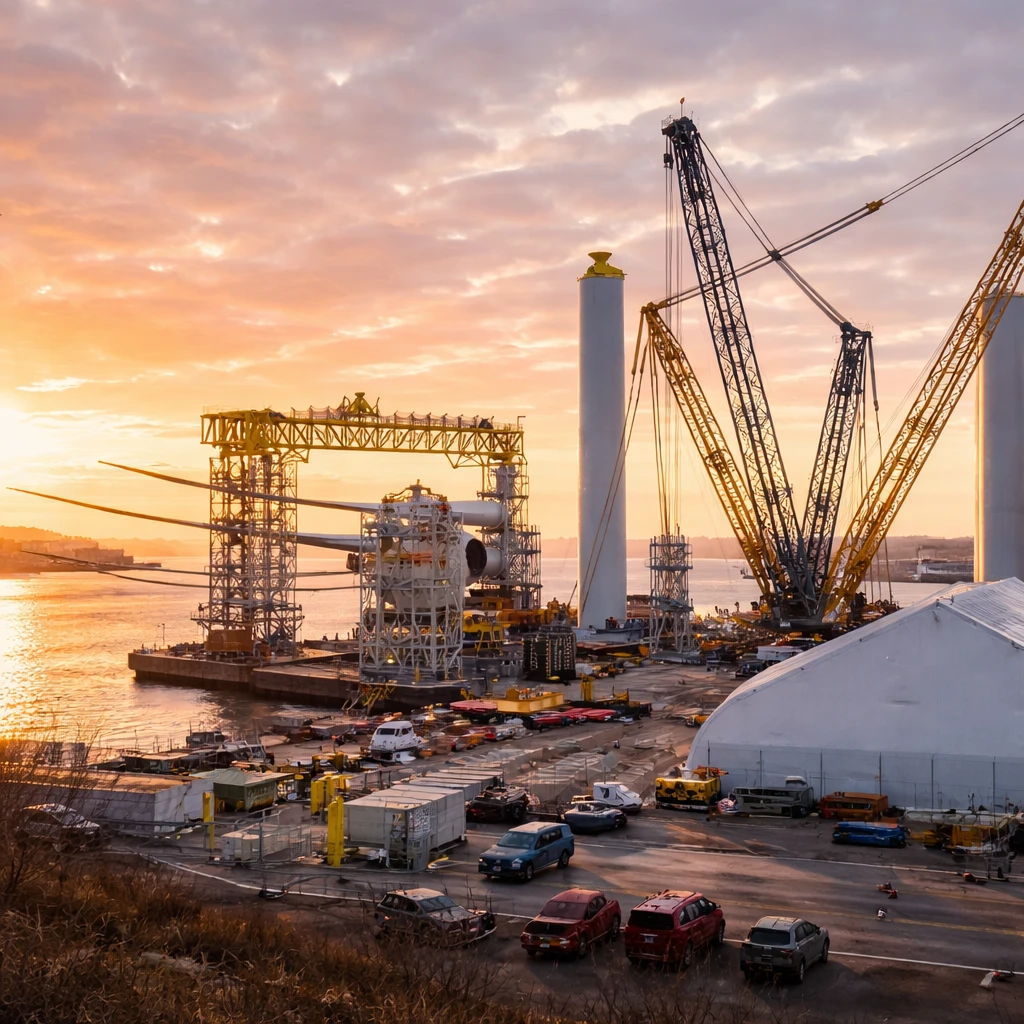

On Monday, a significant legal decision allowed the Sunrise Wind offshore wind farm off New York to restart construction activities. This ruling by U.S. District Judge Royce Lamberth dismissed earlier claims that offshore wind projects posed immediate national security threats warranting cessation of work, overturning a December directive from the prior administration.
The Sunrise Wind initiative, designed to provide clean electricity to approximately 600,000 New York residences, is one of five major offshore wind projects on the East Coast previously halted days before Christmas amidst concerns about security implications. President Donald Trump's public statements reflected strong opposition to wind power, describing it as unfavorable and ordering halts.
Danish energy company Orsted, which is leading both Sunrise Wind and another development named Revolution Wind serving Rhode Island and Connecticut, challenged the administration's pause through litigation. In a hearing related to Sunrise Wind held in the District of Columbia, Judge Lamberth applied reasoning consistent with his earlier January ruling permitting Revolution Wind construction to continue, signaling judicial skepticism toward the security rationale given by government agencies.
With the injunction in place, Sunrise Wind has committed to resuming project work promptly. At present, about 45 percent of the project infrastructure is complete, with expectations for operational status within the coming year.
The case’s momentum casts uncertainty on whether the government will seek further appeals, as federal bodies such as the Bureau of Ocean Energy Management declined to comment on ongoing lawsuits. While the judicial decisions now allow construction to proceed across all five affected projects, developers have already incurred multimillion-dollar losses during the suspension period.
Stakeholder representatives, such as Hillary Bright from the offshore wind advocacy group Turn Forward, have noted that delays impose increased costs on developers and ratepayers alike. She emphasized that these projects are crucial to meeting the rising demands on the electricity grid and enhancing overall reliability.
Additional judicial approvals in January enabled the resumption of work on other key initiatives, including the Empire Wind project in New York by Norwegian firm Equinor, Coastal Virginia Offshore Wind by Dominion Energy Virginia, and Massachusetts' Vineyard Wind through Avangrid and Copenhagen Infrastructure Partners.
Bright estimates that collectively, these projects will deliver approximately six gigawatts of renewable electricity, sufficient to power around 2.5 million homes and businesses nationwide.
Political figures have voiced support for the rulings. New York Governor Kathy Hochul characterized Monday's court decision as a major victory for the state's energy future and tied energy independence directly to national security considerations. New York Attorney General Letitia James pursued legal action against the administration’s project suspensions, citing risks to the state's economic stability and energy infrastructure.
Prominent Senator Sheldon Whitehouse, serving as top Democrat on the Senate environment committee, criticized the prior administration's assertions regarding security threats and renewable energy costs, labeling them as unsubstantiated and detrimental to broader economic interests.
Documents filed by Sunrise Wind indicated that their compulsory halt had been incurring daily losses of at least $1.25 million, a figure projected to increase absent swift reinstatement of operations. Continuing disruptions beyond early February raised concerns about potentially forced project cancellation.
President Trump had derided offshore wind projects as visually unappealing; however, representatives from Orsted clarified that Sunrise Wind's turbines would be situated at least 30 miles east of Long Island’s Montauk Point, rendering them imperceptible from shore. The project’s planned 924-megawatt capacity aims to offer considerable clean energy resources to the region.
These developments unfold amid growing electricity demand and escalating pressure on grid stability, underscoring the strategic value of utility-scale offshore wind generation in the nation’s energy landscape.