In a decisive ruling on Monday, U.S. District Judge Amit Mehta declared that the Trump administration engaged in unconstitutional practices by rescinding $7.6 billion in clean energy grants designed for projects in states that had cast their votes for Democratic Vice President Kamala Harris in the 2024 election. These grants supported a wide variety of clean energy endeavors, spanning the development of battery manufacturing facilities, hydrogen fuel technology projects, upgrades to electrical grids, and carbon capture initiatives across 16 states including California, New York, and Massachusetts, all of which favored Harris in the election.
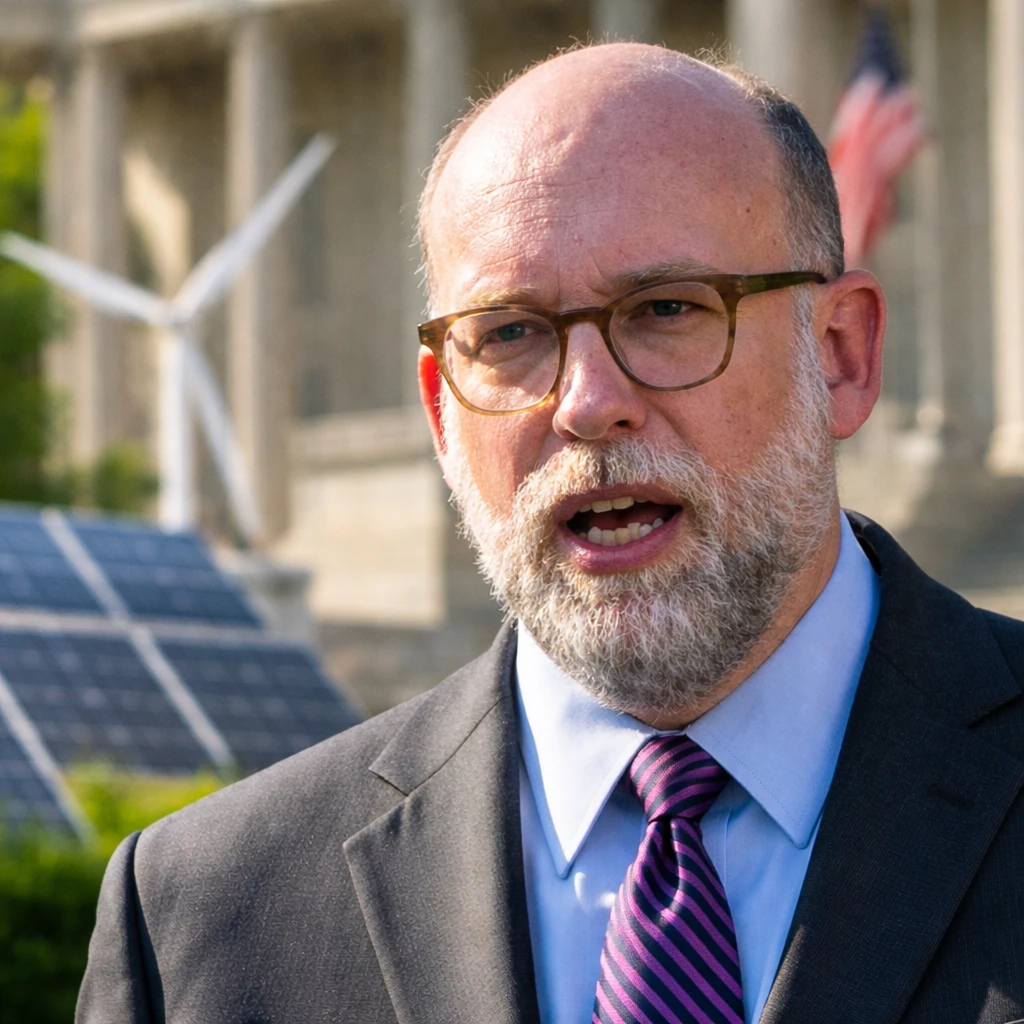
The Department of Energy (DOE) justified the cancellations by asserting after reviewing the projects that many did not sufficiently promote the country's energy needs or lacked economic viability. Russell Vought, serving as White House budget director, reiterated these sentiments on social media, claiming the administration was terminating what he described as "the Left’s climate agenda."
However, Judge Mehta’s detailed 17-page opinion sharply criticized the administration's reasoning. He highlighted that the defendants themselves acknowledged that the decision-making for grant termination was primarily or exclusively influenced by whether recipients resided in states that supported President Trump in the election. The judge expressed skepticism that this approach possessed any legitimate, rational basis for advancing government interests, emphasizing its incompatibility with the Constitution's equal protection guarantees.
This judicial decision follows swiftly on a related legal challenge. Another federal court ruled in favor of the offshore wind project development for Rhode Island and Connecticut, allowing work to proceed after previous attempts by the administration to halt such initiatives due to national security concerns. This series of rulings represent significant setbacks to the Trump administration’s broader efforts to curtail clean energy programs.
In response, an Energy Department spokesperson maintained disagreement with the court's findings. Ben Dietderich, the spokesman, affirmed confidence in the DOE’s evaluation process, which assessed each grant on an individual basis and determined many did not satisfy requirements to continue the allocation of federal funds. Dietderich noted that this was done with an emphasis on responsible and accountable taxpayer fund management.
Analysis of the cancellation list reveals notable projects affected: up to $1.2 billion was withdrawn from California’s hydrogen hub initiative aimed at advancing hydrogen production and technology, and up to $1 billion was rescinded from a hydrogen project in the Pacific Northwest. Conversely, projects in Texas and a multi-state hydrogen initiative involving West Virginia, Ohio, and Pennsylvania remained intact. Advocates for clean energy reportedly obtained the list of affected projects through DOE sources.
Several lawsuits have ensued as a consequence, including one brought by the city of St. Paul and a coalition of environmental organizations targeting the grant cancellations. Highlighting political motivations behind these actions is an October 2024 interview in which former President Trump explicitly stated that the administration had the authority and intent to cut projects favored by Democrats, emphasizing fiscal prudence and approval criteria.
Vickie Patton, general counsel for the Environmental Defense Fund and a plaintiff in one of the cases, praised the court’s ruling. She characterized the administration's behavior as vindictive and in clear violation of constitutional protections ensuring equal treatment across all states. Patton also underscored the broader impacts on Americans who depend on affordable and clean energy, describing the actions as detrimental to both financial well-being and public health.
Anne Evens, CEO of Elevate Energy, an organization affected by the funding cuts, hailed the ruling as a crucial development in maintaining affordability and job creation within clean energy sectors. She emphasized that reliable, affordable energy access is a fundamental necessity for all individuals, and restoring these grants advances that goal.
The cancellation of these extensive grants affected a geographically and politically diverse group of states that supported Harris, including California, Colorado, Connecticut, Delaware, Hawaii, Illinois, Maryland, Massachusetts, Minnesota, New Hampshire, New Jersey, New Mexico, New York, Oregon, Vermont, and Washington. This sweeping rescission reflects a politically selective pattern of federal fund distribution that the court has now determined to be unconstitutional.
January 12, 2026
News & Politics
Federal Judge Finds Administration Illegally Terminated Clean Energy Grants Based on Political Affiliation
Court determines selective cancellation of $7.6 billion in grants violates constitutional equal protection clause

Caleb Monroe
Consumer & Retail Analyst
Summary
A U.S. federal judge ruled that the recent cancellation of $7.6 billion in clean energy grant funding disproportionately targeting states that supported Vice President Kamala Harris in the 2024 presidential election was unlawful. The grants, intended for diverse clean energy initiatives across 16 Democratic-leaning states, were rescinded on grounds questioned by the court for their apparent political motivation. This judgment marks a significant judicial rebuke of the administration's approach to the clean energy program rollbacks and raises issues concerning the equitable administration of federal funds.
Key Points
A federal court ruled that the cancellation of $7.6 billion in clean energy grants disproportionately affected states that voted Democratic in the 2024 election, violating the constitutional equal protection clause.
The rescinded funds supported diverse clean energy projects such as hydrogen hubs, battery manufacturing, grid upgrades, and carbon capture technologies across 16 states.
The Department of Energy claimed these projects did not meet economic or national energy interest criteria, a justification questioned and invalidated by the court due to evident political motivations.
Risks
- Legal challenges and court rulings may create uncertainty for current and future clean energy initiatives, potentially disrupting project timelines and investment confidence in the energy sector.
- Political motivations influencing federal grant distributions may undermine equitable access to government funding, impacting states' ability to develop clean energy infrastructure.
- Ongoing disputes and reversals in clean energy funding allocations could delay advancements in critical technologies such as hydrogen production and renewable energy grid enhancements, affecting related job creation and economic growth.
Disclosure
This article provides analysis based solely on the legal rulings and official statements regarding the rescinded clean energy grants and does not incorporate any speculative or unverified information.