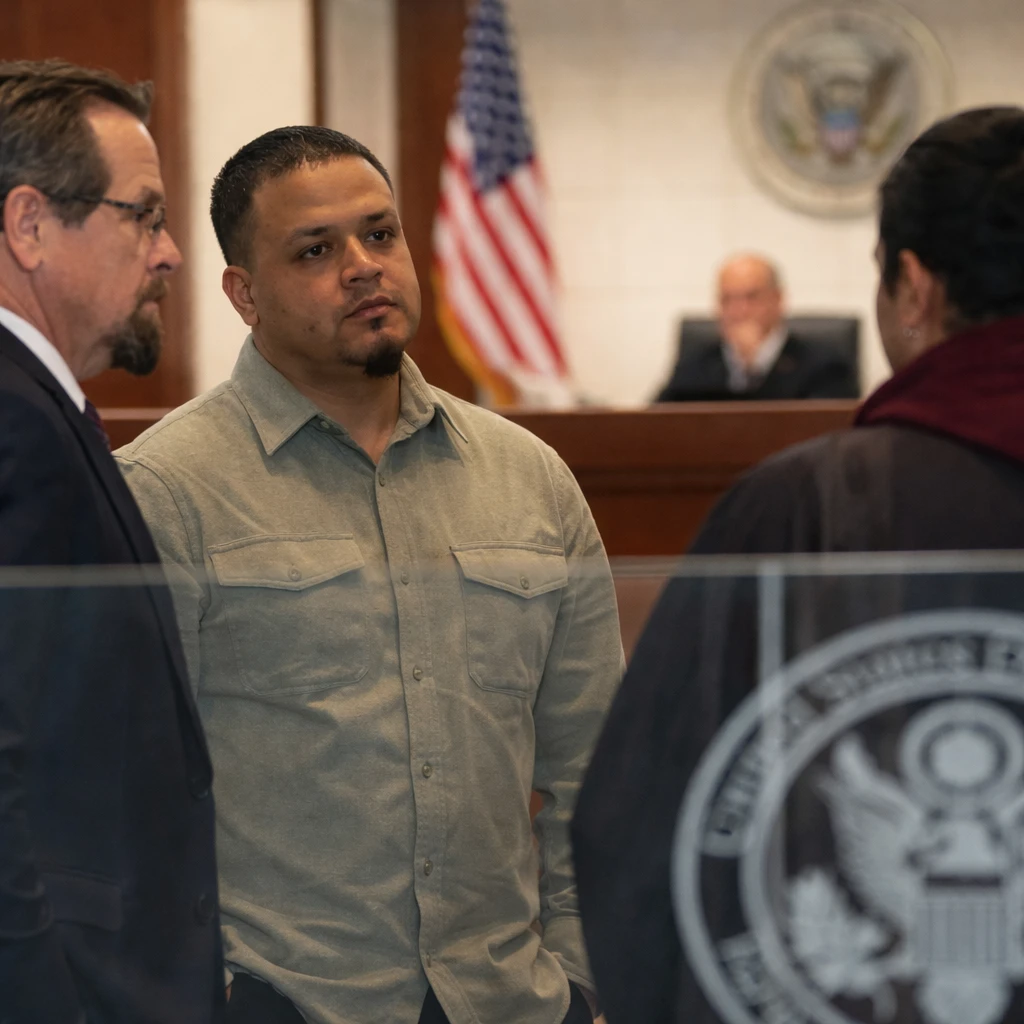

Federal Judge Schedules Hearing to Examine Prosecutorial Intent in Kilmar Abrego Garcia Case
December 26, 2025
News & Politics

Federal Judge Schedules Hearing to Examine Prosecutorial Intent in Kilmar Abrego Garcia Case

Trial canceled amid questions over human smuggling charges following wrongful deportation

Summary

A federal judge has called off the trial of Kilmar Abrego Garcia, who was mistakenly deported and later charged with human smuggling. The court will hold a hearing to assess whether the prosecution is acting vindictively. This case highlights ongoing debates over immigration enforcement and the legal responses surrounding deportations and criminal charges.

Key Points

Federal Judge Waverly D. Crenshaw Jr. canceled the trial of Kilmar Abrego Garcia and scheduled a hearing for January 28 to examine claims of prosecutorial vindictiveness.
Garcia was mistakenly deported to El Salvador in March under the Trump administration and later returned to the U.S. after a court order and public pressure.
Upon return, Garcia faced human smuggling charges in Tennessee, which he denies, claiming selective prosecution.
The original investigation stemmed from a 2022 traffic stop with nine passengers, but Garcia was only given a warning at that time.
A Department of Homeland Security agent began investigating only after a Supreme Court ruling requiring Garcia’s return from El Salvador.
Garcia had previously been granted protection from deportation due to threats from a gang in El Salvador targeting his family.
He resides in the U.S. with his American wife and child, and has no criminal record, despite allegations of gang involvement.
Legal representatives from both sides have not commented publicly on the latest developments.

A federal judge announced this week the cancellation of the trial for Kilmar Abrego Garcia, a Salvadoran national who was wrongly deported and subsequently faced charges in a human smuggling case. Instead of proceeding with the trial, the judge has set a hearing to determine whether the prosecution is pursuing the case in a retaliatory manner.

Abrego Garcia’s situation has become a focal point in the broader immigration discussion following his deportation during the Trump administration in March to a well-known prison in El Salvador. Following public outcry and a court mandate, he was brought back to the United States in June. This return was accompanied by the issuance of an arrest warrant connected to allegations of human smuggling in Tennessee.

Throughout the proceedings, Abrego Garcia has consistently denied the human smuggling accusations and contends that the charges against him represent selective and vindictive prosecution. Judge Waverly D. Crenshaw, Jr. indicated in an order on Tuesday that there is sufficient evidence to justify a hearing addressing these claims, which is scheduled for January 28.

The upcoming hearing will require prosecutors to justify the grounds for charging Abrego Garcia. Should they fail to do so adequately, there is a possibility the charges may be dismissed.

The origins of the case trace back to a 2022 traffic stop where officers encountered a vehicle with nine passengers. Although officers expressed suspicion of smuggling at the time, Abrego Garcia was permitted to leave with only a warning.

Additionally, a Department of Homeland Security agent testified that an investigation into the traffic stop only commenced after the U.S. Supreme Court mandated in April that the Trump administration facilitate Abrego Garcia's return from El Salvador.

Previously, Abrego Garcia had been granted protection from deportation by a judge, who determined he faced threats in his home country from a gang targeting his family. This protection allowed him to reside and work in the United States under Immigration and Customs Enforcement supervision. He is married to an American citizen and has a child.

Members of the Trump administration have accused Abrego Garcia of affiliations with the MS-13 gang; however, he has strongly denied these allegations and does not have a criminal record.

As of now, neither Abrego Garcia’s defense counsel nor the U.S. attorney’s office in Nashville has responded to requests for comment.

Risks
  • Potential dismissal of charges could affect judicial clarity on prosecutorial conduct in immigration-related cases, impacting legal precedents.
  • Public scrutiny and political debate over immigration enforcement could influence government immigration policies and prosecutorial decisions.
  • The ongoing case introduces uncertainty for individuals under deportation protection facing criminal allegations, affecting immigrant communities.
  • The perception of selective prosecution could impact trust in the justice system and complicate immigration enforcement efforts.
  • Unclear motivations behind prosecution may delay case resolution and affect resource allocation within the justice and immigration systems.
Disclosure
The reporting is based solely on information provided by official court documents, statements, and testimony mentioned within the article. No external sources or speculation have been included.
Search Articles
Category
News & Politics

News & Politics

Related Articles
FDA Initiates Review of BHA Food Additive Safety

The U.S. Food and Drug Administration (FDA) has announced plans to conduct a comprehensive reassessm...

Partisan Divide Deepens as White House Excludes Democratic Governors from NGA Meeting

The longstanding bipartisan forum of the National Governors Association (NGA) is facing disruption a...

Using Fireplace Ashes in Your Garden: Benefits and Considerations

Amidst a notably cold winter leading to increased fireplace use, many homeowners are seeking sustain...