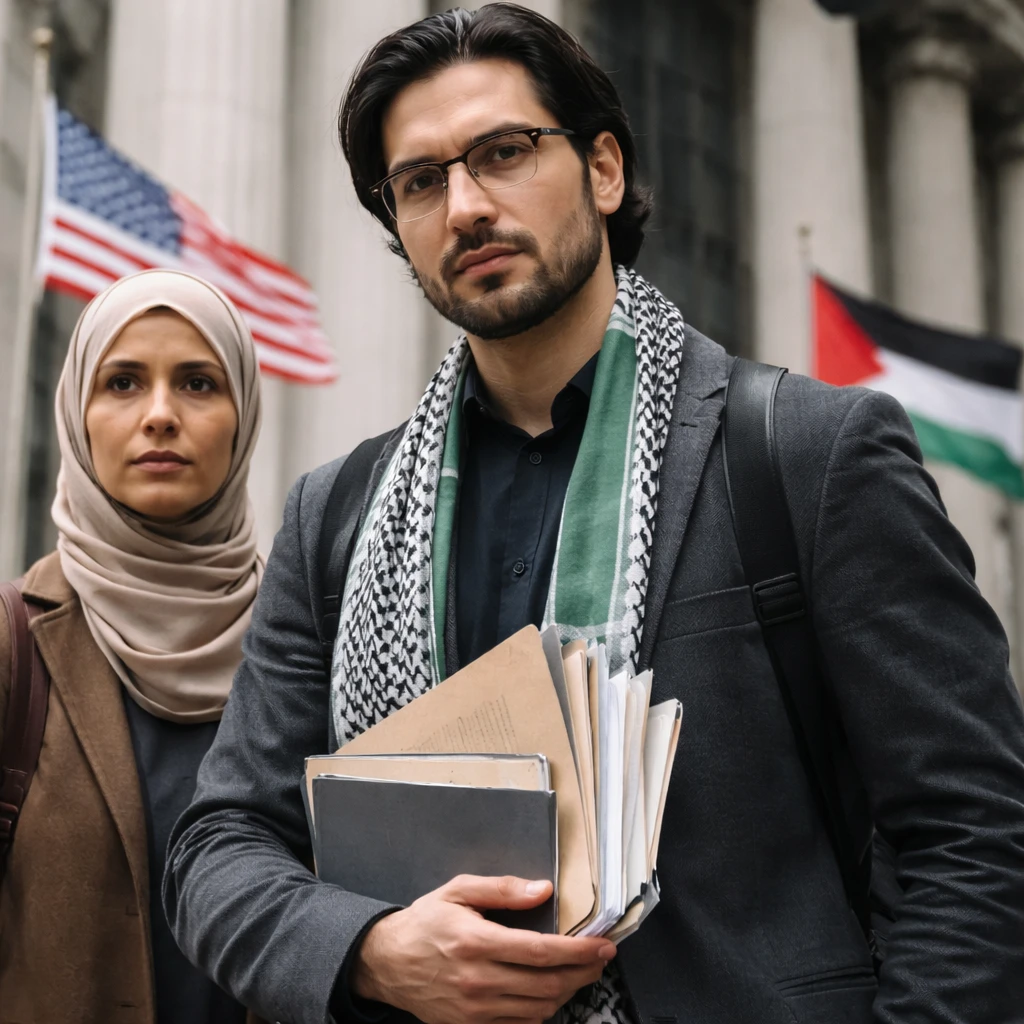
In a significant legal development, U.S. District Judge William Young ruled that academics involved in a lawsuit contesting U.S. policies which allegedly discriminate against noncitizens for their pro-Palestinian activism on university campuses are entitled to seek judicial relief if their immigration status is altered as punishment for participating in the case.
This ruling follows an earlier trial where Judge Young determined that the Trump administration infringed upon constitutional rights by singling out non-U.S. citizens for deportation solely based on their support for Palestinians and criticism of Israel. Throughout that trial, the judge repeatedly reprimanded the administration for violating the plaintiffs’ First Amendment rights.
On Thursday, Judge Young issued what he termed a "remedial sanction" aimed at safeguarding specific noncitizen plaintiffs from any retaliatory actions linked to their exercise of constitutional free speech rights.
During a hearing earlier in the month, Judge Young maintained that Homeland Security Secretary Kristi Noem, Secretary of State Marco Rubio, and their agencies engaged in an "unconstitutional conspiracy" to suppress the plaintiffs’ free speech. He described their conduct as creating a chilling effect by attempting to "pick off certain people" from the activist community.
Judge Young criticized the highest levels of the government for disregarding the First Amendment, stating, "There doesn’t seem to be an understanding of what the First Amendment is by this government." Notably, Judge Young was appointed by the late Republican President Ronald Reagan.
The judge’s order stipulates that any noncitizen facing an adverse immigration status change must demonstrate membership in either the American Association of University Professors or the Middle East Studies Association between March 25, 2025, and September 30, 2025. Additionally, they must prove their immigration status was valid and that they have not committed any crimes since September 30, 2025. Meeting these criteria will invoke a presumption that any immigration status alteration is retaliatory due to their exercise of First Amendment rights within the lawsuit’s context.
So far, there is no public evidence of any individuals from these associations whose immigration status has changed as a consequence of this lawsuit. Requests for comment from the Department of Homeland Security have not been answered.
Testimony during the prior trial established that over 5,000 pro-Palestinian protesters were targeted in the government’s campaign. Plaintiff witnesses described how these enforcement actions instilled widespread fear among academics, leading some to cease their activism.
The lawsuit was partially fueled by the case of Mahmoud Khalil, a former Columbia University graduate student and Palestinian activist. Recently, a federal appeals panel reversed a lower court’s decision to release Khalil from immigration detention, moving the government closer to potentially detaining and deporting him. However, the appellate decision did not address the constitutional question regarding the Trump administration’s rationale which focused on his campus activism and criticism of Israel, instead ruling that jurisdiction lies within the immigration courts and must be exhausted before federal court intervention.
Other individuals affected include Rümeysa Öztürk, a student at Tufts University who was detained for six weeks after being arrested near Boston. She alleges her detention was unlawful and related to an op-ed piece criticizing her university's response to the Israel-Gaza conflict.
In court, Judge Young expressed disbelief that top government officials would institute policies infringing on the rights of those lawfully present in the U.S. He lamented, "The record in this case convinces me that these high officials, and I include the president of the United States, have a fearful view of freedom."
Ramya Krishnan, senior staff attorney at the Knight First Amendment Institute, which advocated for court relief, condemned the administration’s efforts as "lawless" and responsible for fostering "terror in our campus communities." She emphasized that students and scholars should not live under fear of Immigration and Customs Enforcement agents seizing them for exercising political expression, and welcomed the court's strong message that intimidation campaigns must cease.