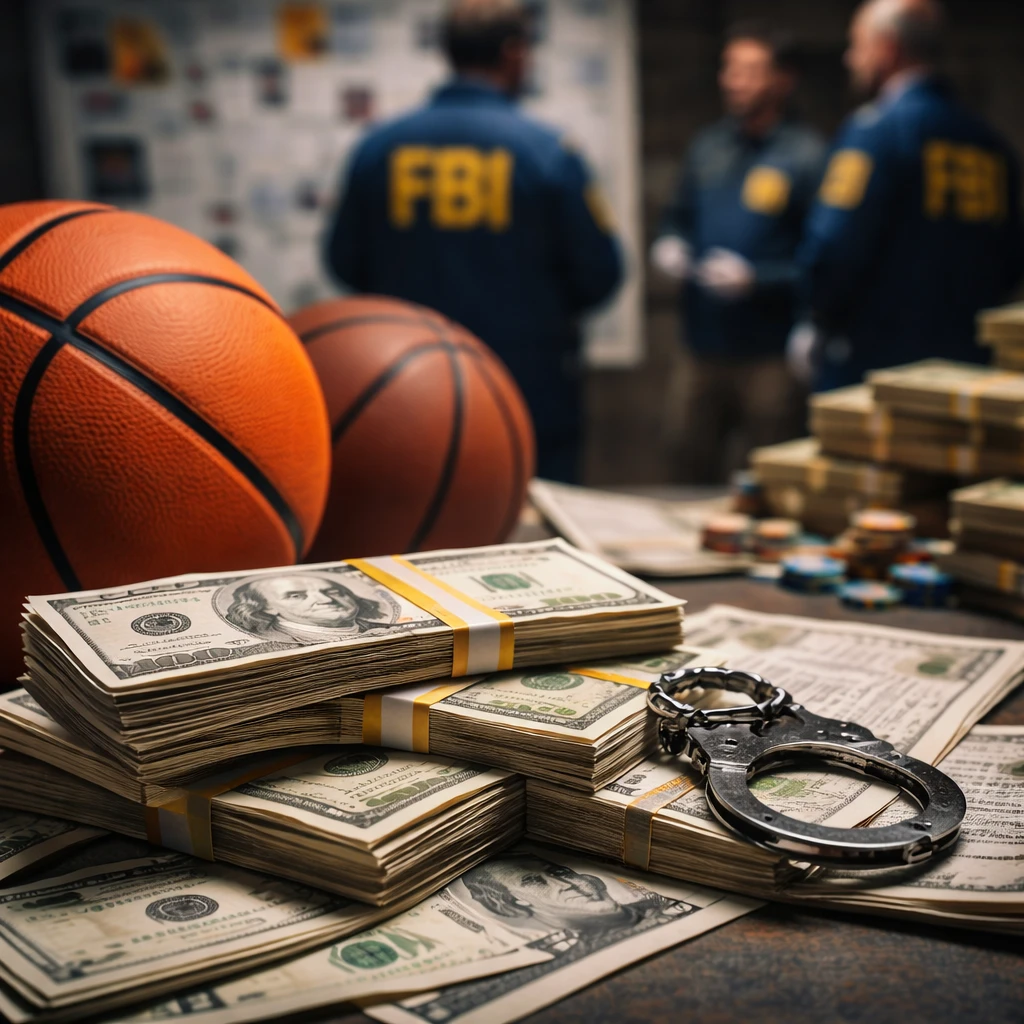

A significant federal inquiry into a basketball game-fixing and wagering conspiracy has come to light, implicating 26 people, among them current and former college basketball athletes. The scheme reportedly extended from professional ranks in the Chinese Basketball Association to NCAA contests, according to officials speaking Thursday.
The U.S. Attorney's office in Philadelphia presented charges that involve bribery, wire fraud, and conspiracy to commit these offenses. The core of the operation involved a network of individuals who recruited players by offering substantial cash payments to deliberately perform poorly during games. These fixers then placed bets against the very teams those players competed for, ultimately defrauding sports betting companies and other gamblers in the process.
Following the orchestrated game outcomes, players received their promised bribe money in cash, delivered personally. The fixers reportedly traveled across various states to hand over these payments directly, whether on college campuses or during team travel.
While prosecutors have not specified the exact amount of illicit proceeds gained by the fixers, it was disclosed that betting activities involved millions of dollars. The fixers themselves obtained significant financial gains, distributing hundreds of thousands of dollars in bribes. Individual payments to players commonly ranged between $10,000 and $30,000 per affected game. In one notable instance, nearly $200,000 in bribes and earnings from manipulated Chinese Basketball Association contests were stashed in a Florida storage locker linked to a player.
The scale of the compromised games includes a minimum of 29 NCAA fixtures, some as recent as January 2025, in addition to two contests within the Chinese Basketball Association. Among the charged athletes, four have actively competed this current season, though the allegations pertain specifically to the 2023-24 season and not current play.
Investigators trace the inception of this scheme back to 2023, initially focusing on two Chinese Basketball Association matches before expanding their operations into NCAA basketball.
The main architects of the fraudulent scheme include six men identified by prosecutors. Their profiles vary, including three individuals with direct connections to players through coaching and training roles, two who serve as gamblers and handicappers, and a former NBA player. The inquiry remains ongoing, with the possibility that additional participants, currently unnamed, may face charges in the future.
This case emerges amid heightened scrutiny around sports gambling in the United States, especially following a transformative Supreme Court ruling in 2018 permitting widespread legalization of sports betting. The scandal adds to a growing list of similar incidents across various sports leagues involving illegal wagering, player sanctions, and federal investigations, highlighting persistent vulnerabilities in sports integrity.