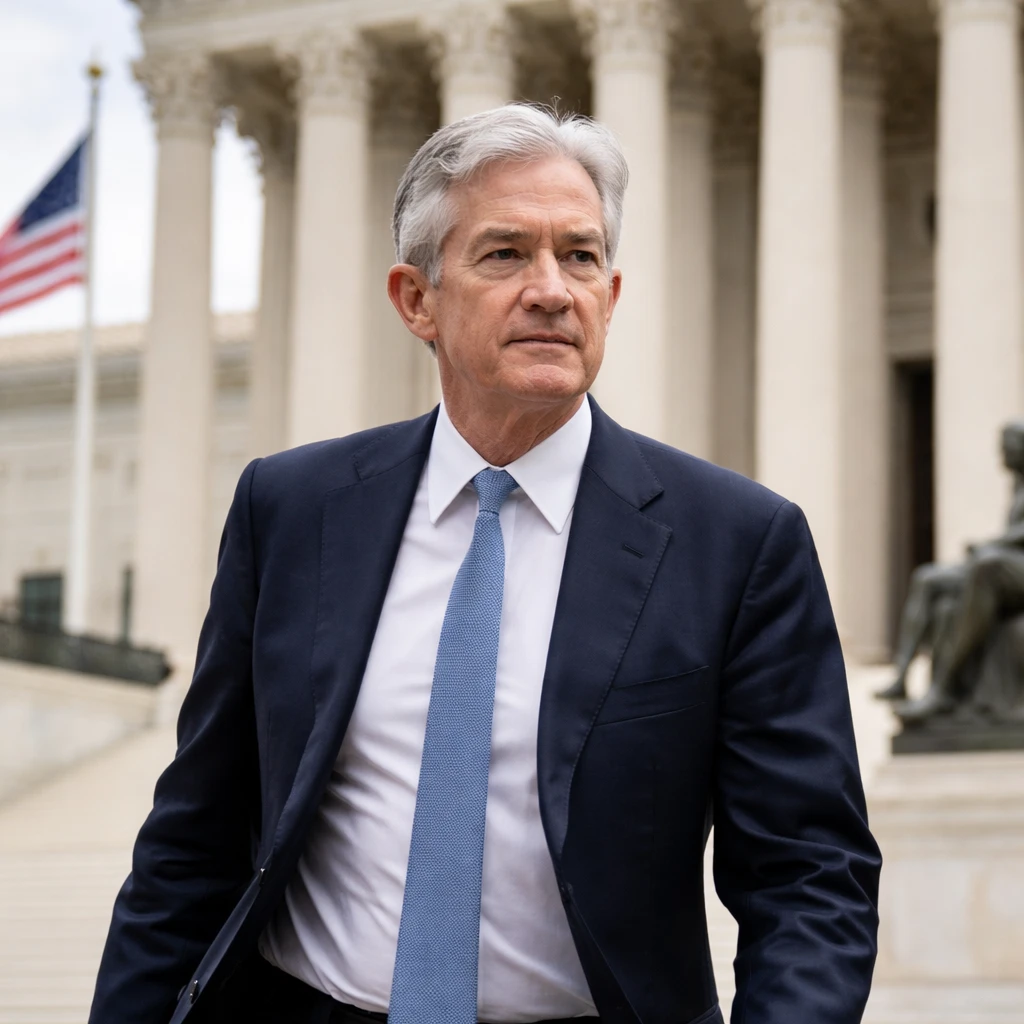

In a significant development, Federal Reserve Chair Jerome Powell is set to attend the Supreme Court's oral argument session on Wednesday that revolves around the contentious dismissal attempt of Federal Reserve Board Governor Lisa Cook. This marks an exceptional display of support from Powell toward a fellow Fed governor, diverging from his prior restrained stance. The Supreme Court is tasked with determining the legality of President Donald Trump’s decision, declared at the end of August, to remove Cook from her position on the Federal Reserve’s governing board—a move with no precedent in recent Fed history.
An individual with knowledge of the matter, wishing to remain anonymous, confirmed Powell’s attendance. This step arrives amid intensified tensions between the Federal Reserve and the Trump administration. Notably, last week, Powell made public that subpoenas had been issued to the Fed by the Trump administration, signaling the prospect of a criminal indictment against him—an unprecedented escalation.
Appointed by Trump in 2018, Powell's public posture has shifted markedly compared to his earlier, more reserved reactions to the President’s critiques and pressures on the central bank’s policies. This transformation towards a more confrontational approach coincides with the challenging circumstances facing the Fed leadership.
Powell made a public video statement on January 11, criticizing the subpoenas as thinly veiled attempts to force the Federal Reserve to drastically reduce its key interest rate. Late last year, under Powell's guidance, the Federal Reserve executed three reductions to the benchmark interest rate, bringing it to approximately 3.6%. However, Trump has maintained that the rate should fall further to 1%, a position generally not supported by the economics community.
The Trump administration has leveled allegations of mortgage fraud against Governor Cook, claims she firmly denies. To date, no formal charges have been filed. Cook has pursued legal action to retain her position on the Fed’s board, and on October 1, the Supreme Court issued a succinct order permitting her to continue serving while her case proceeds. Should President Trump succeed in removing Cook, he could fill her seat with a nominee of his choosing. This would enable his appointees to secure a majority on the Federal Reserve Board, potentially increasing presidential influence over crucial decisions regarding interest rates and bank regulatory policies.